
In long-term care, an 82-year-old resident is on bed rest after a hip fracture, incontinent of urine, and rarely repositions without help. During bathing you see intact buttock skin that is reddened, warm, does not blanch with pressure, and is painful to touch without open areas. Which pressure injury stage should the technician report and document for this skin breakdown?
Select an answer to reveal the explanation.
Short Explanation
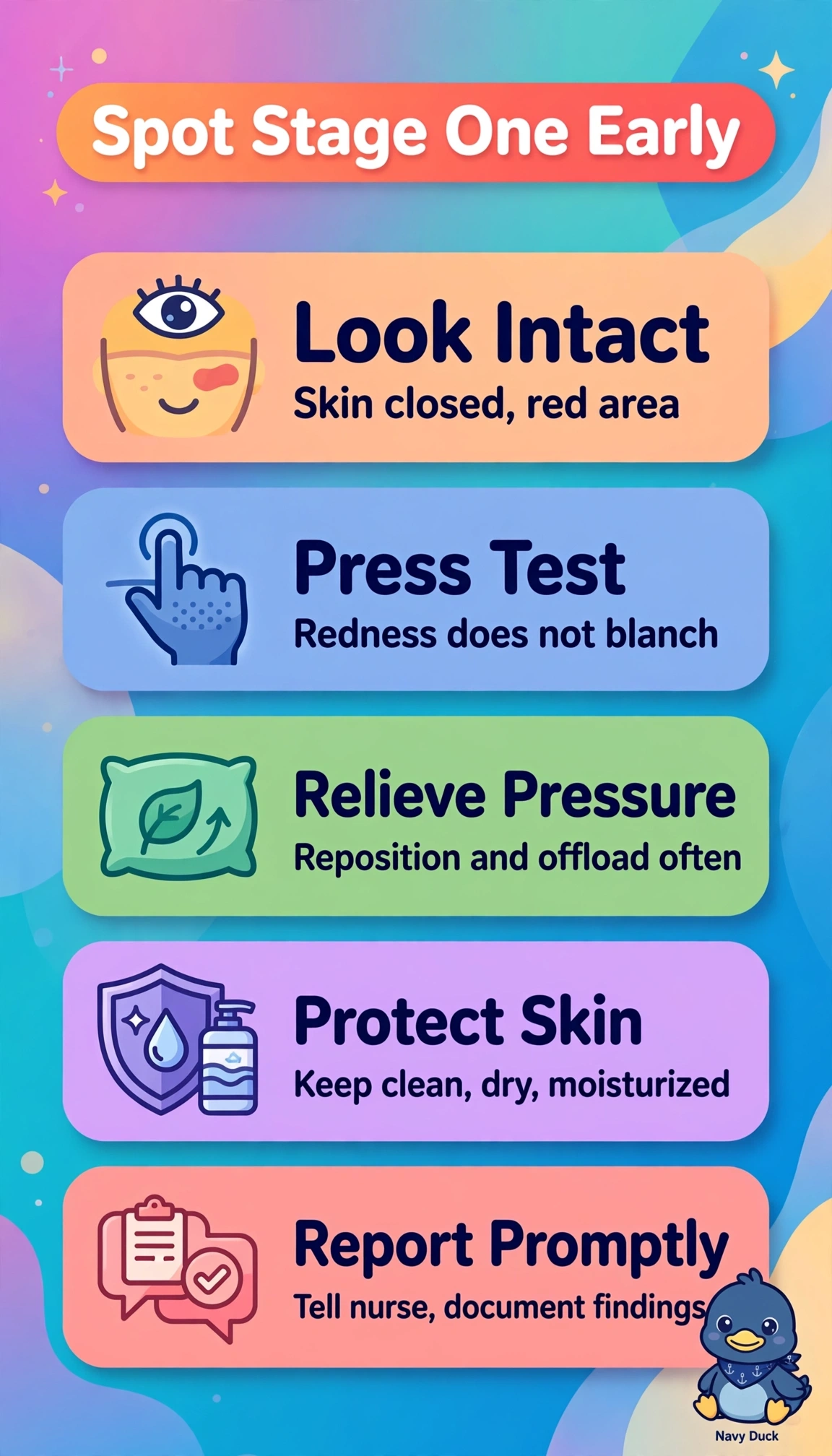
You caught it early, and that matters. Intact skin that stays red is still an injury, so offloading buys healing time. Repositioning and dry, clean skin are your best tools here.
Full Explanation
Correct is suspected stage 1 pressure injury because intact buttock skin with persistent nonblanchable redness, warmth and pain over a pressure site in an incontinent 82-year-old on bed rest after hip fracture indicates pressure-related capillary ischemia with intact epidermis, requiring prompt offloading, redistribution, skin care, urine management and monitoring for worsening. The suspected deep tissue injury approach fails by color concept because that entity shows persistent deep red, maroon or purple discoloration or a blood-filled blister reflecting deeper fat-muscle damage, not localized superficial erythema, so intact redness without deep discoloration or a blister does not meet criteria. The expected reactive hyperemia approach fails by blanching concept because reactive hyperemia blanches with pressure and fades quickly after relief, while described nonblanching persistent redness with warmth and tenderness signals capillary injury. The early stage 2 approach fails by depth concept because stage 2 requires partial-thickness loss such as shallow ulcer, erosion or serum-filled blister, and intact erythema without a break can never be stage 2. Exam caveat is to do the blanch test under good lighting with brief fingertip pressure and separate localized pressure erythema from diffuse moisture irritation, since location, persistence and nonblanchability drive staging. Practical check is to offload immediately, start timed repositioning, use barrier care for incontinence, avoid rubbing reddened skin, and reinspect promptly and escalate darkening, blistering, opening or increased pain.