
On a busy medical-surgical unit, a technician cares for a postoperative adult with limited mobility who reports new calf pain and swelling. The nurse asks for a timely EHR update before rounds using correct clinical terms that stays within the technician role. Which EHR communication best meets scope, ethics, and legal documentation responsibilities?
Select an answer to reveal the explanation.
Short Explanation
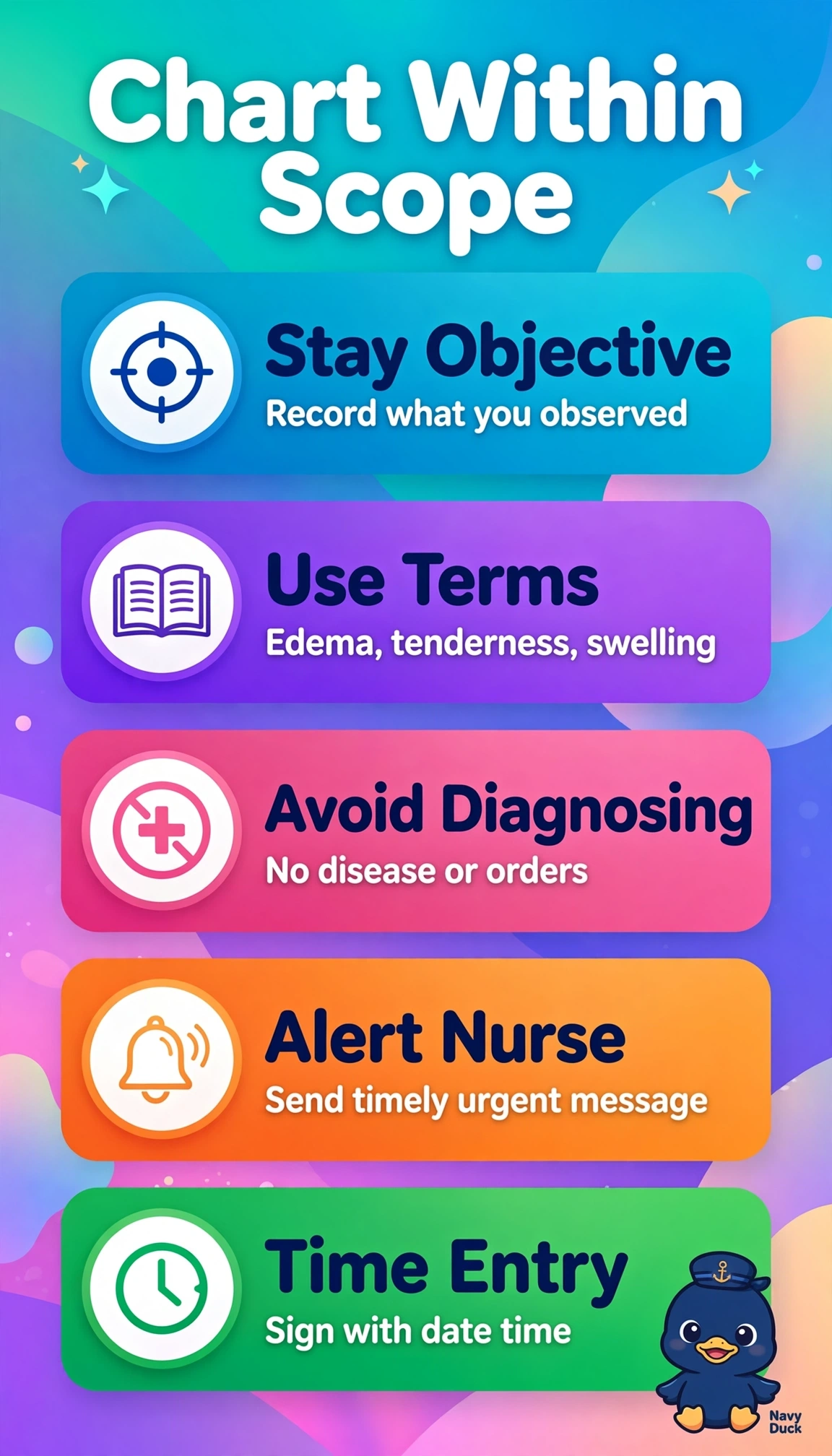
Clear charting keeps everyone safe. Sticking to what you saw keeps you inside scope and the record trustworthy. Objective words plus a prompt nurse alert win every time.
Full Explanation
The correct entry meets all simultaneous demands of scope, ethics, and legal charting for this high-risk context. Objective edema and calf tenderness using approved terms create clear, defensible data for rounds, timeliness before rounds plus direct routing to the nurse ensures a postoperative patient with limited mobility and new pain and swelling receives prompt licensed assessment for possible urgent causes, and staying descriptive without interpretation keeps the technician within role. The prompt verbatim documentation of the patient's own words with nurse notification models respectful, person-centered recording of subjectivity, but fails terminology because the task explicitly required correct clinical terms to support precise team communication and reduce ambiguity. The routine next-shift entry with objective approved language models efficient standard workflow for stable findings, but fails urgency and escalation because new postoperative calf symptoms require immediate pre-rounds alert rather than deferred review. The thorough entry adding independent assessment and care planning models complete licensed documentation, but fails scope because interpretation and planning exceed technician responsibilities and risk legal liability. The exam caveat is that a generally appropriate habit can still be wrong when one stem condition is unmet, so verify timely, termed, and within-role together. The practical check is to confirm objective approved language, pre-rounds time stamp, direct nurse notification, and no added diagnosis or plan.