
A PCT on a busy medical-surgical unit admits an older adult with hearing loss for heart failure, notices two patients with similar last names on the census, and sees unlabeled specimen tubes at the nurses' station. Which patient safety goal action should the PCT complete first to align with Joint Commission identification and HCAHPS communication standards?
Select an answer to reveal the explanation.
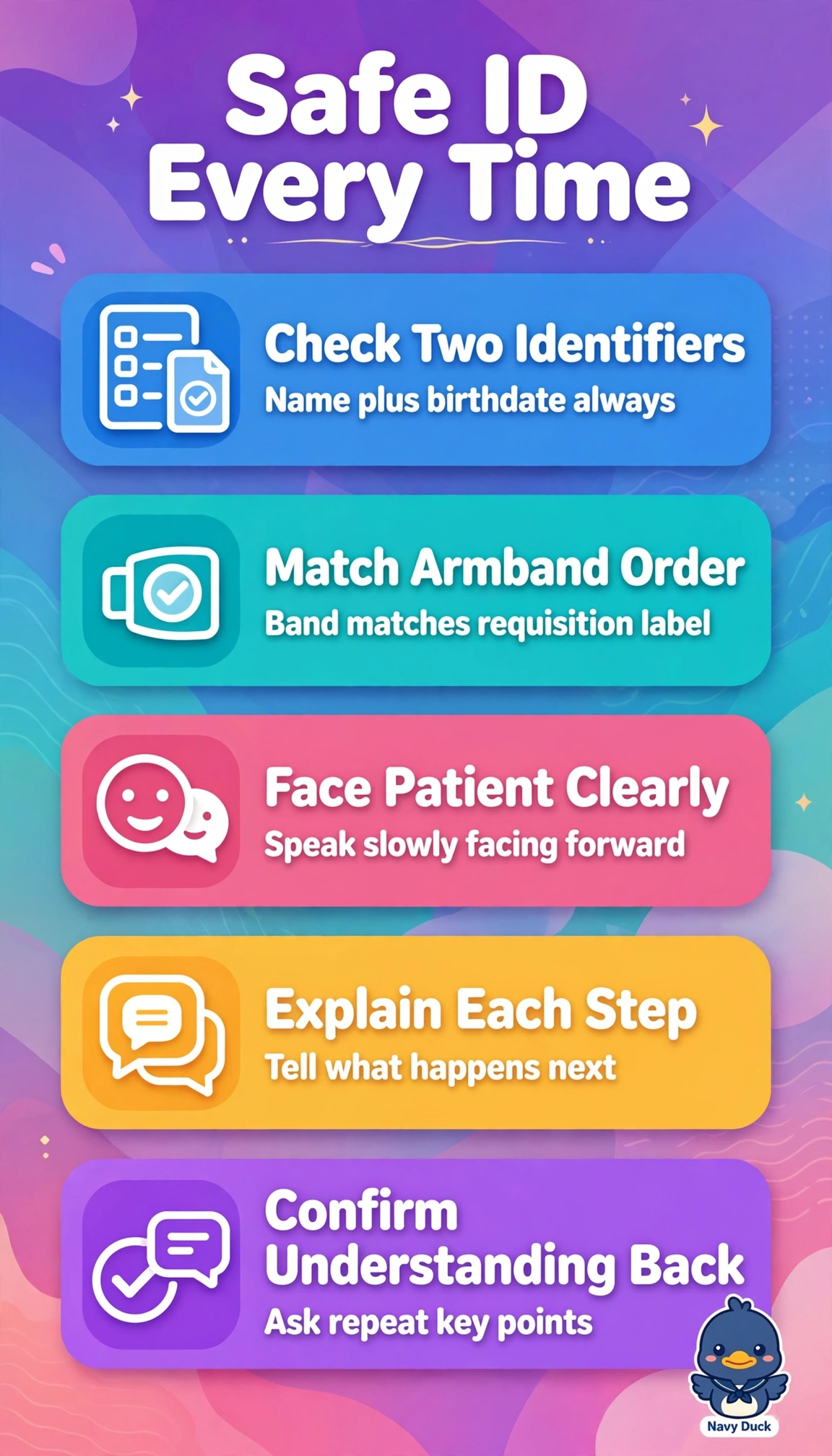
Short Explanation
You've got name mix-ups plus hearing loss, so safety starts with nailing identity and being heard. Clear identification is your seatbelt before you drive any care forward.
Full Explanation
The Joint Commission National Patient Safety Goals require using at least two patient identifiers before care, treatment, medications, or specimens, and improving effective communication, while HCAHPS emphasizes courtesy, listening, and explaining care clearly, which together make active identification plus plain-language explanation the priority when similar names and sensory impairment create wrong-patient risk. Labeling tubes quickly addresses CLSI labeling but without bedside verification it can perpetuate misidentification and it omits the communication standard; repeating back orders and answering lights supports communication and responsiveness but does not resolve the immediate identification hazard for this patient; cleaning hands and raising rails addresses infection and fall safety but leaves the wrong-patient and mislabeled-specimen risks uncorrected. Exam caveat is that identification always precedes other safety tasks when similar names exist, and practical check is to ask the patient to state full name and birthdate while you compare to the armband and explain what you are doing in short, facing-forward sentences.