
Overnight on a small medical-surgical unit, a technician sees flames in a wastebasket, light smoke in the hallway, and two ambulatory patients nearby. The fire alarm has not yet been pulled and the door to the room is open. Which fire and disaster response sequence should the technician initiate first for this fire event?
Select an answer to reveal the explanation.
Short Explanation
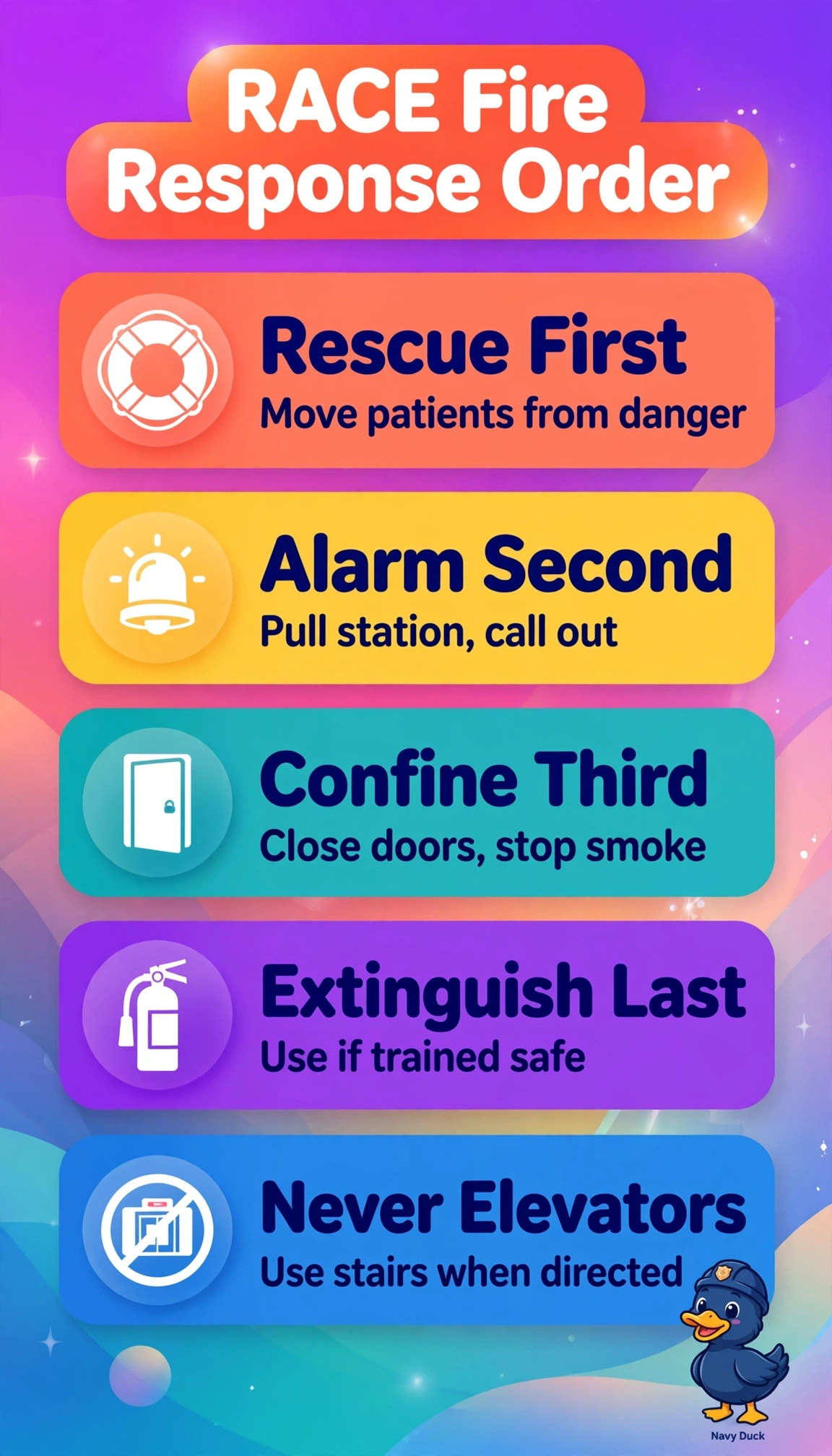
You’re the calm in that smoky moment, so let that rescue-first rhythm guide you. Like clearing the stage before fighting the fire, people come before property every time.
Full Explanation
The correct sequence reflects RACE prioritization tailored to the stated facts: rescue ambulatory patients from immediate flame danger first, then activate the alarm because none has been pulled, then confine by closing the open door to limit light hallway smoke, then attempt limited wastebasket containment only if trained. The alarm-first sequence fails on prioritization because immediate rescue outranks notification when patients stand near visible flames, and delaying movement for alarm activation leaves them exposed despite otherwise correct alarm, confine, and containment steps. The contain-before-close sequence fails on compartmentation because attempting extinguishment while the room door remains open allows smoke and fire spread through the hallway, ignoring the explicit open-door and smoke cues that require confinement before any extinguisher use. The close-before-alarm sequence fails on notification urgency because closing doors first delays activation on an overnight small unit where rapid staff response depends on the alarm, even though rescue and eventual confinement are correct. An exam caveat is to anchor every choice to all stem conditions rather than fire size alone, since a small wastebasket fire still demands rescue, alarm, and confinement in order and plausible choices often preserve three correct actions while inverting one critical step. A practical check is to mentally rehearse RACE and PASS on arrival, confirming patients moved, alarm pulled and verbal alert given, doors and windows closed, and extinguisher use attempted only with a clear exit and training.