
A post-surgical adult with a swollen ankle is prescribed a reusable cold pack, has reduced sensation in the foot, and can call for help. The pack was in the freezer, the skin is intact but pale, and the nurse approved a 20-minute application. Which cold-therapy safety measure should the PCT apply to prevent tissue injury?
Select an answer to reveal the explanation.
Short Explanation
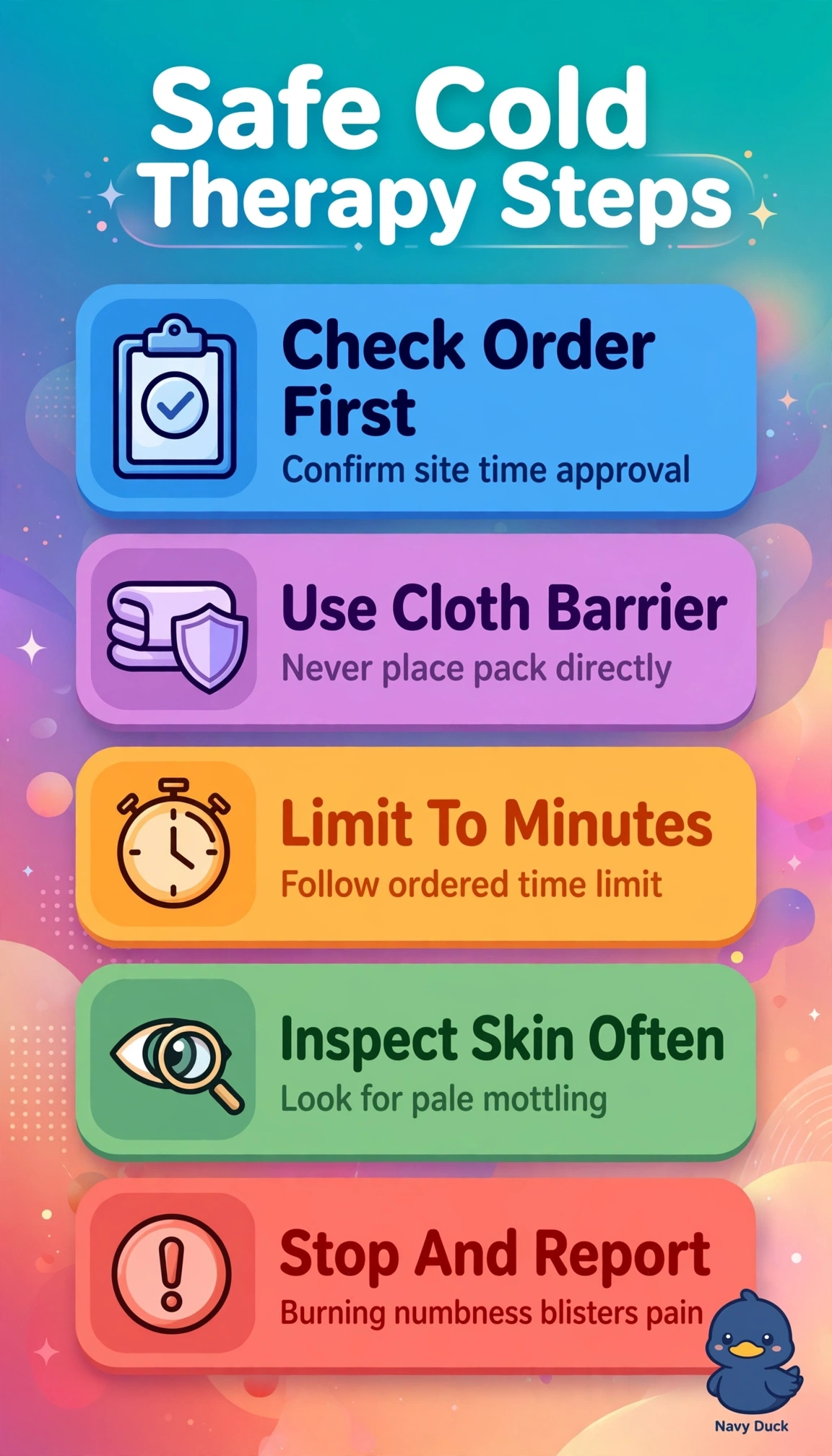
You’re protecting fragile skin while the cold does its job. A cover plus frequent checks keeps cooling safe without freezing tissue, like a potholder guards your hand yet lets warmth through. Keep barrier protection between any pack and skin.
Full Explanation
The correct measure combines a fabric barrier with brief-interval visual skin checks during the ordered 20-minute application because a freezer-stored reusable pack can cause frostbite and prolonged vasoconstriction, and pale intact skin with distal reduced sensation raises vulnerability while masking early warning symptoms. Leaving the covered pack undisturbed for the full interval preserves timing and barrier protection but fails surveillance, since color, edema, blistering, pain, burning, or excessive pallor cannot be detected without lifting the pack every few minutes. Extending the same covered and inspected application to 30 minutes preserves barrier and surveillance but fails the time-limit concept, as exceeding the prescribed duration increases rebound, nerve and skin injury risk and violates the delegation order even when swelling tempts longer cooling. Relying on patient statements about coldness during the covered 20-minute period preserves barrier and timing but fails the sensory-deficit concept, because reduced sensation prevents reliable detection of burning or numbness and requires objective inspection rather than subjective reporting in a patient who otherwise can call for help. An exam caveat is to follow the stated time, barrier, and sensation precautions rather than applying general rules for intact sensation or assuming more time improves swelling control. A practical check is to confirm the cover, set a visible timer, lift and view the ankle every few minutes, stop and report increased pallor, mottling, blistering, severe burning or numbness, and document time, skin findings, and tolerance.