
A memorial-voice kiosk keeps raw visitor recordings so Riva can be adapted later, but families never agreed to a permanent voice file. What does a trustworthy build require?
Select an answer to reveal the explanation.
Short Explanation
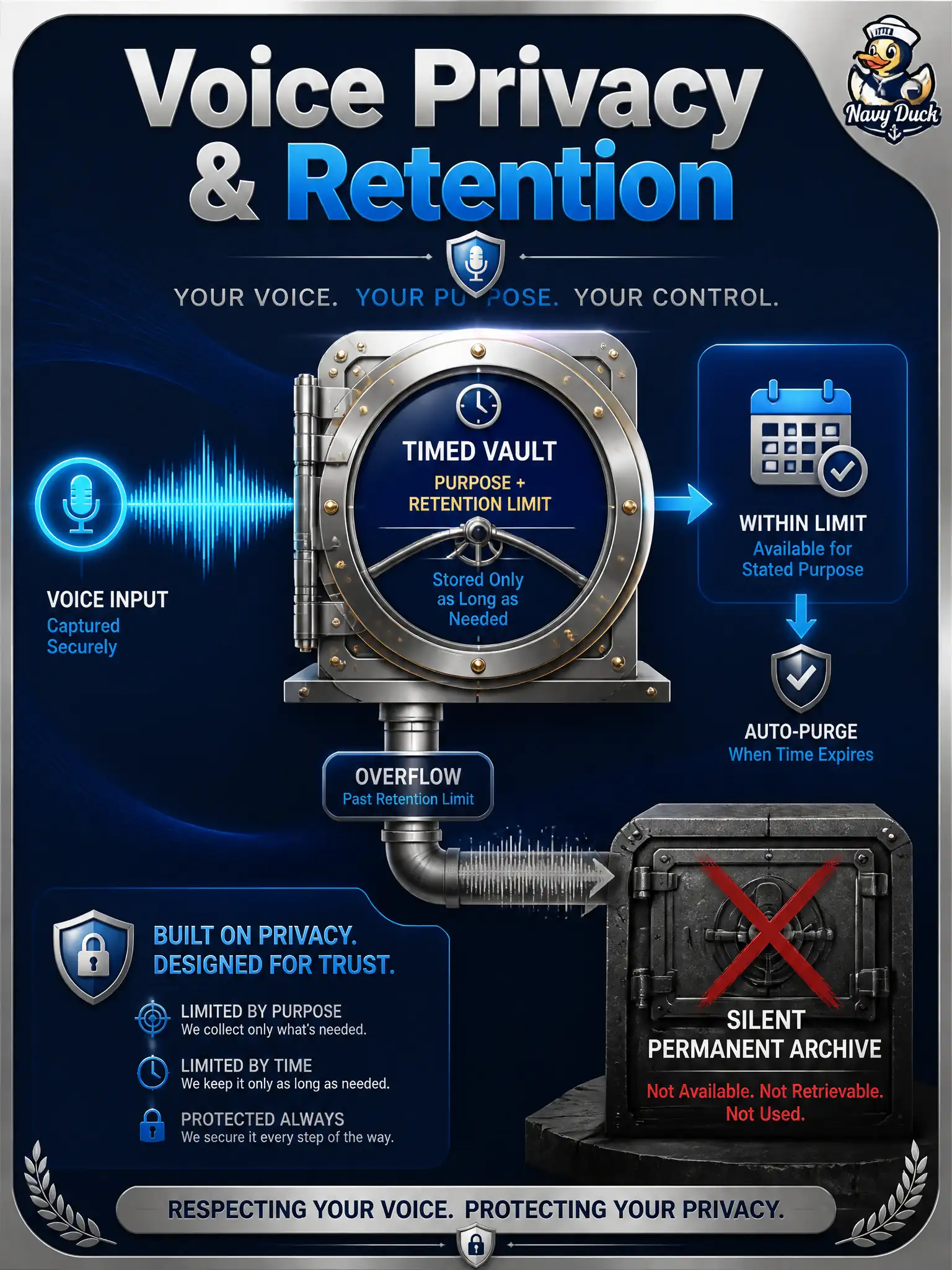
A visitor’s voice is like a fingerprint left at the booth. Keep it only with a clear purpose and time limit—do not stockpile it quietly for later Riva work.
Full Explanation
A memorial-voice kiosk that keeps raw visitor recordings so Riva can be adapted later, when families never agreed to a permanent voice file, requires retention limits and a clear purpose for identifiable speech—not a silent permanent archive. Trustworthy builds bind speech retention to purpose and consent for civic memory booths.
Unlimited storage because any voice clip improves ASR forever fails privacy minimization. Publishing every recording to a public CLIP gallery for “transparency” fails by broadcasting biometrics under a false transparency banner. Treating visitor speech as free adaptation fuel with no privacy review fails Domain 7 governance.
Exam caveat: identifiable speech needs purpose limitation and retention limits. Adaptation value does not erase privacy duties.
Operational check: define retention windows; delete or anonymize on schedule; state adaptation purpose on signage; obtain agreement before long-term keep for the municipal memorial kiosk. In municipal trustworthy-AI stewardship, record the disclosure, consent, or bias decision and the rejected shortcuts in the gallery change log so future stewards protect residents from undisclosed synthesis and stereotyped generation. Re-audit labels, consent records, and bias samples after the next model or exhibit update to keep the city's public trust intact.