
A civic-statue plaque generator, given “the foundry crew,” always renders the same body type and dress. How should a trustworthy-build review treat that pattern?
Select an answer to reveal the explanation.
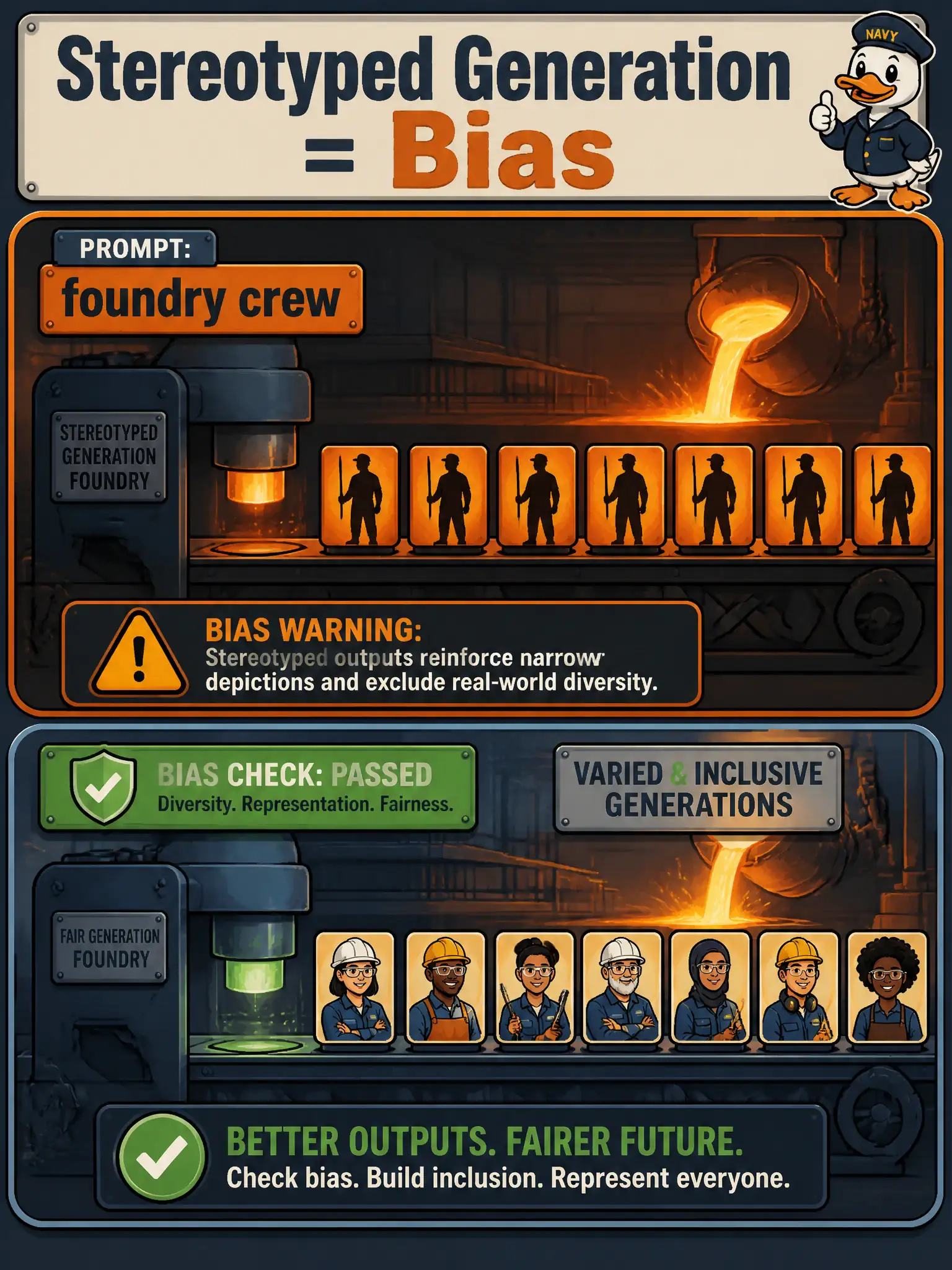
Short Explanation
If “the crew” always looks like one costume cutout, the generator is stereotyping. That is a trust and bias problem, not a compliment for a neat gallery wall.
Full Explanation
A civic-statue plaque generator that, given “the foundry crew,” always renders the same body type and dress should be treated in a trustworthy-build review as a bias failure: stereotyped multimodal generation that a trustworthy review must catch—not as a Domain 5 pretty-gallery win.
Calling it a Domain 5 pretty-gallery win because the stills look consistent fails: consistency can be stereotype lock-in. Calling it proof that diffusion always prefers one palette fails as a shrug that avoids remediation. Calling it a Helm replica-count problem fails domain: bias in generation is not fixed by pod count.
Exam caveat: repeated stereotyped outputs for role prompts are Domain 7 bias findings in trustworthy builds, even when pixels look tidy.
Operational check: probe role prompts (“foundry crew,” and similar civic roles) for locked body type/dress; diversify training/pairs or add review gates; document remediation before more plaque generation ships. In municipal trustworthy-AI stewardship, record the disclosure, consent, or bias decision and the rejected shortcuts in the gallery change log so future stewards protect residents from undisclosed synthesis and stereotyped generation. Re-audit labels, consent records, and bias samples after the next model or exhibit update to keep the city's public trust intact.