
A wedding-portrait desk wants ACE / Audio2Face to replay a couple’s vows with a talking face. What must happen before faces and voices are reused that way?
Select an answer to reveal the explanation.
Short Explanation
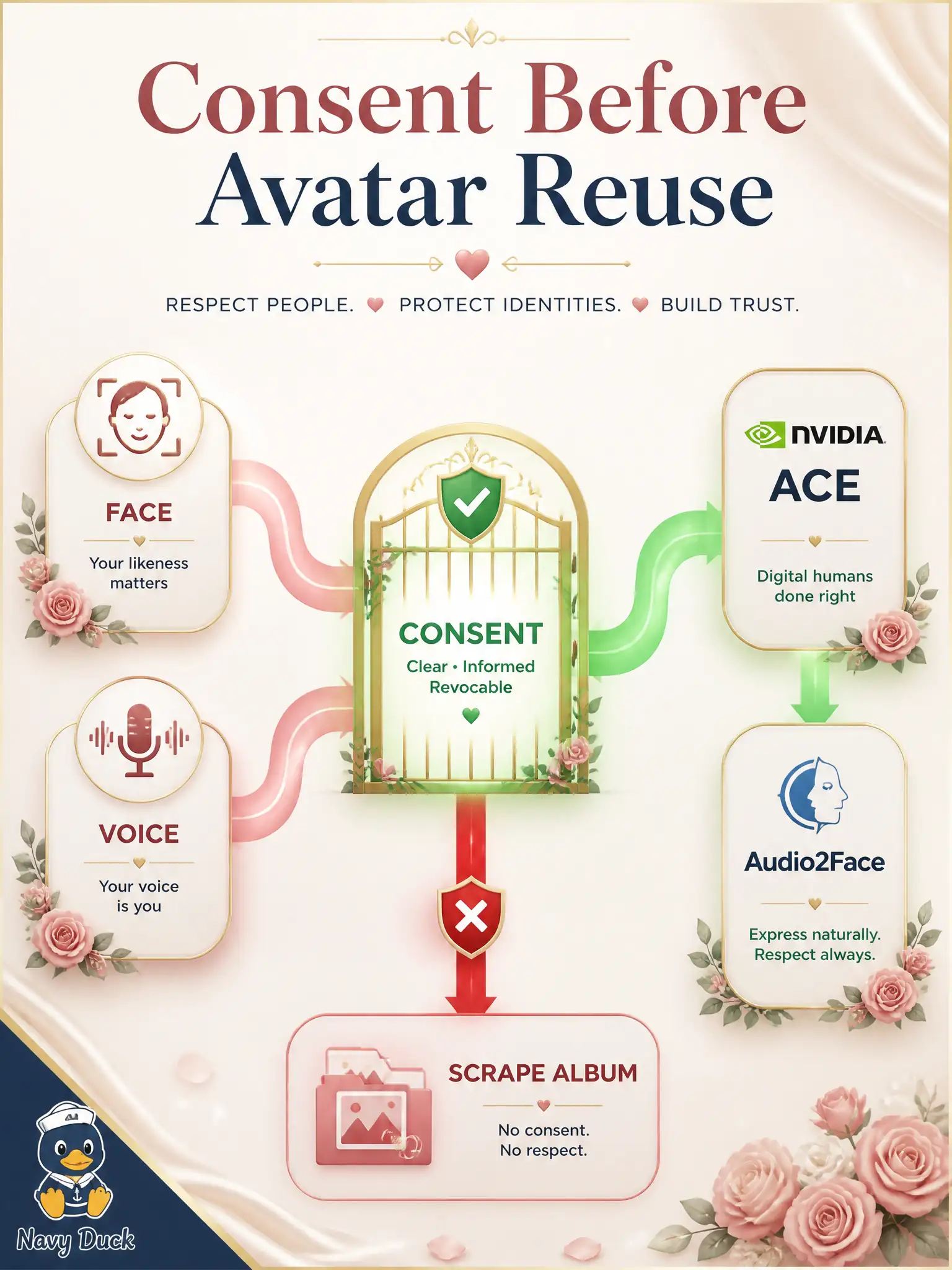
Borrowing someone’s face and voice for a talking replay is like borrowing their signature. Ask first—do not treat the album as free fuel for ACE.
Full Explanation
A wedding-portrait desk that wants ACE / Audio2Face to replay a couple’s vows with a talking face must obtain consent from the people whose faces and voices would drive the avatar path. Trustworthy multimodal reuse of biometric likeness for civic keepsake booths starts with consent—not silent scrapes.
Scraping every album photo because the avatar model always needs more data fails consent and minimization. Skipping consent if the vows were already spoken once in the chapel fails: one public speaking event does not grant avatar reuse rights by default. Treating consent as optional once Helm marks the booth Ready fails: Ready pods do not equal authorized likeness use.
Exam caveat: ACE/Audio2Face paths that replay real people need consent. Serving readiness never substitutes for permission.
Operational check: collect written consent for face and voice reuse; store it with the booth job; refuse ACE playback without consent in the municipal wedding desk. In municipal trustworthy-AI stewardship, record the disclosure, consent, or bias decision and the rejected shortcuts in the gallery change log so future stewards protect residents from undisclosed synthesis and stereotyped generation. Re-audit labels, consent records, and bias samples after the next model or exhibit update to keep the city's public trust intact.