
A life-mask studio intern asks for an unnamed watermarking product “because Trustworthy AI.” That product is not on the official NCA-GENM materials. What should the candidate do instead?
Select an answer to reveal the explanation.
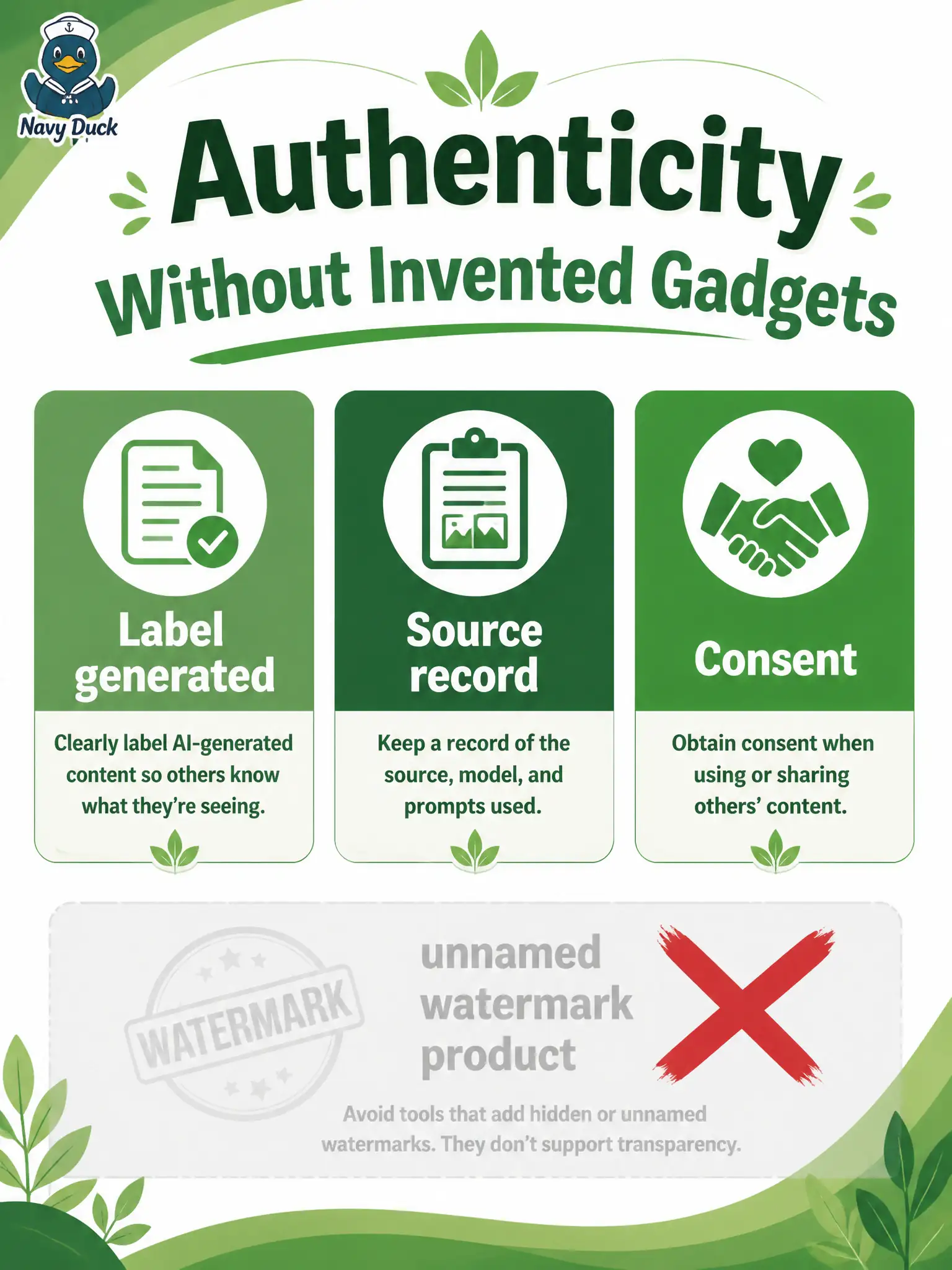
Short Explanation
Trust here is more like a clear museum label and a signed release than a magic stamp gadget. If the exam never named a watermark product, do not invent one.
Full Explanation
When a life-mask studio intern asks for an unnamed watermarking product “because Trustworthy AI” that is not on the official NCA-GENM materials, the candidate should stay with honest labels, source records, and consent rather than inventing a provenance product. Domain 7 associate practice is disclosure and governance—not checklist gadgets from nowhere.
Inventing a Guardrails-style watermark gadget so the checklist looks complete fails materials fidelity. Importing confidential-GPU branding from another certification’s trustworthy list fails cross-exam product dumping. Treating watermark hardware as the only allowed Domain 7 control fails by narrowing trust to a single invented control.
Exam caveat: prefer labels, provenance records, and consent on the official path. Do not invent watermark products or import other exams’ brand lists.
Operational check: maintain source logs and visible generated labels; capture consent where faces/voices are reused; reject unlisted watermark-product tickets for the civic life-mask studio. In municipal trustworthy-AI stewardship, record the disclosure, consent, or bias decision and the rejected shortcuts in the gallery change log so future stewards protect residents from undisclosed synthesis and stereotyped generation. Re-audit labels, consent records, and bias samples after the next model or exhibit update to keep the city's public trust intact.