
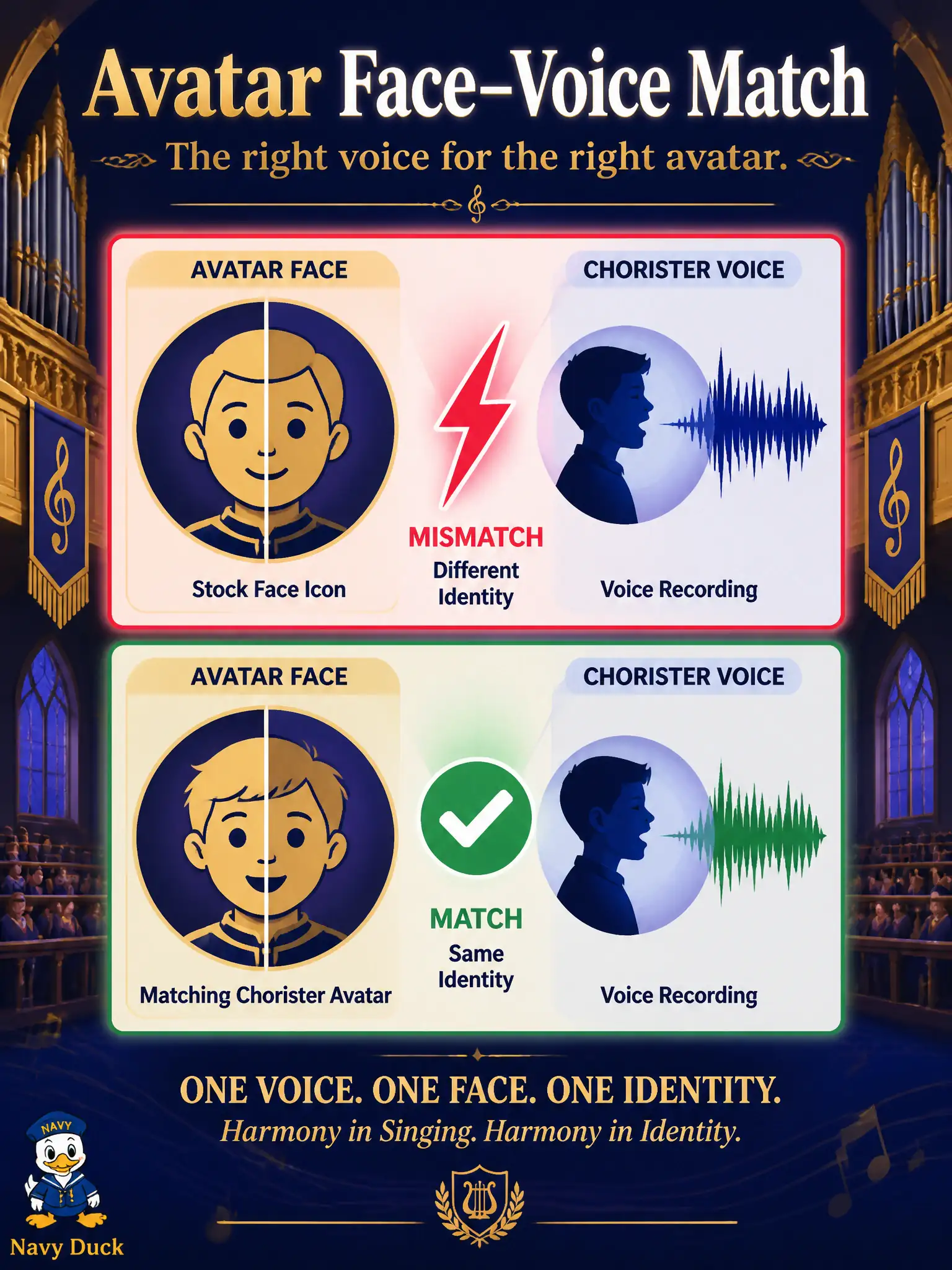
A choir-loft kiosk drives an ACE talking face with Audio2Face while the voice was adapted from a chorister and the face is a stock figure. What should the candidate flag?
Select an answer to reveal the explanation.
Short Explanation
Picture a puppet wearing one person’s face and speaking with another’s voice. The stack may work, but authenticity fails when guests think the avatar is that chorister.
Full Explanation
A choir-loft kiosk that drives an ACE talking face with Audio2Face while the voice was adapted from a chorister and the face is a stock figure should flag an authenticity mismatch: the avatar’s face or voice is not the source person being presented. Domain 7 catches face/voice provenance mismatches on civic avatar paths.
Calling it a Domain 4 wiring bug because ACE and Riva cannot share a booth path fails—the stack can be wired; the issue is authenticity of presentation. Calling it a Helm chart error that only Kubernetes can fix fails domain. Calling it a missing CLIP embedding for choir loft stills fails modality and trust scope.
Exam caveat: ACE/Audio2Face plus adapted voice still requires coherent, disclosed identity. Stock faces with someone else’s voice are authenticity flags.
Operational check: document voice source and face source on the kiosk card; disclose composite avatars; obtain consent where a real chorister’s voice is used; refuse silent mismatches in the municipal loft. In municipal trustworthy-AI stewardship, record the disclosure, consent, or bias decision and the rejected shortcuts in the gallery change log so future stewards protect residents from undisclosed synthesis and stereotyped generation. Re-audit labels, consent records, and bias samples after the next model or exhibit update to keep the city's public trust intact.