
A wax-figure workshop plays Riva TTS that visitors hear as a living guide naming a real steward. What is the authenticity concern?
Select an answer to reveal the explanation.
Short Explanation
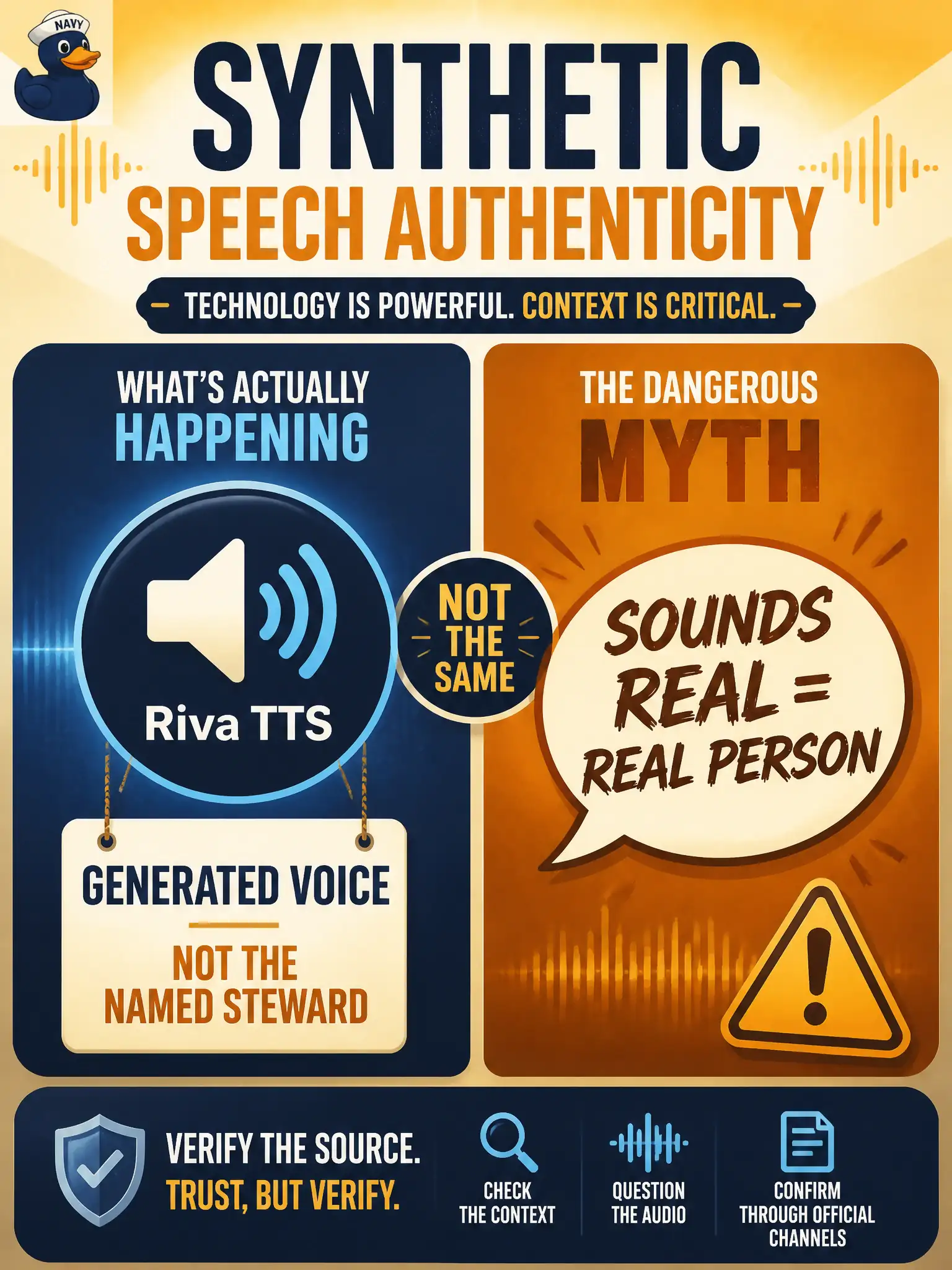
A convincing recording of someone’s name is still a recording. If Riva TTS sounds like a real steward, authenticity means saying it is synthetic—not passing it off as that person live.
Full Explanation
A wax-figure workshop that plays Riva TTS visitors hear as a living guide naming a real steward faces an authenticity concern: whether the synthetic speech is disclosed as generated and must not be presented as that named person speaking. Domain 7 cares about disclosure and non-impersonation of civic staff voices.
Asking whether Helm scaled the TTS pods during the tour hour fails domain—that is performance, not authenticity. Asking whether the spoken line used intermediate versus late fusion fails as an architecture distraction. Asking whether guidance scale made the voice warmer fails because generation-control knobs do not answer disclosure of synthetic speech.
Exam caveat: synthetic speech that names a real person needs disclosure and must not claim to be that person speaking without authorization.
Operational check: add “synthetic voice” notices at the wax workshop; forbid scripts that assert a named steward is speaking unless consent and labeling are in place; audit tour audio for the municipal exhibit. In municipal trustworthy-AI stewardship, record the disclosure, consent, or bias decision and the rejected shortcuts in the gallery change log so future stewards protect residents from undisclosed synthesis and stereotyped generation. Re-audit labels, consent records, and bias samples after the next model or exhibit update to keep the city's public trust intact.