
A portrait-miniature gallery hangs a diffusion render beside a real ivory miniature. Visitors treat the sharper frame as painted from life. What should the studio do for content authenticity?
Select an answer to reveal the explanation.
Short Explanation
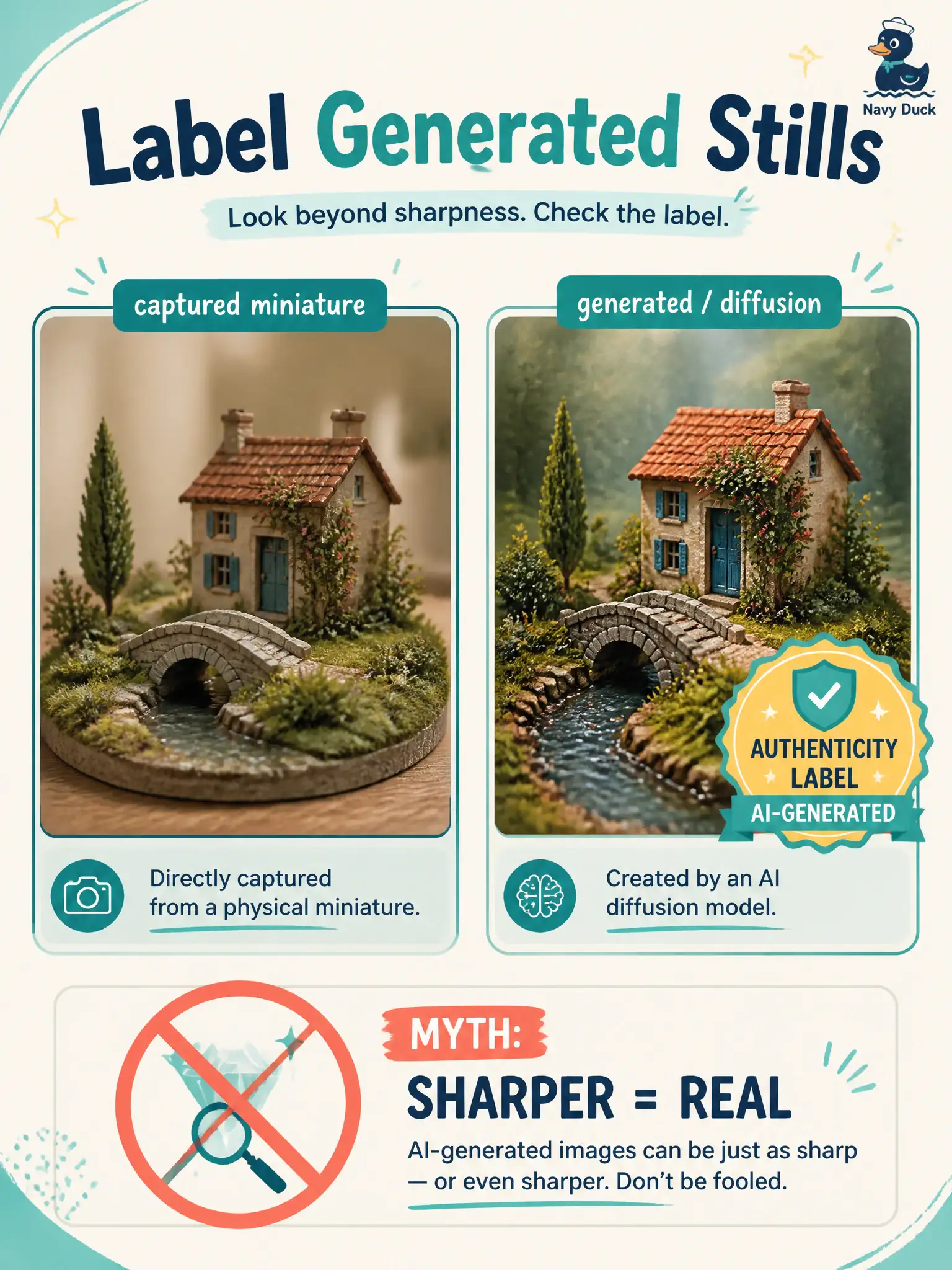
Think of a museum placard next to a replica vase. Sharp paint does not make a replica authentic. A clear “generated” label keeps the still honest even when it looks finished.
Full Explanation
A portrait-miniature gallery that hangs a diffusion render beside a real ivory miniature must label the diffusion still as generated so visitors know it was synthesized, not painted from life. Content authenticity for civic exhibits starts with honest disclosure when guests might treat the sharper frame as captured or hand-painted.
Treating the crispest still as captured because sharpness proves a camera was used fails: sharpness is not provenance. Hiding the diffusion origin so guests enjoy the display without labels fails transparency and invites false belief. Replacing authenticity labels with a Domain 5 chart of pixel sharpness scores fails because analysis charts do not substitute for Domain 7 disclosure.
Exam caveat: generated looks ≠ captured truth. Domain 7 requires labeling synthesized stills even when they outshine nearby authentic miniatures.
Operational check: tag every diffusion hang with a visible generated label; keep the ivory miniature’s captured provenance separate; spot-check visitor-facing signage before opening the municipal gallery. In municipal trustworthy-AI stewardship, record the disclosure, consent, or bias decision and the rejected shortcuts in the gallery change log so future stewards protect residents from undisclosed synthesis and stereotyped generation. Re-audit labels, consent records, and bias samples after the next model or exhibit update to keep the city's public trust intact.