
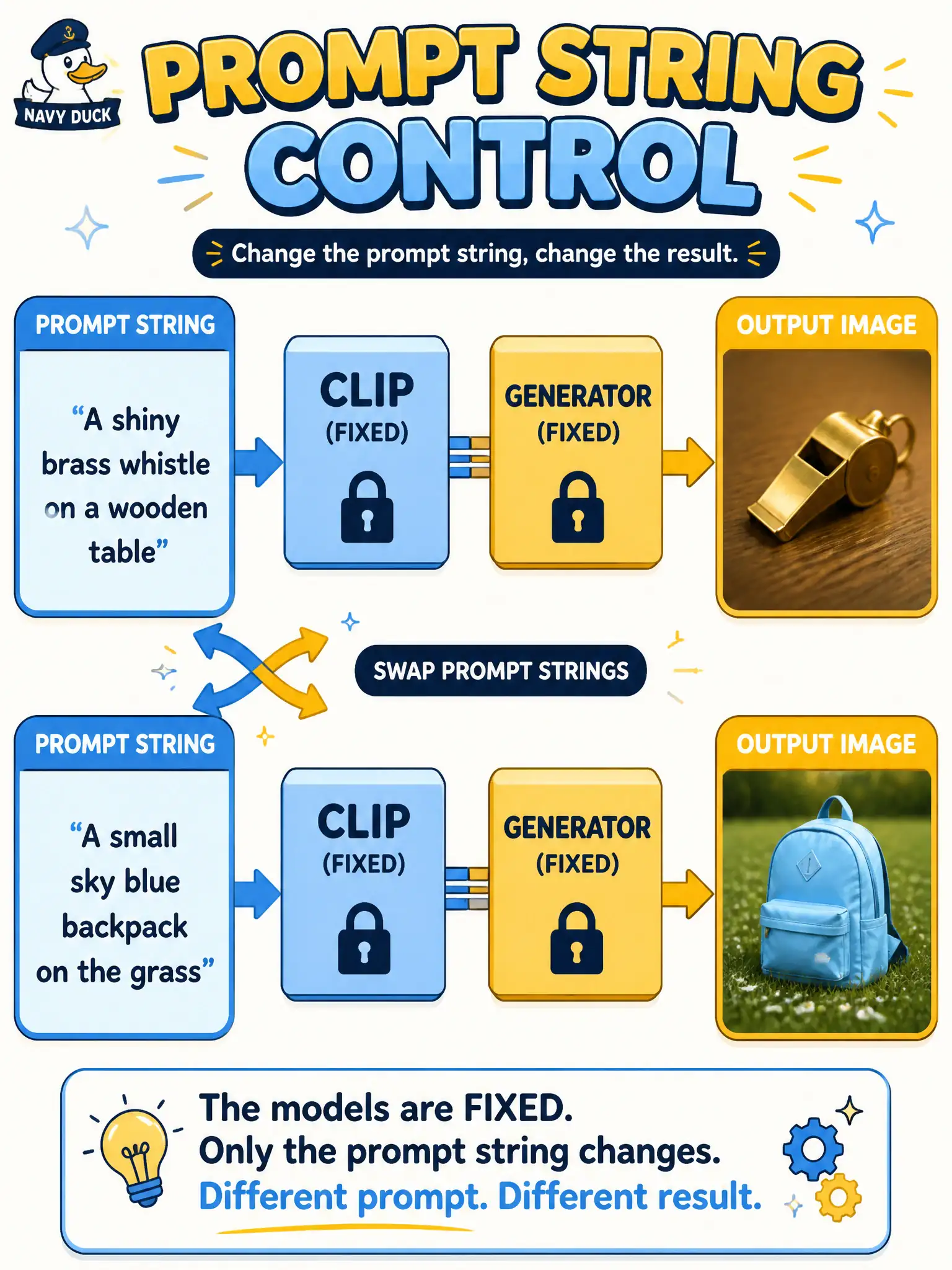
A whistle-works demo keeps the same loaded CLIP and generator modules and only swaps the English string before rerunning. What kind of change is that?
Select an answer to reveal the explanation.
Short Explanation
Same oven, different recipe card. Swapping only the English string is a software input control, not a new architecture or cluster redeploy.
Full Explanation
Keeping the same loaded CLIP and generator modules and only swapping the English string before rerunning is an implementation control: change the prompt input while modules stay fixed. That classification is correct for the whistle-works demo. Civic prompt desks should treat new English lines as input changes, not as architecture or cluster events.
Calling it a Domain 2 architecture change that redefines network topology fails; weights and topology are unchanged. Calling it a Domain 6 Kubernetes redeploy required for every new string fails proportionality. Claiming the loft must unload CLIP and train a new model per prompt fails operational sense and associate practice.
Exam caveat: prompt string swaps are software input controls on a fixed CLIP generate path. Operational check: expose civic English prompts as call arguments; keep CLIP/generator modules loaded across prompt changes unless weights truly change. Align this choice with the agency’s published multimodal runbook so civic operators can audit why the configuration was accepted. Record the civic software choice in the service README—named modules, inputs, and domain—so operators can replay the same path during audits and handoffs.