
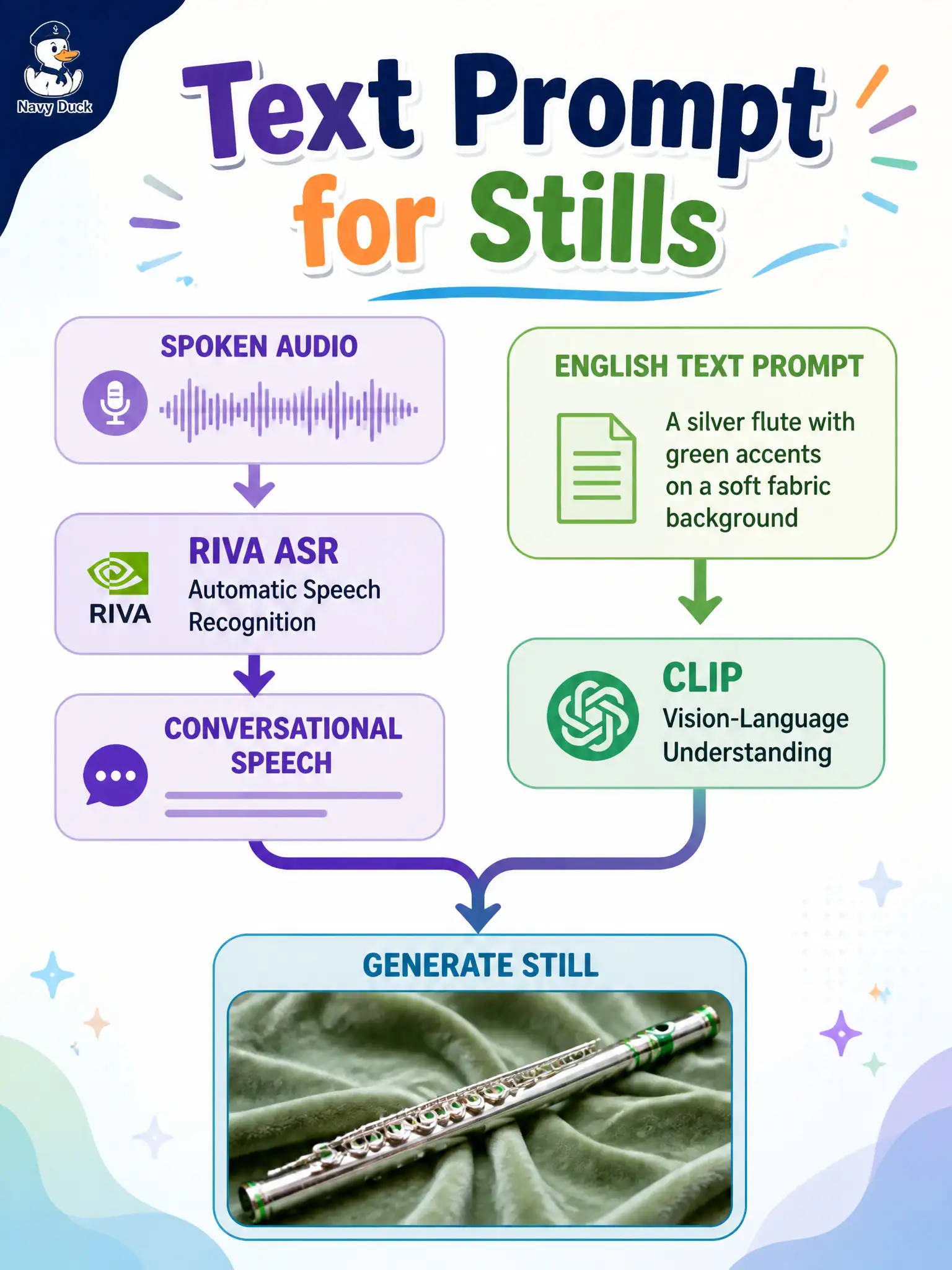
A flute-maker intern wires Riva ASR directly to “generate the picture” with no English text prompt. What is the correct Domain 4 correction?
Select an answer to reveal the explanation.
Short Explanation
Speech goes to the talk booth; stills need written English. CLIP paints from a text prompt—typed or already transcribed—not from a raw speech service hook.
Full Explanation
Domain 4 correction when someone wires Riva ASR directly to “generate the picture” with no English text prompt is: keep CLIP generate on an English text prompt; send speech to the conversational path instead. That correction is correct for the flute-maker intern. Civic systems must route speech to Riva conversation and still generation to typed or already-transcribed English prompts.
Treating raw ASR audio tensors as the official CLIP image condition fails the English-prompt CLIP path. Replacing CLIP with ACE Audio2Face whenever anyone speaks near the bench fails job selection—faces are not still generation. Using Helm to scale ASR until the still appears without a text prompt fails by hoping packaging invents images.
Exam caveat: CLIP generate wants English text; speech stays on the conversational path. Operational check: if civic users speak, run ASR→text (or conversation); feed English text into CLIP generate—never raw ASR tensors as the official image condition. Align this choice with the agency’s published multimodal runbook so civic operators can audit why the configuration was accepted. Record the civic software choice in the service README—named modules, inputs, and domain—so operators can replay the same path during audits and handoffs.