
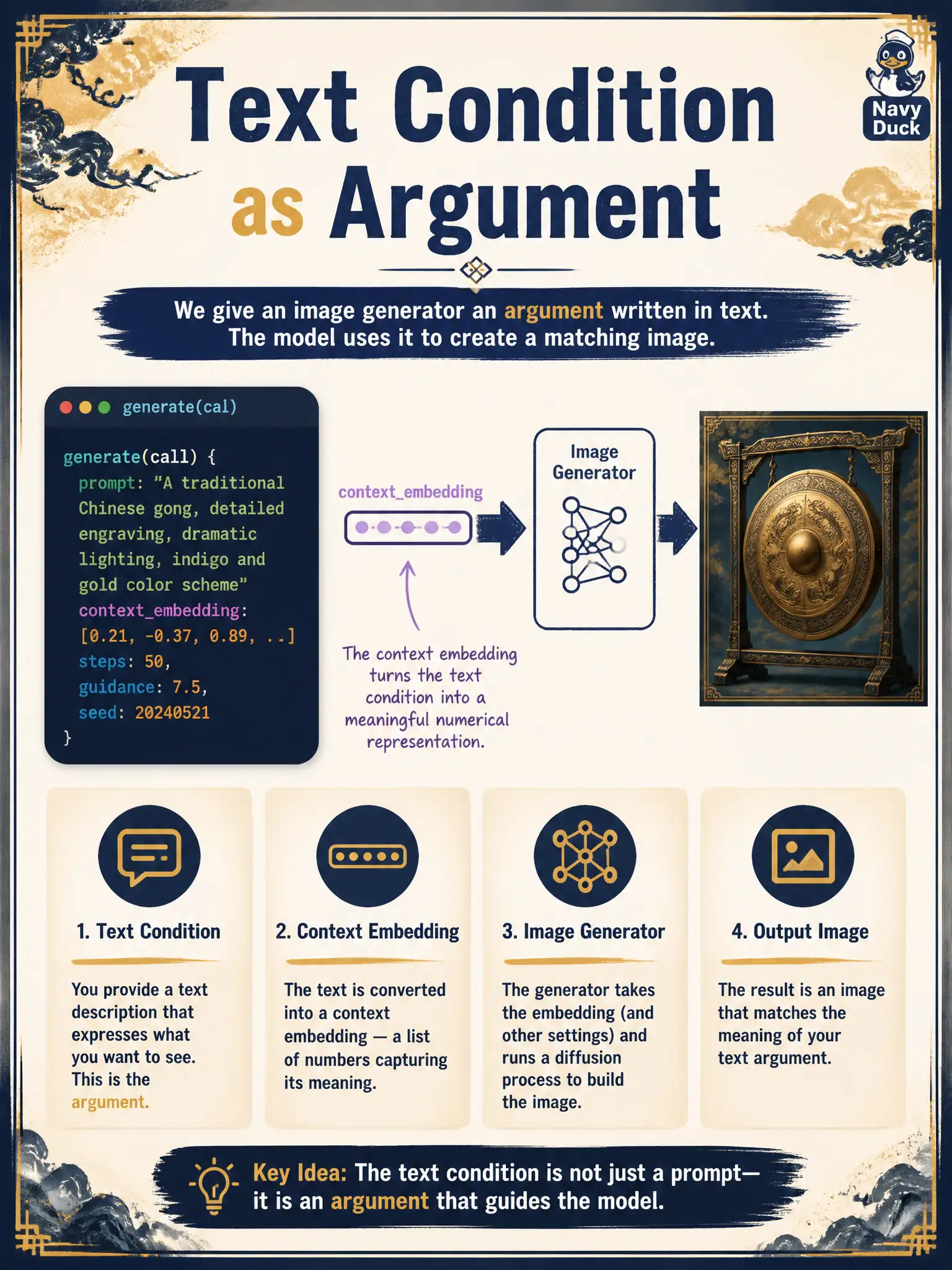
A gong shop’s generate function must receive the text condition so the still matches the English line. At Domain 4 depth, what does the developer implement?
Select an answer to reveal the explanation.
Short Explanation
The text condition is a dial you hand to the painter. Implementation means that embedding or condition is an argument the generate call actually receives.
Full Explanation
At Domain 4 depth, the developer implements passing a context embedding or text condition as an argument into the generate call so the still matches the English line. That implementation is correct for the gong shop. Civic conditioned generation fails if the text condition never reaches the generate API.
A Domain 1 prompt-wording experiment that never touches the generate API fails implementation. A Riva microphone stream wired as the only legal image condition fails the English-text CLIP generate path. A Domain 2 architecture rewrite that replaces CLIP with an invented sensor bus fails scope and naming.
Exam caveat: conditioning is an argument into generate, not a prompt bake-off or speech-only hook. Operational check: thread civic English embeddings/conditions into the generate call signature and verify stills change when the condition changes. Align this choice with the agency’s published multimodal runbook so civic operators can audit why the configuration was accepted. Record the civic software choice in the service README—named modules, inputs, and domain—so operators can replay the same path during audits and handoffs. Prefer explicit, reversible civic decisions over silent assumptions when multimodal data or software paths move toward production.