
A dulcimer loft’s first generate call returns a crooked instrument still. The encode-and-write path completed without error. How should that software milestone be treated?
Select an answer to reveal the explanation.
Short Explanation
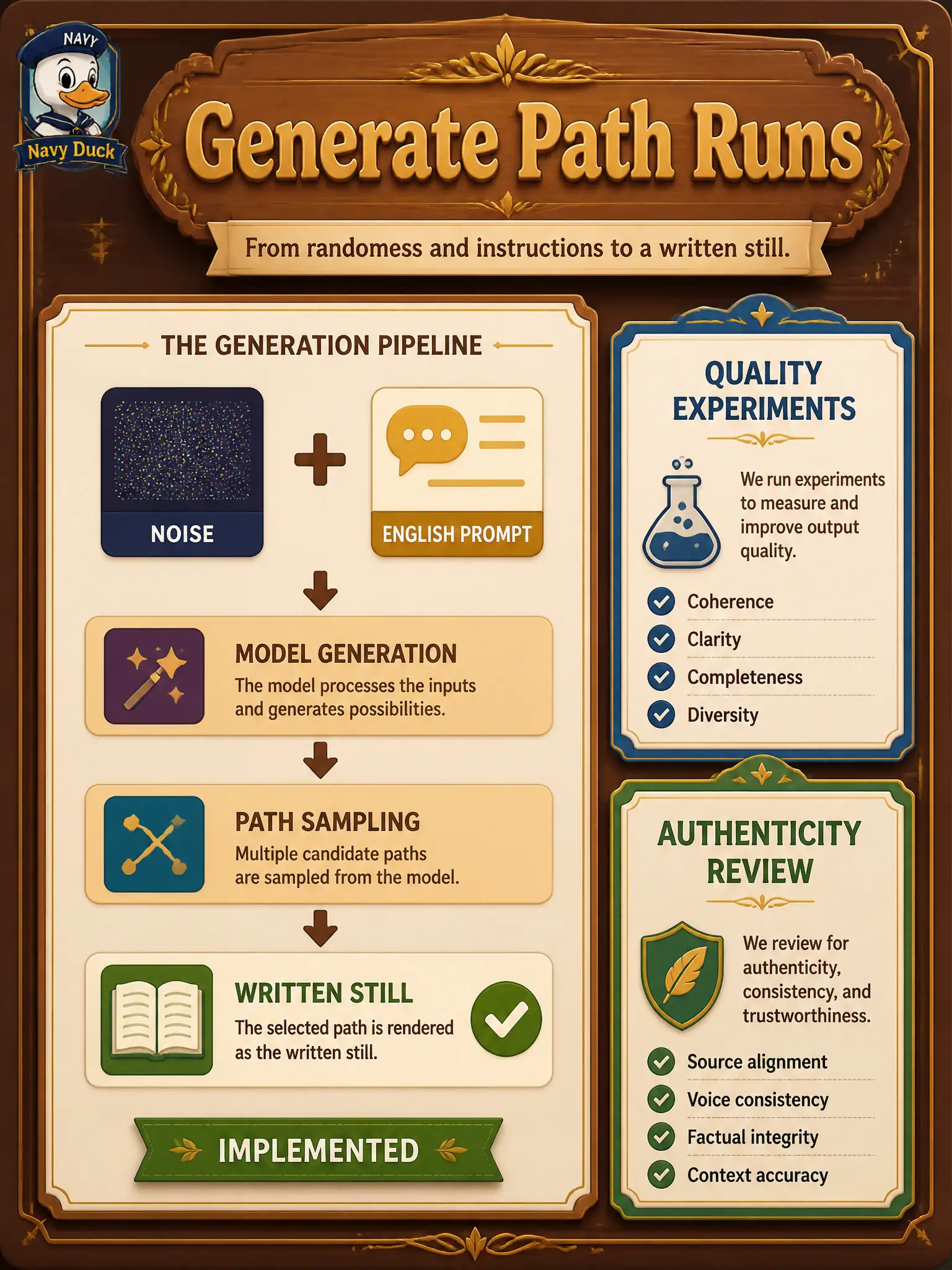
Think of the first crooked still as a kettle that finally boils—water moved. Getting a picture out of the generate path is the implementation win; polishing look and checking authenticity live in other domains.
Full Explanation
When the first generate call returns a crooked instrument still but the encode-and-write path completed without error, treat it as Domain 4 implementation done once the noise-to-image path runs and writes a still. Quality polish is Domain 1 experimentation, not a reason to reopen Domain 4. Civic software milestones should separate “path works” from “looks pretty.”
Calling it unfinished until Domain 1 quality experiments remove every crooked detail fails domain separation. Calling it a Domain 7 authenticity review because the still looks imperfect misassigns quality to authenticity. Abandoning CLIP to invent a third-party prompt product fails scope.
Exam caveat: Domain 4 success is a working generate/write path; beauty contests are Domain 1. Operational check: accept civic Domain 4 done when noise-to-image runs and writes; schedule Domain 1 quality trials separately. Align this choice with the agency’s published multimodal runbook so civic operators can audit why the configuration was accepted. Record the civic software choice in the service README—named modules, inputs, and domain—so operators can replay the same path during audits and handoffs. Prefer explicit, reversible civic decisions over silent assumptions when multimodal data or software paths move toward production.