
A lute-maker types “spruce top, ebony pegs” and needs a still from that English line. Which software sequence implements the official CLIP generate path?
Select an answer to reveal the explanation.
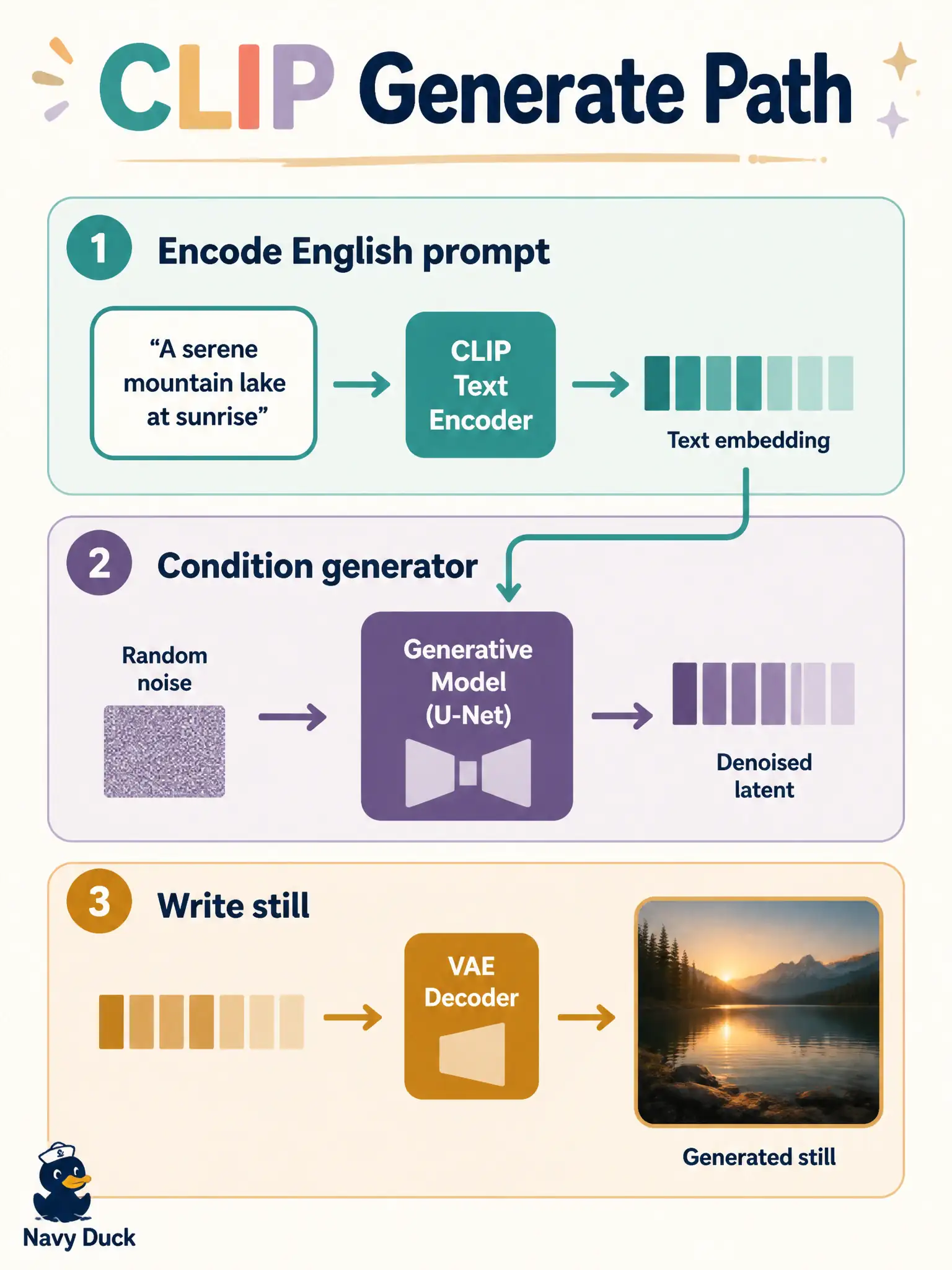
Short Explanation
The English sentence is a steering wheel, not the engine. CLIP turns the words into a condition, the generator paints, and the file is written—that is the official still path.
Full Explanation
Official CLIP generate for a typed English line implements encode the English prompt, condition the generator with that embedding, then write the picture. That sequence is correct for the lute-maker’s “spruce top, ebony pegs” request. Civic prompt-to-still desks follow the same encode → condition → write path.
Sending the typed line straight into Riva ASR and treating speech recognition as the still writer fails modality. Skipping encoding and dumping raw characters into a Helm chart as the picture payload fails both CLIP and packaging roles. Training a new caption–still corpus from scratch before any generate call is allowed confuses Domain 3 collection with Domain 4 generate.
Exam caveat: CLIP generate is prompt encode, condition, write—not ASR or Helm payloads. Operational check: wire civic English prompts through CLIP encode and generator conditioning; verify a still is written without requiring a new corpus rebuild for each call. Align this choice with the agency’s published multimodal runbook so civic operators can audit why the configuration was accepted. Record the civic software choice in the service README—named modules, inputs, and domain—so operators can replay the same path during audits and handoffs.