
A mosaic studio wants a talking face after Riva hears a visitor. From official additional material, which face module should be assembled on that path?
Select an answer to reveal the explanation.
Short Explanation
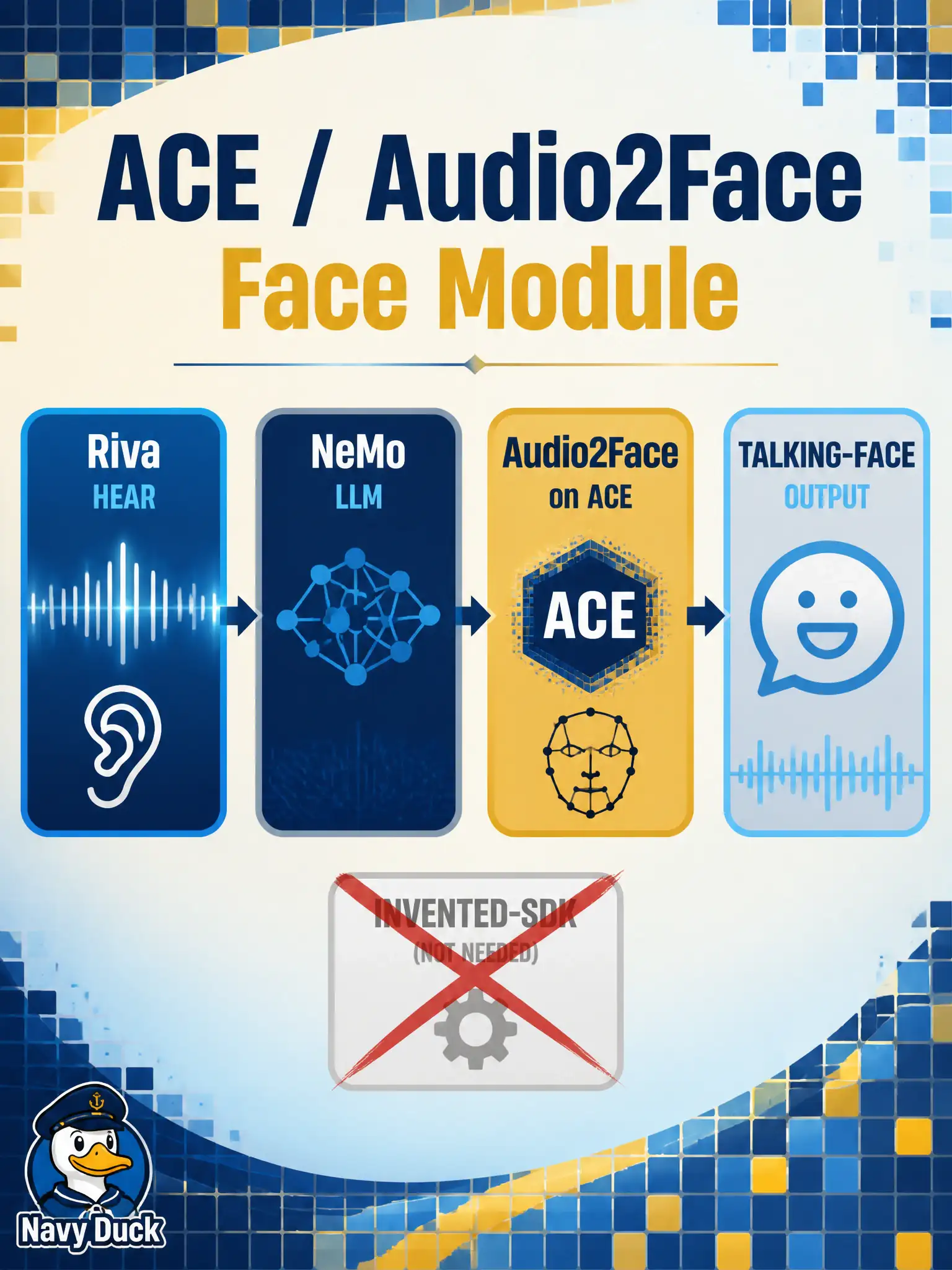
After Riva hears the visitor, the talking face comes from the official ACE path with Audio2Face—not a mystery SDK you invent on the spot.
Full Explanation
From official additional material, a talking face after Riva hears a visitor is assembled with Audio2Face on an ACE path (with Riva and a NeMo LLM) as the face implementation. That module choice is correct for the mosaic studio: associate face animation follows the named ACE/Audio2Face path rather than invented SDKs or CLIP-as-face engines. Civic visitor desks that want a speaking digital face owe residents a stack that matches published materials.
An invented third-party face SDK with no ACE reference fails official path selection. A CLIP dual encoder used as the only facial animation engine fails by concept—CLIP matches image and text, it does not drive face animation from speech. A handwritten CUDA mesh kernel instead of any official face stack fails associate scope.
Exam caveat: ACE + Audio2Face (+ Riva/NeMo as named) is the associate avatar face path. Operational check: assemble civic talking-face demos on ACE/Audio2Face with Riva; refuse unnamed face SDKs and CLIP-only face claims. Align this choice with the agency’s published multimodal runbook so civic operators can audit why the configuration was accepted. Record the civic software choice in the service README—named modules, inputs, and domain—so operators can replay the same path during audits and handoffs.