
An umbrella loft needs English lines and canopy stills to meet in one program. Which module should be plugged in as the official English-prompt image path?
Select an answer to reveal the explanation.
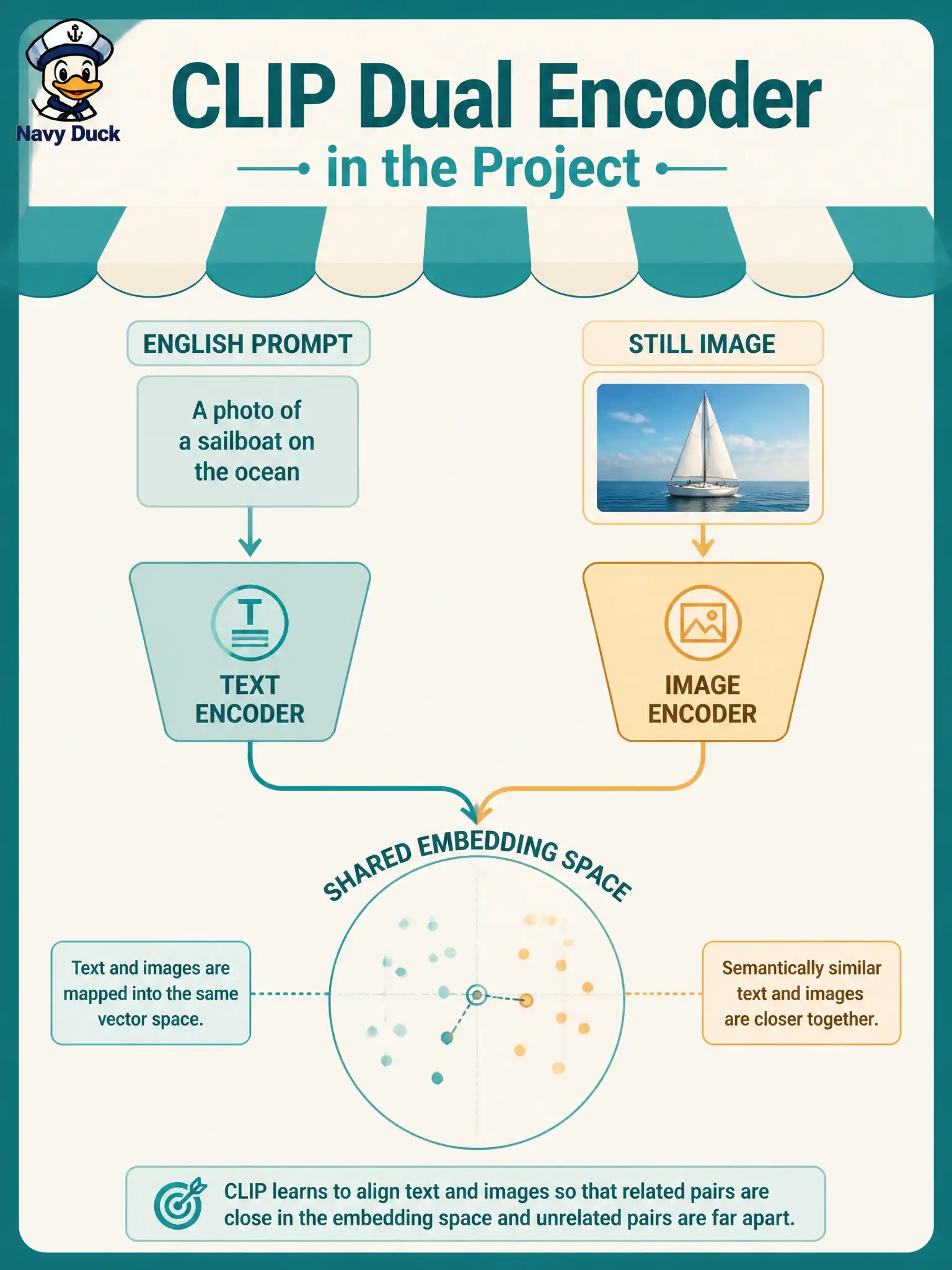
Short Explanation
Think of CLIP as two matching translators—one for English, one for the picture—so they can meet in the same space. Wire that dual-encoder path when text and stills must align.
Full Explanation
The official English-prompt image path uses a CLIP-style dual encoder that encodes the English prompt against the still. Plugging that module into the umbrella loft is correct when English lines and canopy stills must meet in one program. Civic prompt-to-image or image–text matching desks should start from that named path rather than speech-only or vision-only substitutes.
A Riva ASR-only stack that never sees the canopy still fails the image arm. A single CNN classifier with no text arm fails the English-prompt side. A handwritten CUDA kernel that replaces the framework call fails associate scope and refuses the official dual-encoder path.
Exam caveat: CLIP-style dual encoding is the associate English-prompt image module. Operational check: wire civic English prompts and stills through the dual encoder; do not substitute ASR-only, CNN-only, or custom kernel paths for this skill. Keep municipal reviewers in the loop whenever modality claims, fusion labels, or agent scripts are promoted from lab notes into the production corpus used by public-facing services. Record the decision, owner, and date beside the dataset manifest. Align this choice with the agency’s published multimodal runbook so civic operators can audit why the row was accepted or rejected.