
A vestry desk intern edits replica count and resource requests and claims they “invented a new fusion type.” How should those edits be classified?
Select an answer to reveal the explanation.
Short Explanation
Turning replica dials is housekeeping, not inventing a new fusion recipe. Keep values-file edits in performance; leave architecture names in Domain 2.
Full Explanation
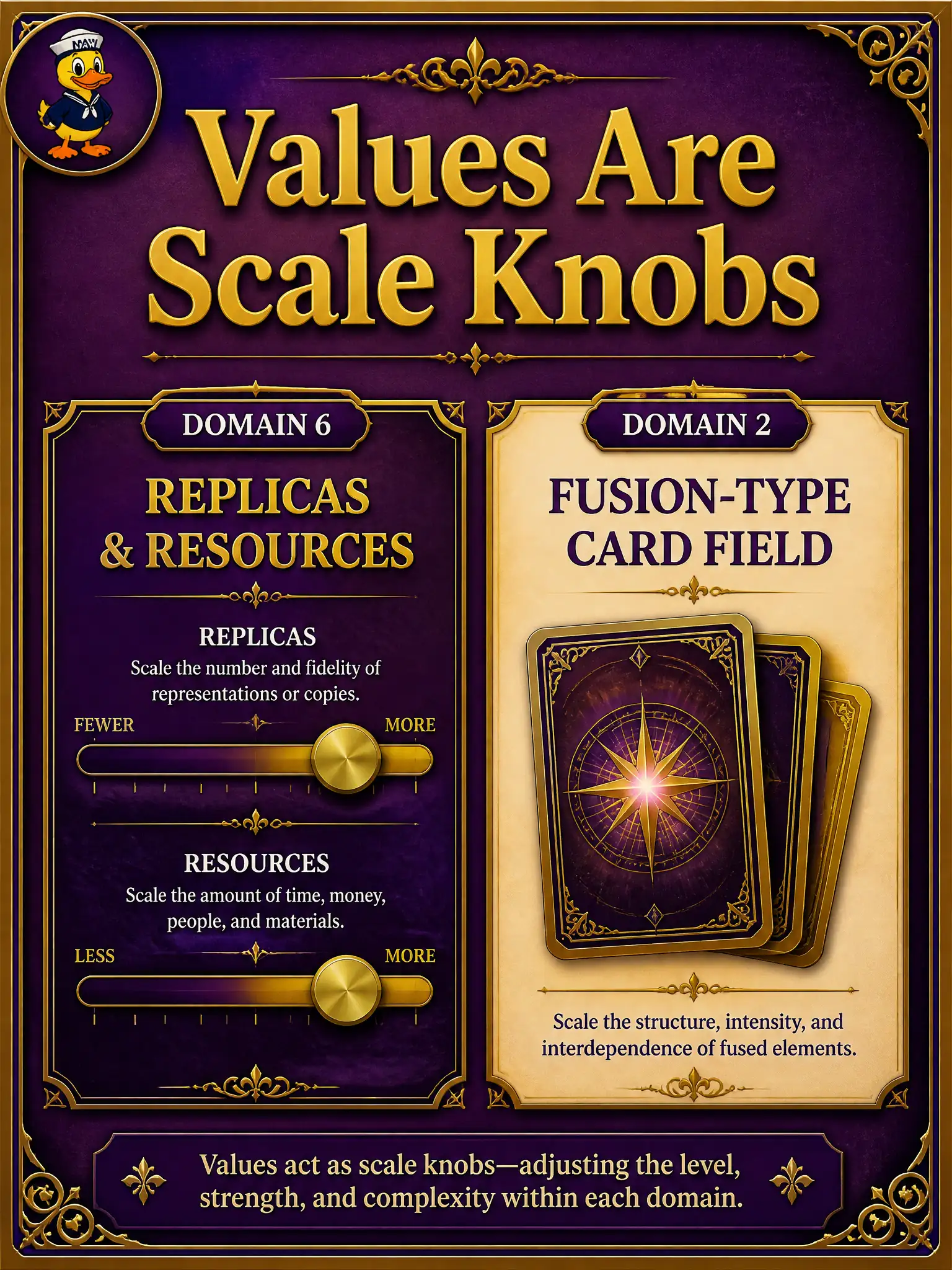
When a vestry desk intern edits replica count and resource requests and claims they “invented a new fusion type,” classify those edits as Domain 6 performance knobs (scale and resources), not as a new architecture or fusion type. Helm values tune capacity; they do not rewrite model math for the civic desk.
Calling the edits a Domain 2 fusion-type invention fails because values files do not invent fusion mathematics. Calling them Domain 1 transcript scoring fails because replicas are not vocabulary experiments by definition. Calling them Domain 7 authenticity policy fails because resource requests do not judge voice truth.
Exam caveat: replica/resource edits = Domain 6 scale. Keep fusion, transcript experiments, and authenticity in their domains.
Operational check: peer-review values diffs as performance changes; forbid “new fusion type” language in municipal change tickets for replica edits; verify metrics after apply. In municipal platform operations, record the chosen performance lever and the rejected alternatives in the change record so future on-call engineers understand the failure modes avoided for citizen services. Re-check the decision after the next traffic spike or model update to ensure the same answer still holds for the city's estate.