
A lych-gate greeter is live on the conversational Helm chart. An intern wants to “drop in” an unnamed third-party server for speed. What should the candidate do?
Select an answer to reveal the explanation.
Short Explanation
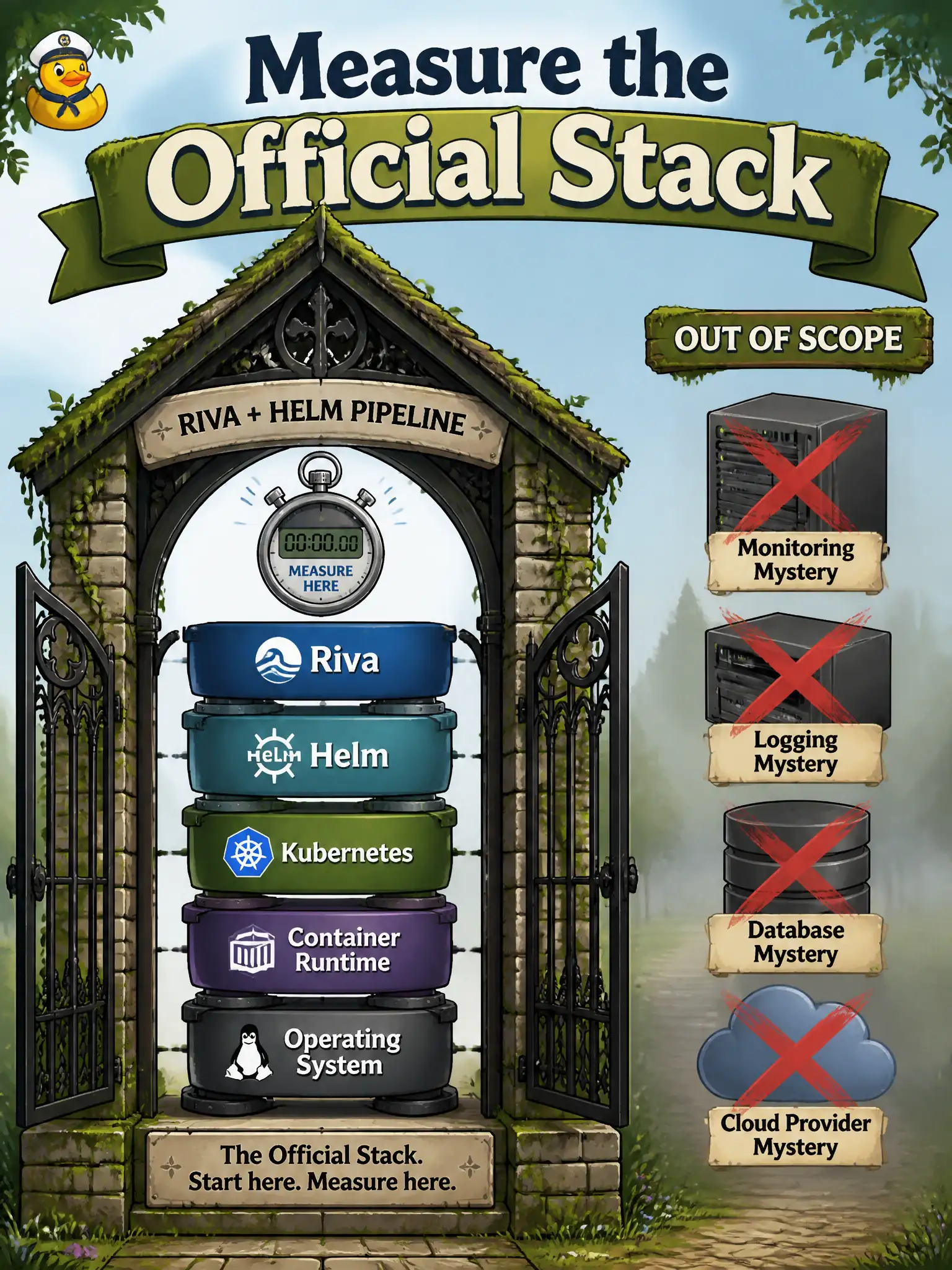
Time the official booth you actually run—Riva on Helm—before inventing a mystery server. Unnamed or out-of-scope serving brands are not the exam’s performance story.
Full Explanation
A lych-gate greeter already live on the conversational Helm chart should measure latency and throughput on the official Riva-on-Helm path and must not invent Triton, NIM, or another serving product for speed. Domain 6 associate performance stays on the named conversational stack: measure first, then scale or adapt—without dropping in unnamed third-party servers as a default “speed” move.
Inserting Triton as the named primary serving fix for every conversational booth fails because the official skill path here is Riva on Helm measurement and scale, not declaring Triton mandatory for every booth. Swapping Riva for NIM because Performance Optimization requires a new server brand fails by inventing a brand-swap requirement not justified by measurement. Skipping measurement and declaring any third-party server faster by default fails the empirical core of performance work.
Exam caveat: do not invent serving product names to look advanced. Measure the official Riva-on-Helm conversational path; change only with evidence.
Operational check: capture baseline p95 latency and turns/minute on the civic greeter; trial only approved chart changes; reject tickets that insert unnamed servers without numbers; publish before/after metrics to leadership. In municipal platform operations, record the chosen performance lever and the rejected alternatives in the change record so future on-call engineers understand the failure modes avoided for citizen services. Re-check the decision after the next traffic spike or model update to ensure the same answer still holds for the city's estate.