
A porter’s lodge must answer live, while a night job captions a week of archive speech. How should targets be assigned?
Select an answer to reveal the explanation.
Short Explanation
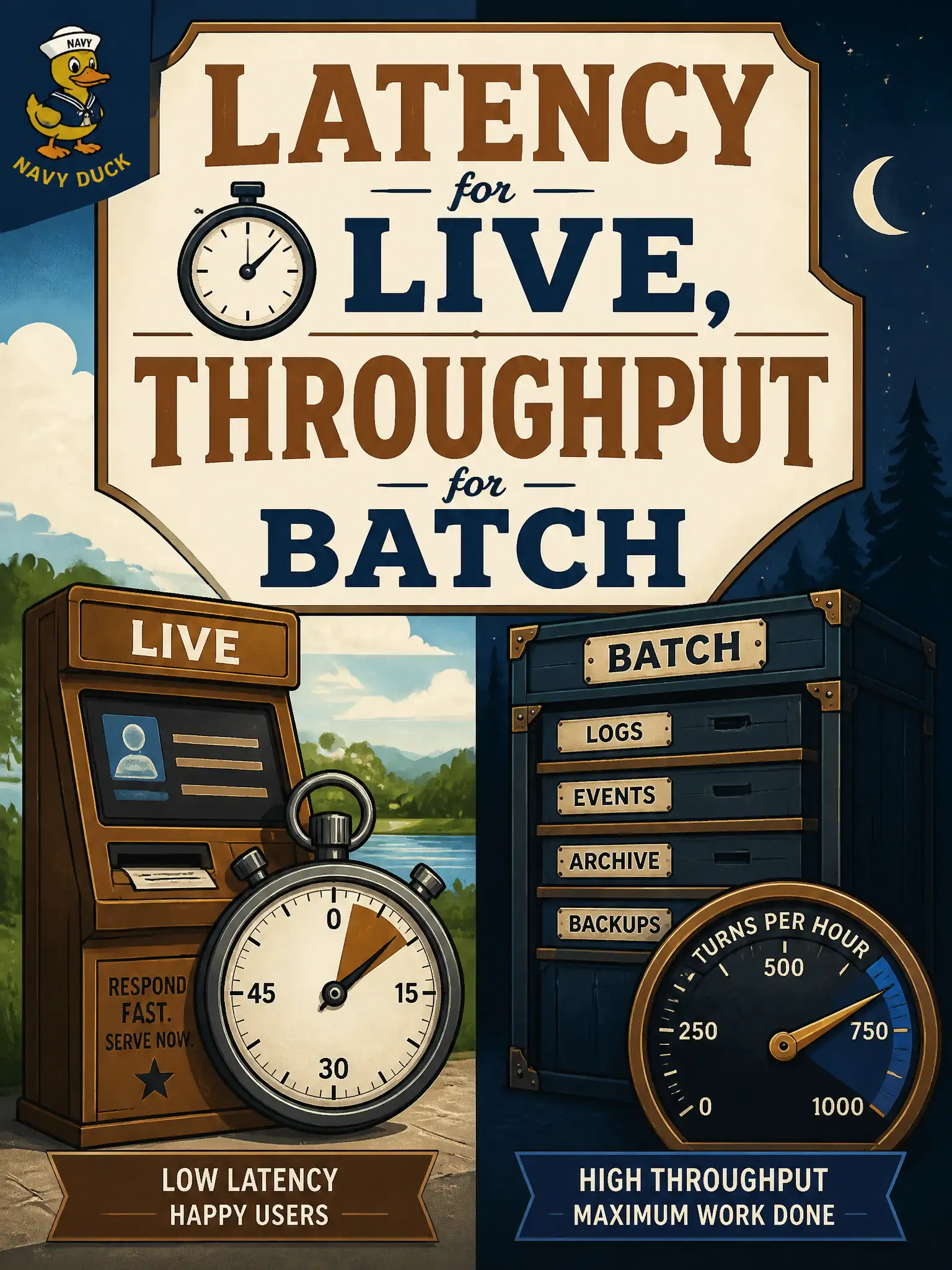
Live ears need a stopwatch; overnight piles need a finished-per-hour meter. Same shop, two different performance stories—do not mash them into one replica fairy tale.
Full Explanation
A porter’s lodge that must answer live, while a night job captions a week of archive speech, should give the live path a latency target and the archive path a throughput target. Do not force both through the same replica-count story: interactive delay and batch completion rate are different Domain 6 goals for civic speech workloads.
Forcing both jobs to share one replica-count story and one identical target type fails because live visitors care about delay while the night archive cares about captions finished per hour. Optimizing only throughput for the live lodge because visitors prefer batch captions fails the live interactive requirement. Treating archive captioning as a Domain 7 authenticity score instead of a throughput job fails domain placement.
Exam caveat: assign latency to interactive paths and throughput to batch paths. Replica stories follow the target type—they are not one-size-fits-all.
Operational check: set SLA delay for the lodge greeter; set captions/hour for the night job; size Helm replicas separately per path; review municipal dashboards that show both metrics without merging them into one meaningless number. In municipal platform operations, record the chosen performance lever and the rejected alternatives in the change record so future on-call engineers understand the failure modes avoided for citizen services. Re-check the decision after the next traffic spike or model update to ensure the same answer still holds for the city's estate.