
A refectory visitor desk survives a feast-day line only if many short turns finish each minute. What should the candidate call that rate, and where should they look first?
Select an answer to reveal the explanation.
Short Explanation
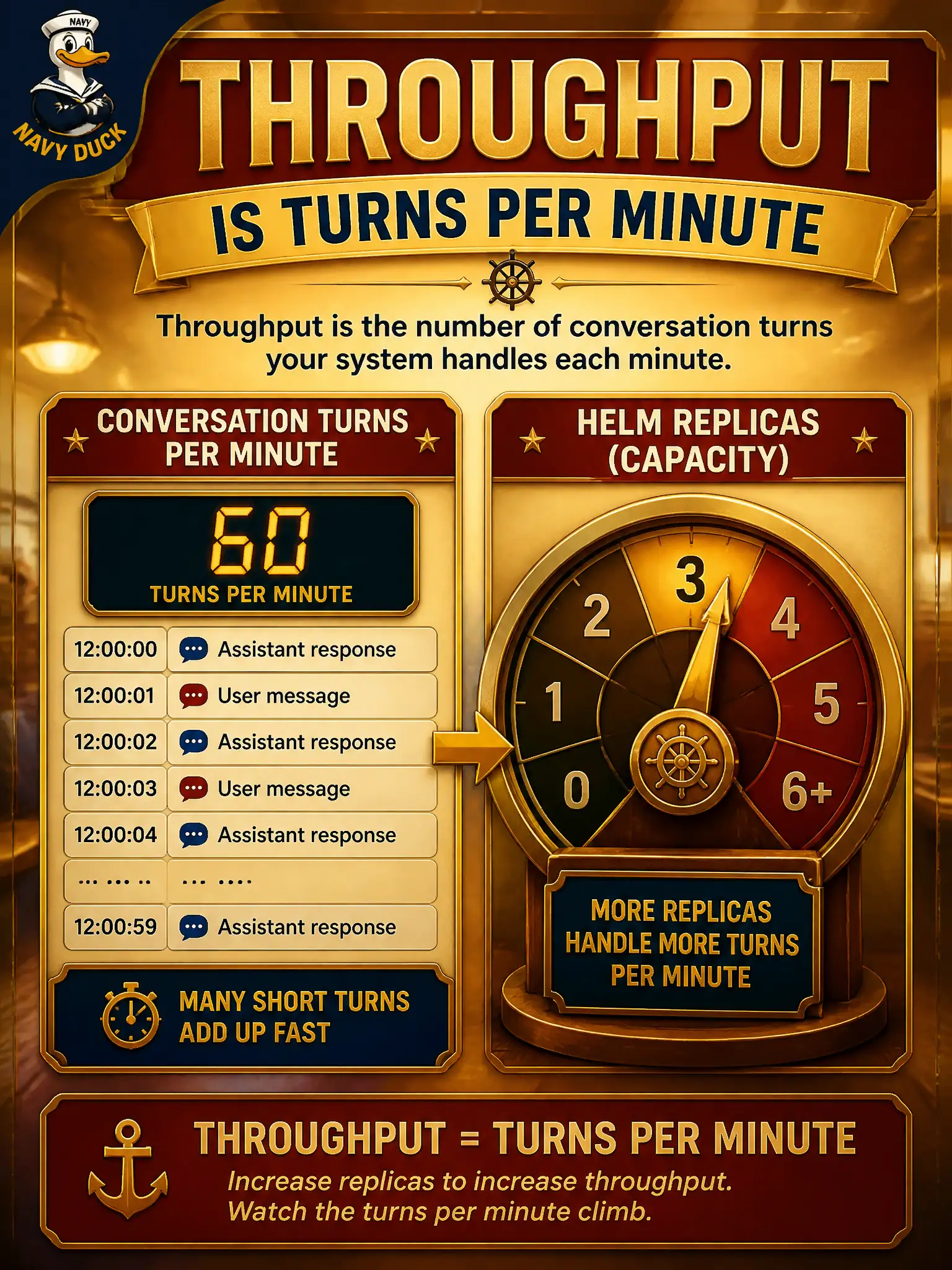
Turns finished per minute is throughput—the feast-day firehose. When models are fine, add capacity with replicas; do not rebuild the fusion recipe to clear a line.
Full Explanation
A refectory visitor desk that survives a feast-day line only if many short turns finish each minute is about throughput—completed conversational turns per unit time. Look first at Helm replica count rather than rewriting the fusion type. Scale capacity for aggregate rate when the civic line is the constraint.
Optimizing latency only—ignoring how many turns finish and only watching one visitor’s wait—fails the feast-day survival criterion, which is many completions per minute. A Domain 2 fusion rewrite as the first feast-day scale lever fails because architecture redesign is not the first lever for turn rate under load. Guidance-scale tuning because turn rate is a generation-control problem fails: conversational turn rate here is a serving/scale concern, not diffusion guidance.
Exam caveat: feast-day lines → throughput + Helm replicas. Do not lead with fusion rewrites or generation-control knobs for conversational completion rate.
Operational check: chart completed turns/minute during peak; increase conversational Helm replicas; re-measure municipal desk throughput; keep fusion changes off the table until capacity is ruled out. In municipal platform operations, record the chosen performance lever and the rejected alternatives in the change record so future on-call engineers understand the failure modes avoided for citizen services. Re-check the decision after the next traffic spike or model update to ensure the same answer still holds for the city's estate.