
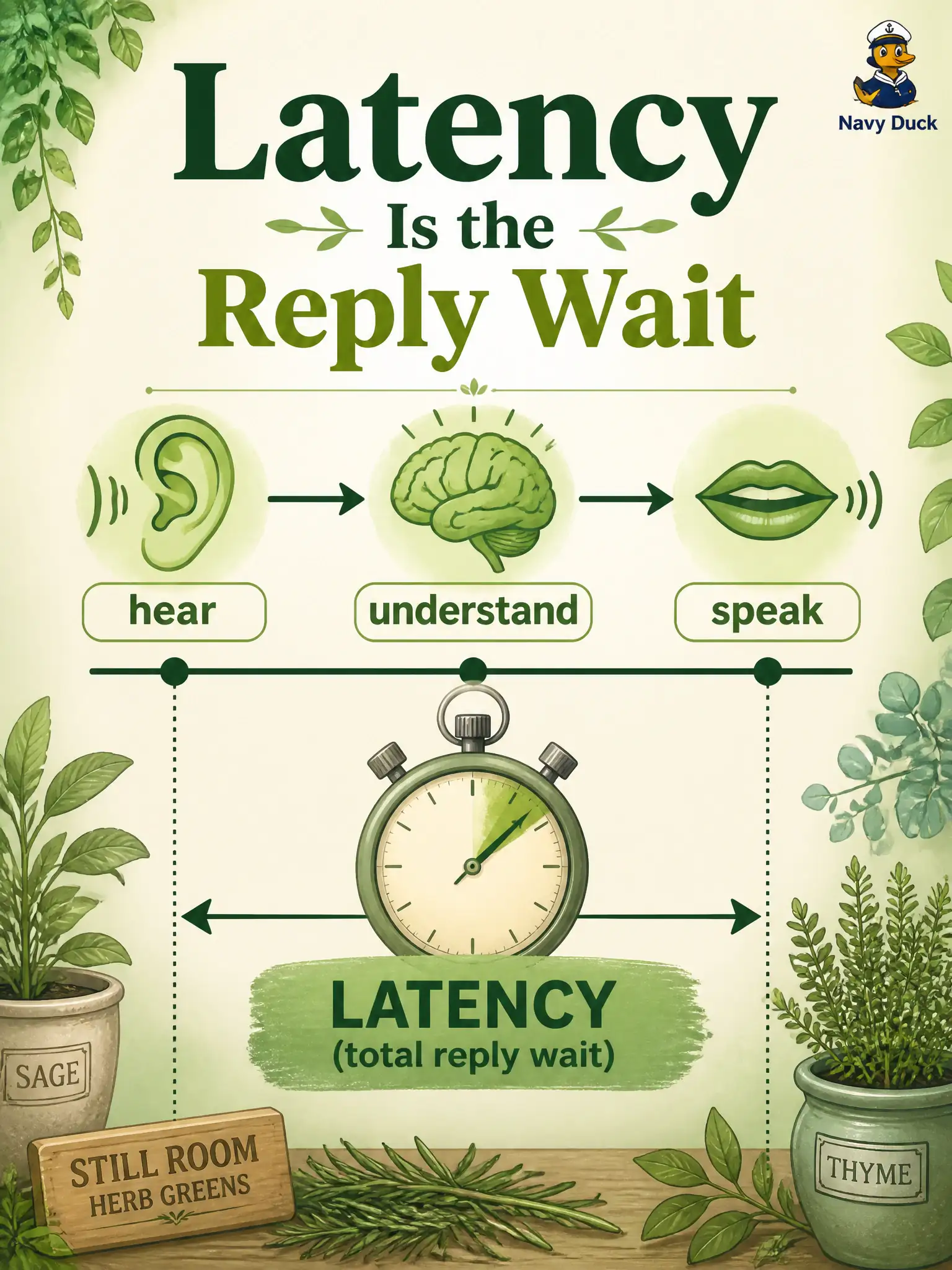
A still-room kiosk hears a visitor and should speak before they walk away. The steward times hear → understand → speak. What is that end-to-end wait called?
Select an answer to reveal the explanation.
Short Explanation
How long until the booth answers is latency—the visitor’s patience clock. That is not the same as how many chats you finish per minute, and it is not a transcript-scoring drill.
Full Explanation
Timing hear → understand → speak on a still-room kiosk until the visitor hears a reply measures latency—the conversational delay to optimize for an interactive reply. Domain 6 performance language separates that end-to-end wait from throughput (how many turns finish per minute).
Calling the wait throughput—the count of completed turns per minute across a feast-day line—fails because the steward timed one visitor’s end-to-end delay, not aggregate completion rate. Calling it a Domain 1 transcript-quality experiment fails because the measurement is timing, not vocabulary scoring. Calling for fusion type redesign because delay always means the wrong architecture fails: latency often yields to serving capacity, batching, or stage bottlenecks without fusion redesign.
Exam caveat: latency = delay for one interactive path; throughput = rate across many. Interactive booths lead with latency targets.
Operational check: instrument ASR→NLP→TTS timestamps; set a civic SLA for end-to-end reply delay; optimize the slow stage before rewriting fusion; re-measure after each change on the still-room kiosk. In municipal platform operations, record the chosen performance lever and the rejected alternatives in the change record so future on-call engineers understand the failure modes avoided for citizen services. Re-check the decision after the next traffic spike or model update to ensure the same answer still holds for the city's estate.