
A treen-turner’s vision model is already adapted and accurate on one bench. An intern opens a Kubernetes values file “to do performance.” What should today’s job stay focused on?
Select an answer to reveal the explanation.
Short Explanation
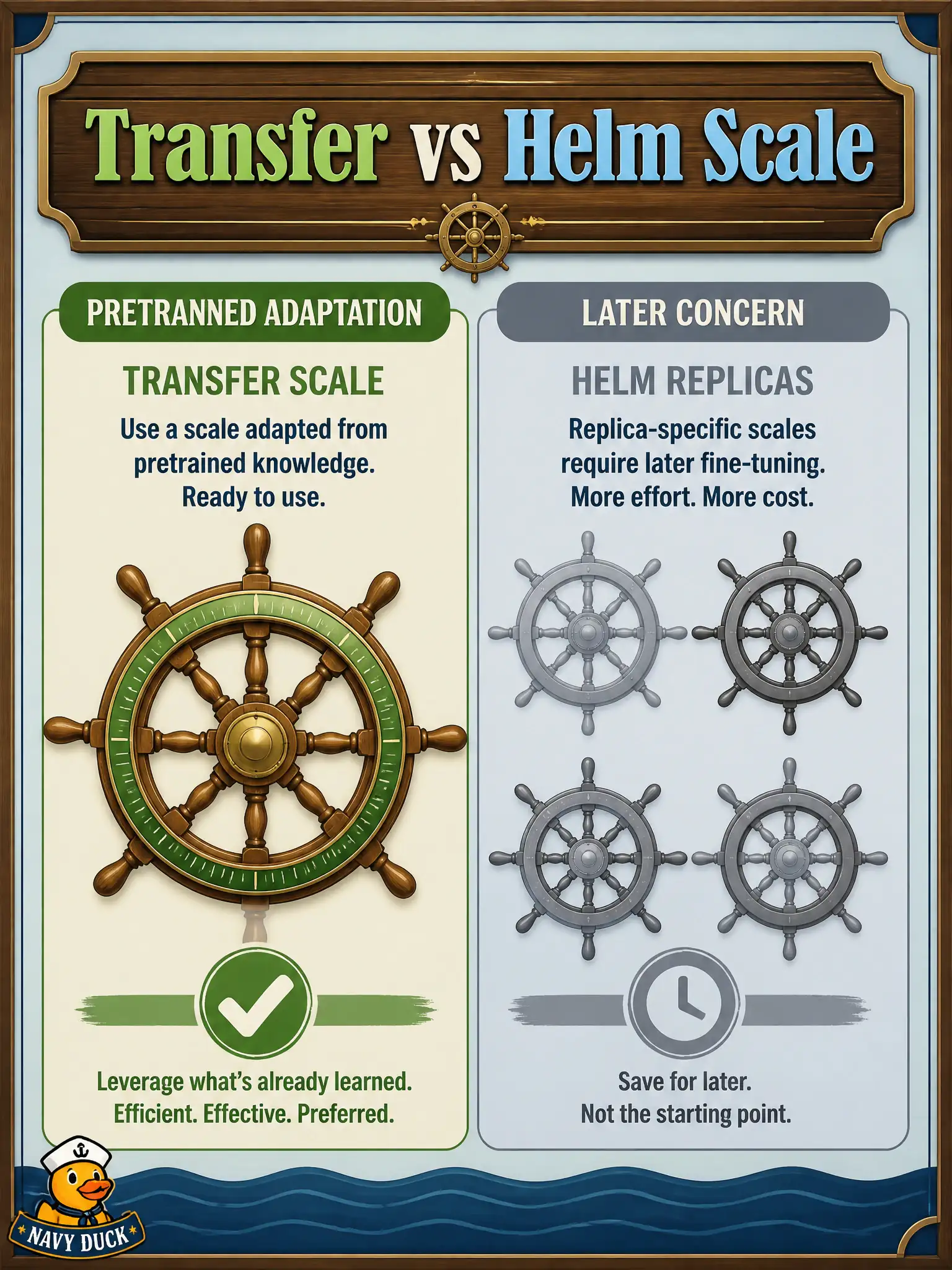
A well-adapted model and a busy cluster are different headaches. Today’s win is transfer efficiency; replica knobs wait for traffic, not for “open a chart” as a reflex.
Full Explanation
When a treen-turner’s vision model is already adapted and accurate on one bench, and an intern opens a Kubernetes values file “to do performance,” today’s job should stay on transfer-learning efficiency and leave replica scale to the Helm group when traffic—not model fit—is the issue. Do not conflate values-file edits with the transfer skill that already succeeded.
Treating editing the values file as the same skill as adapting pretrained weights fails: one is serving scale, the other is model adaptation. Discarding the adapted model because Helm charts replace transfer learning fails; charts do not obsolete a working adapted model. Rewriting the fusion type in Domain 2 before any performance talk is allowed fails by dragging architecture into an already-solved adaptation job.
Exam caveat: transfer efficiency and Helm scale are both Domain 6 topics but different levers. Use transfer for fit/compute; use Helm when load/traffic demands capacity.
Operational check: confirm holdout accuracy on the bench model; measure live queueing; only open Helm replica changes if traffic metrics—not model fit—justify them for the civic turner booth. In municipal platform operations, record the chosen performance lever and the rejected alternatives in the change record so future on-call engineers understand the failure modes avoided for citizen services. Re-check the decision after the next traffic spike or model update to ensure the same answer still holds for the city's estate.