
A parquetry floor shop has a pretrained furniture-stills model. Where should transfer be expected to help, and where should it not?
Select an answer to reveal the explanation.
Short Explanation
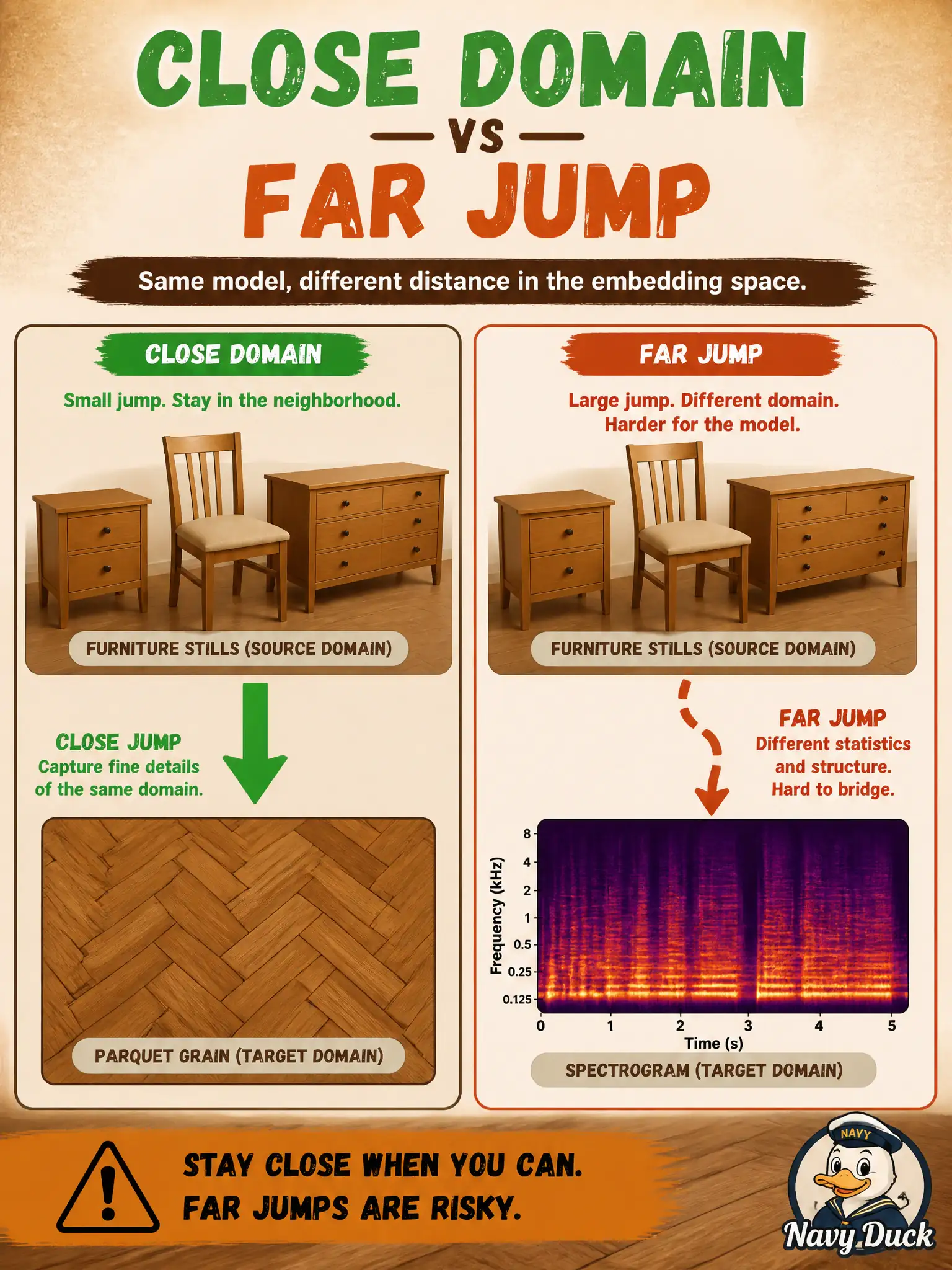
Transfer loves a short hop—furniture stills to parquet grain. A spectrogram is a different planet; do not pretend the same vision passport works there.
Full Explanation
Transfer helps when the new task is close to the pretrained domain. A parquetry floor shop with a pretrained furniture-stills model should expect help on parquet close-ups (close visual domain) but not on kettle spectrograms (far jump). Domain proximity—not magical universal transfer—guides civic performance planning.
Expecting equal help on parquet stills and kettle spectrograms because any pretrained weights transfer fails; spectrograms are a far modality/domain jump from furniture stills. Expecting help only on spectrograms because audio always needs vision pretraining first fails both direction and modality logic. Expecting no help on parquet stills because furniture and floors can never share visual features fails: close visual domains often share useful low- and mid-level cues.
Exam caveat: transfer is domain-sensitive. Near visual tasks benefit; far jumps (e.g., stills → spectrograms) need different starts.
Operational check: pilot the furniture pretrained model on parquet holdout; separately refuse forcing those weights onto kettle spectrograms; budget a speech/audio-appropriate start for spectrogram work in the civic shop’s roadmap. In municipal platform operations, record the chosen performance lever and the rejected alternatives in the change record so future on-call engineers understand the failure modes avoided for citizen services. Re-check the decision after the next traffic spike or model update to ensure the same answer still holds for the city's estate.