
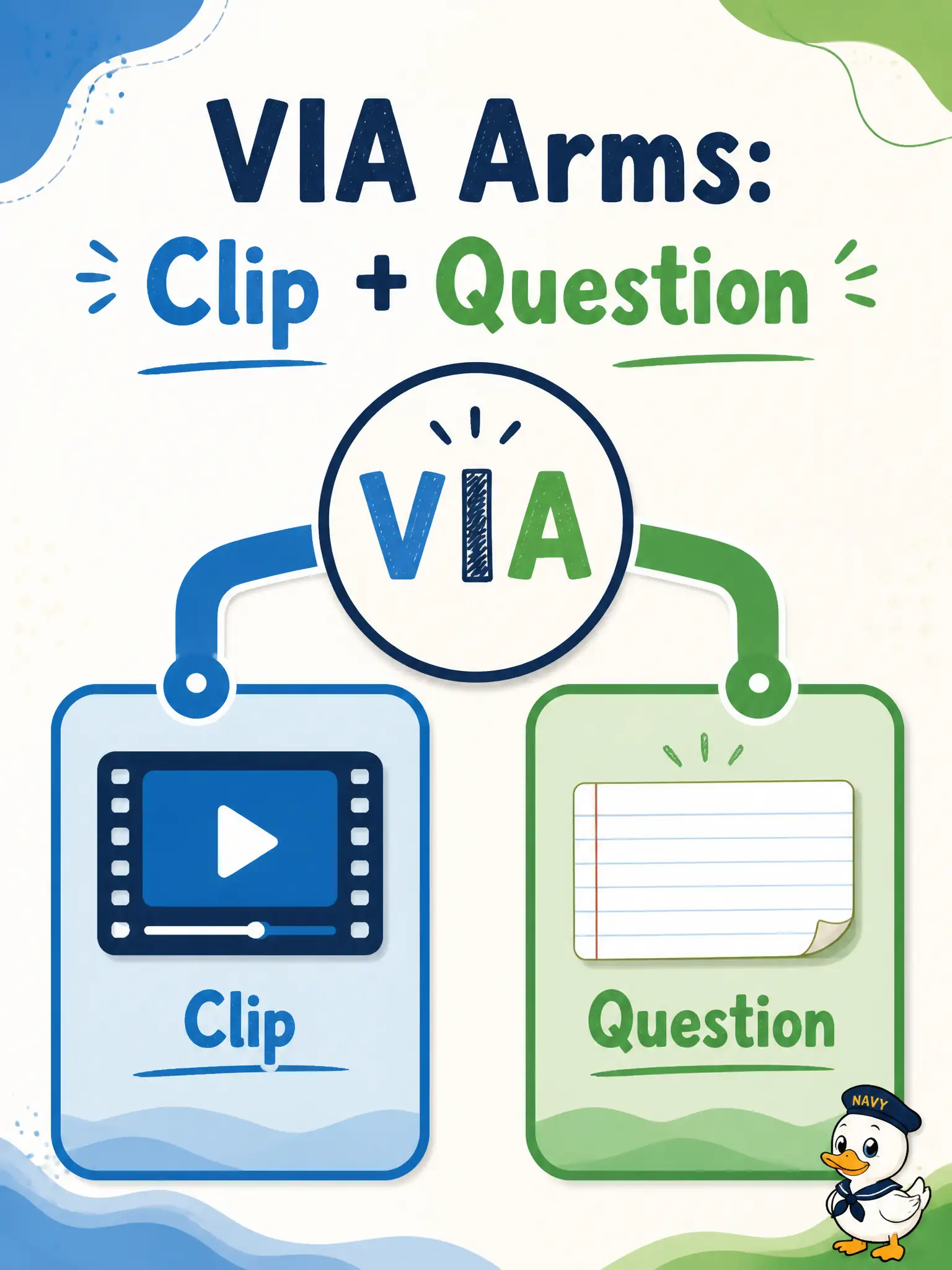
An eel-weir watch uses an NVIDIA AI Blueprint with VIA on a short clip plus a typed question. What are the data arms being orchestrated?
Select an answer to reveal the explanation.
Short Explanation
VIA situations here are clip-plus-question data pairs. Name those two files as the arms; leave VIA as initials and skip Blueprint surgery.
Full Explanation
For an NVIDIA AI Blueprint with VIA on a short clip plus a typed question, the data arms being orchestrated are the video clip and the text question, with VIA kept as initials. That answer is correct for the eel-weir watch: orchestration here is about those two modalities on the official path, not about infrastructure diagrams. Civic clip-Q&A desks must keep that modality pair explicit.
A Helm chart and a cooling diagram fail as data arms—they are packaging and facility concerns. A customized Blueprint source tree plus power-and-cooling inventory fails by mixing Domain 4/AIIO concerns into the data-arm question. Keeping only the typed question and discarding the clip fails the video+text job.
Exam caveat: VIA stays initials; clip and question are the arms. Operational check: for civic VIA rows, verify clip file and question text share an example id and that orchestration docs name those two modalities only. Keep municipal reviewers in the loop whenever modality claims, fusion labels, or agent scripts are promoted from lab notes into the production corpus used by public-facing services. Record the decision, owner, and date beside the dataset manifest. Align this choice with the agency’s published multimodal runbook so civic operators can audit why the row was accepted or rejected.