
An oyster-rake shed may later drive a face with ACE / Riva / Audio2Face. What data ask is appropriate at awareness depth?
Select an answer to reveal the explanation.
Short Explanation
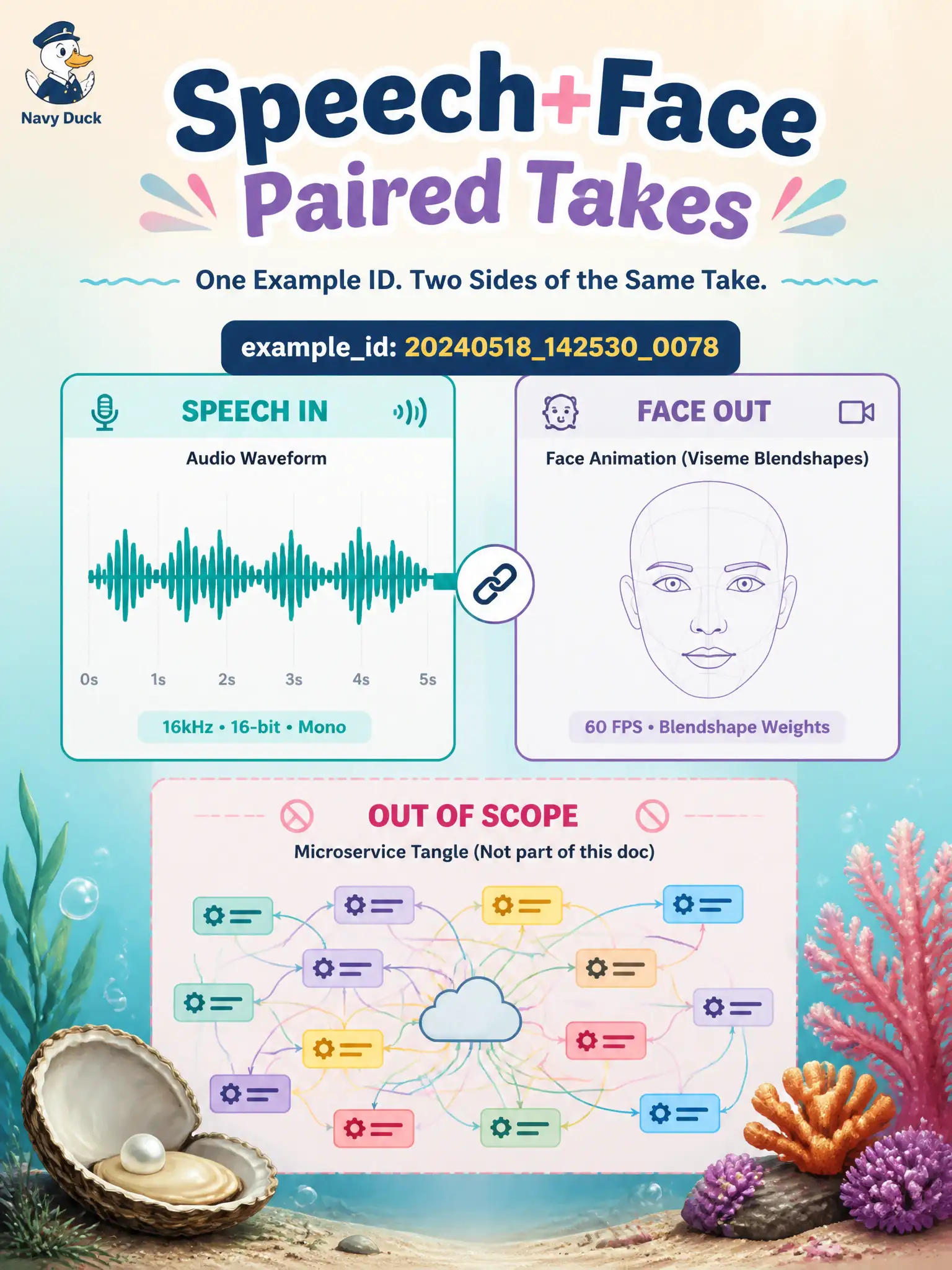
If a face will be driven from speech, you need paired speech and face recordings. Ask for those takes; don’t build the whole microservice map in this domain.
Full Explanation
At awareness depth for a possible ACE / Riva / Audio2Face avatar path, the appropriate data ask is paired speech-in and target-face takes if that avatar path is real. That ask is correct for the oyster-rake shed: avatar face drive needs paired recordings, not microservice diagrams yet and not CLIP still–caption rows alone. Civic visitor desks planning talking faces must budget those paired takes early.
Assembling every microservice wiring diagram for ACE now fails by jumping past data awareness into full assembly. Skipping paired recordings because avatar paths need no data fails the data requirement. Replacing face takes with CLIP still–caption rows only fails because image–text pairs do not supply speech-driven face supervision.
Exam caveat: awareness depth asks for the right paired takes, not full ACE wiring. Operational check: if a civic avatar path is in scope, schedule paired speech and target-face captures; otherwise explicitly defer the path. Keep municipal reviewers in the loop whenever modality claims, fusion labels, or agent scripts are promoted from lab notes into the production corpus used by public-facing services. Record the decision, owner, and date beside the dataset manifest.