
A fulling-mill intern concatenates a 4K still next to a three-word note and a 30-second clip with no shared clock or size layout. What should be flagged before calling the row early-fusion ready?
Select an answer to reveal the explanation.
Short Explanation
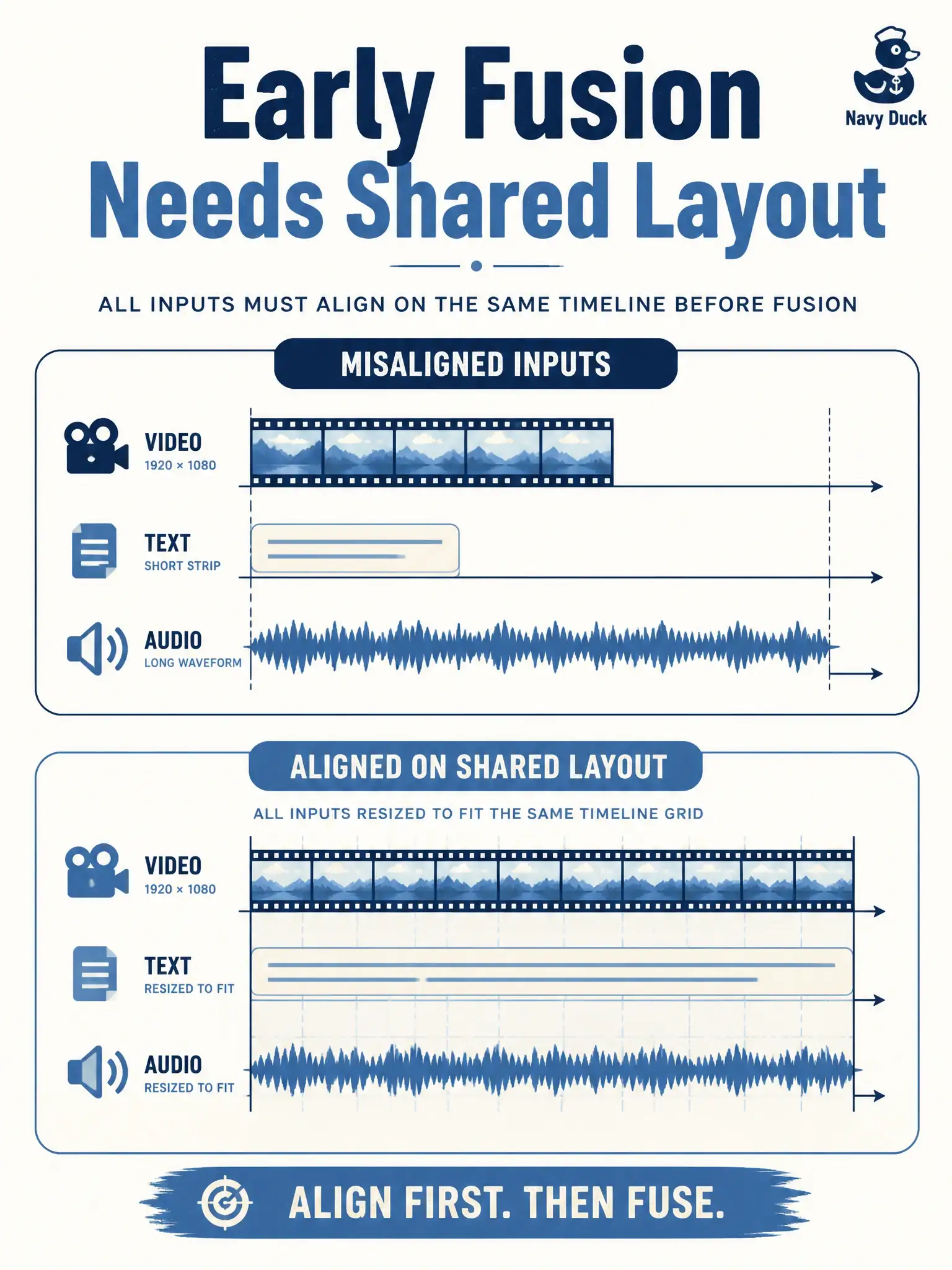
Early fusion glues arms into one layout. A huge still, a tiny note, and a long clip with no shared clock are not glue-ready yet—align size, rate, or time first.
Full Explanation
Early fusion concatenates or otherwise joins raw or low-level features, so the arms must already share a compatible size, rate, or time layout. Flagging that the fulling-mill’s 4K still, three-word note, and 30-second clip are not joinable yet is correct because mismatched layouts make an early-fusion claim premature. Civic multimodal bags—inspection stills, short notes, and clips—need the same alignment discipline before anyone asserts the row is early-fusion ready for a public model.
Saying early fusion never needs compatible layouts fails the joinability premise of early fusion. Replacing the clip with a Riva pronunciation lexicon fails by swapping in an unrelated speech asset. Requiring Domain 5 evaluation charts before any alignment fails by putting scoring ahead of making the raw civic example physically joinable.
Exam caveat: associate items often hide early-fusion unreadiness behind the mere presence of three files. Operational check: normalize civic arm shapes (resize, resample, time-align), record the layout contract, and only then label the row early-fusion ready. Keep municipal reviewers in the loop whenever modality claims, fusion labels, or agent scripts are promoted from lab notes into the production corpus used by public-facing services.