
A thimble shop loses the photo but still has the care sentence and a tiny click. Late fusion could run the remaining specialists; early concat cannot invent pixels. What should guide the next step?
Select an answer to reveal the explanation.
Short Explanation
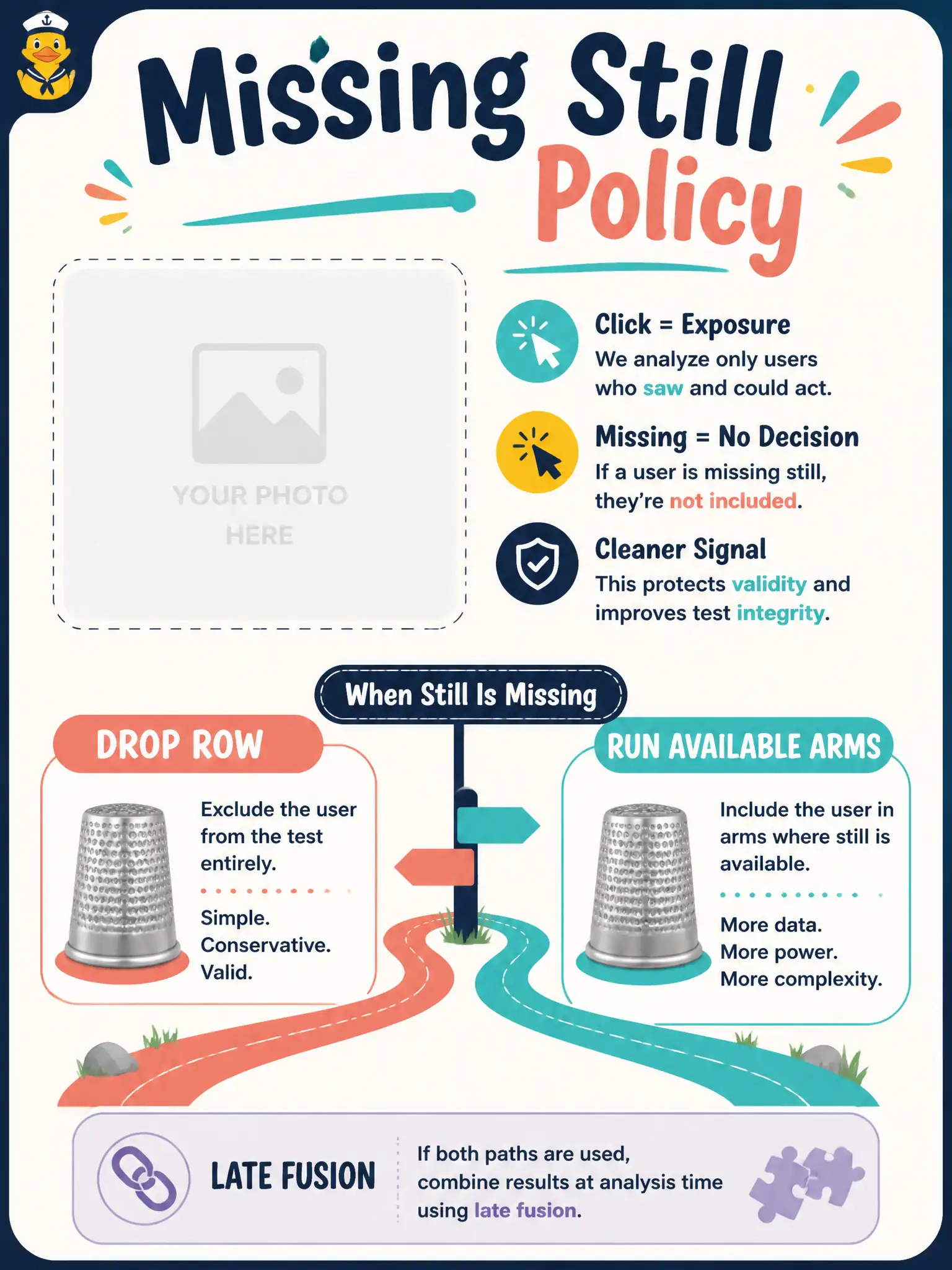
No photo means early concat has nothing to glue on that arm, while late specialists might still vote on what remains. Choose drop-or-keep based on how the example will actually be used.
Full Explanation
When a photo is lost but care sentence and click remain, late fusion might still run remaining specialists while early concat cannot invent pixels. Guiding the next step with a data policy—drop the row or run only available arms—matched to how the joined example will be used is correct. Civic pipelines should choose based on whether a two-arm public example is still valuable or whether the missing still makes the row unsafe to keep.
Always redefining early fusion so it can hallucinate a still from text alone fails as associate data practice and invents pixels the corpus never captured. Quizzing the team on Domain 2 fusion definitions before touching the files fails by substituting vocabulary drill for a policy decision. Deleting the care sentence so every incomplete row looks the same fails by destroying usable arms without improving integrity. Matching policy to intended use keeps reduced-arm civic examples from being silently treated as full three-arm training gold.
Exam caveat: fusion capability differences inform policy; they do not replace it. Operational check: for civic incomplete rows, record intended use, choose drop versus reduced-arm keep, and never claim early-fusion readiness without the missing still.