
A dry-stone yard has ASR transcripts and intent tags but no spoken-back lines for the kiosk. What does that mean for the conversational pipeline corpus?
Select an answer to reveal the explanation.
Short Explanation
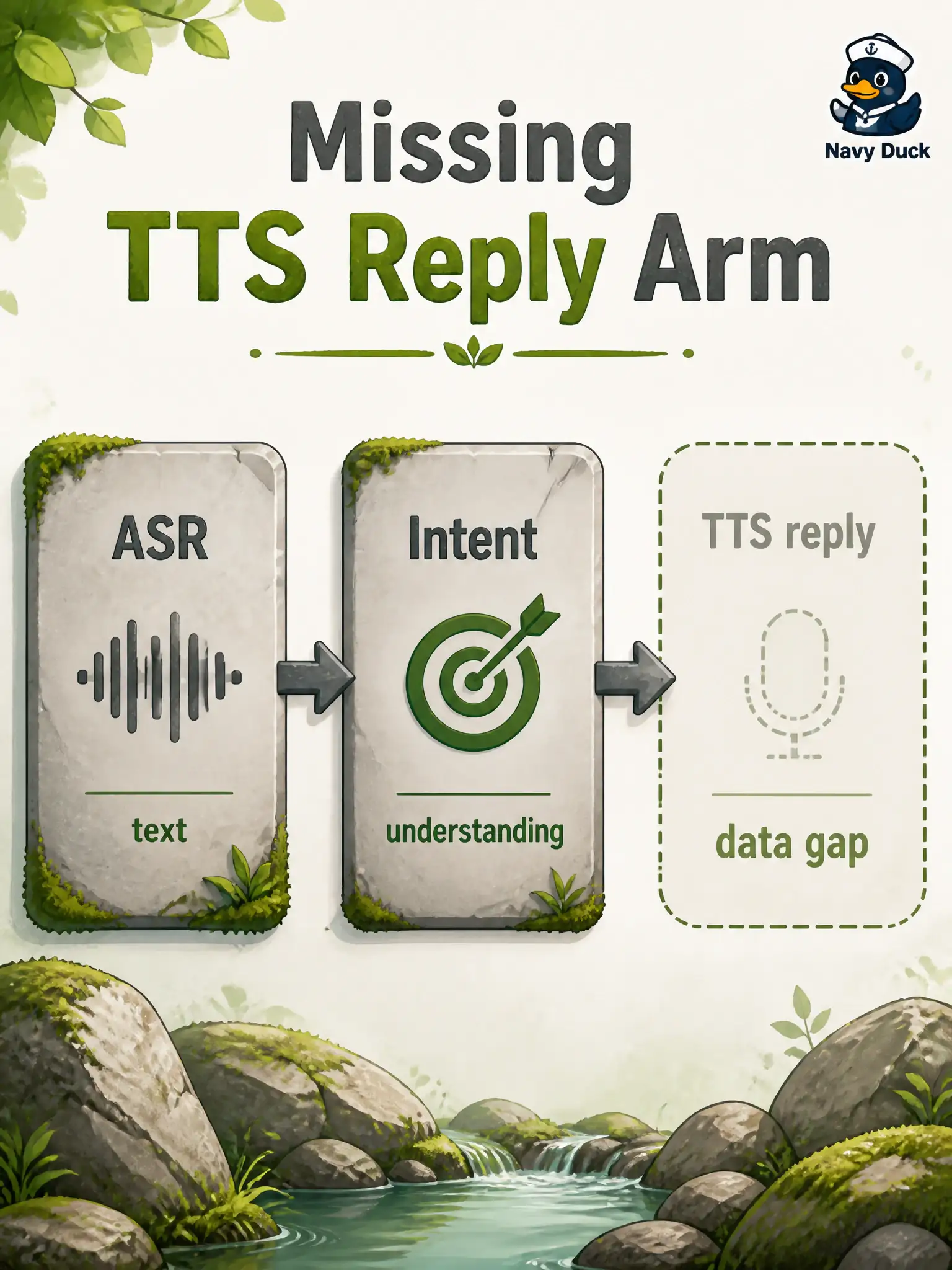
Hearing and understanding without a scripted answer leaves the talker silent. The gap is on the TTS speak arm—write reply lines, don’t redesign fusion to dodge them.
Full Explanation
If a dry-stone yard has ASR transcripts and intent tags but no spoken-back lines for the kiosk, the TTS arm is a missing modality in the pipeline corpus and must be filled with reply scripts. Fusion redesign from early to late is not the first fix for missing reply text. Intent tags alone do not drive TTS without speakable replies. CLIP stills of stone walls cannot substitute for the speak arm. Exam caveat: missing reply scripts = missing TTS data arm. Operational check: author spoken-reply scripts for each civic intent, align them to turn ids, and re-validate that ASR, NLP, and TTS arms are all present. Backfill dry-stone reply scripts for every intent before claiming TTS readiness. Municipal operators closing q146 should file evidence that the correct concept was implemented on the civic assets named in the stem, that each rejected alternative fails for a distinct conceptual reason, and that an operational check appears in logs or dataset cards. Keeping that evidence with the run packet prevents silent drift back to distractor thinking during later maintenance. Municipal operators closing q146 should file evidence that the correct concept was implemented on the civic assets named in the stem, that each rejected alternative fails for a distinct conceptual reason, and that an operational check appears in logs or dataset cards. Keeping that evidence with the run packet prevents silent drift back to distractor thinking during later maintenance. Reference q146 in the evidence filename for traceability.