
A millstone loft wants NLP to route “dress the stone” versus “buy flour,” but someone starts tagging hopper photographs instead. Where should the intent annotation go?
Select an answer to reveal the explanation.
Short Explanation
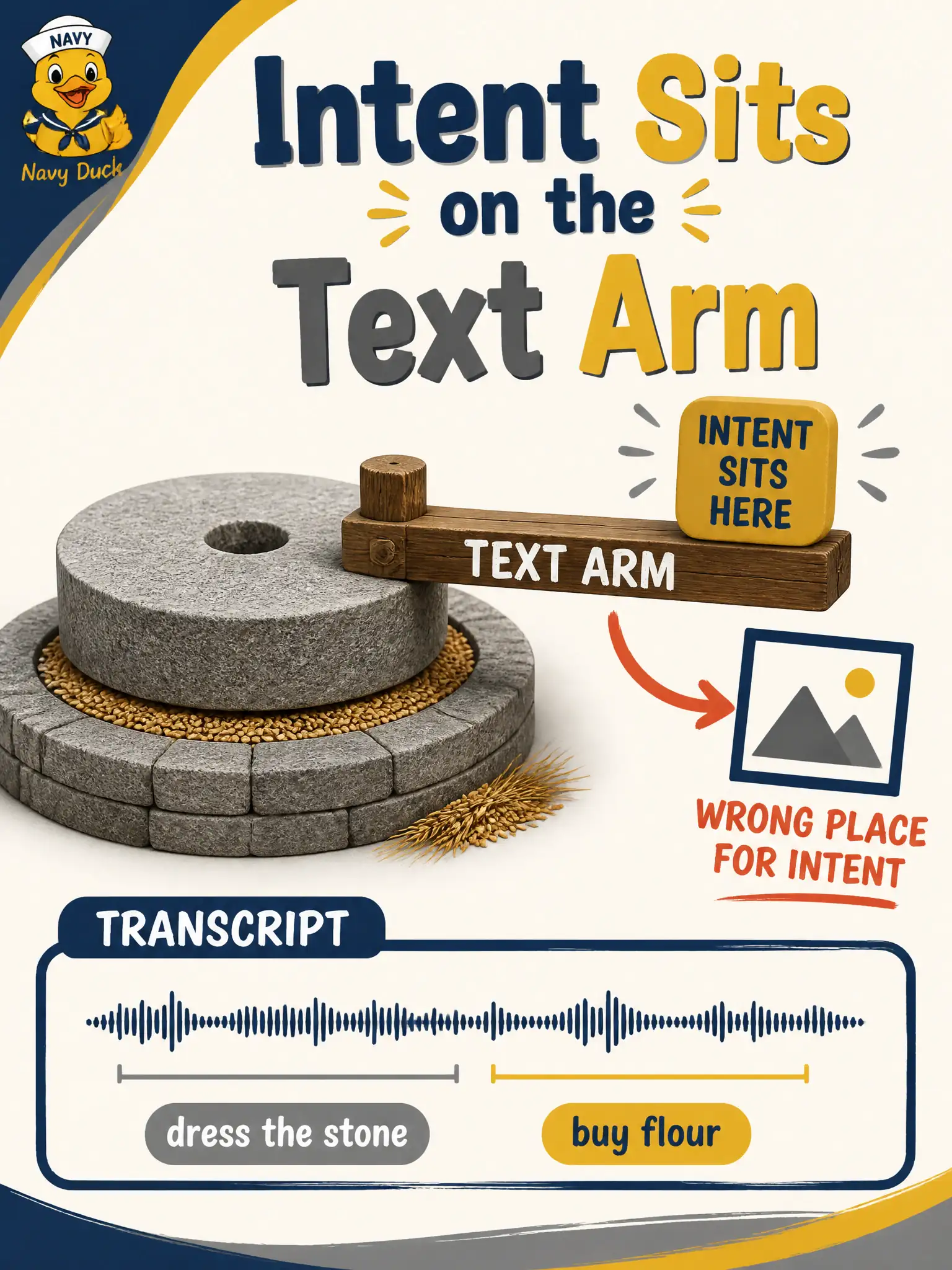
Intent lives on the words, not on a random photo of the hopper. Tag the transcript (or gold text) so NLP can route the request.
Full Explanation
Intent annotation for routing “dress the stone” versus “buy flour” belongs on the recognized or gold transcript text that forms the NLP data arm—not on hopper photographs as if intent were only a vision-labeling task. Diffusion noise schedules do not replace NLP routing labels. Kubernetes replica counts for the Riva chart are deployment settings, not intent tags. Exam caveat: intent lives on the text/NLP arm of the conversational corpus. Operational check: tag intents on millstone transcripts (gold or ASR), keep stills out of the intent table unless a separate vision task is explicitly scoped, and verify routing uses those text labels. Annotate millstone intents on transcript text fields only in the NLP table. Municipal operators closing q147 should file evidence that the correct concept was implemented on the civic assets named in the stem, that each rejected alternative fails for a distinct conceptual reason, and that an operational check appears in logs or dataset cards. Keeping that evidence with the run packet prevents silent drift back to distractor thinking during later maintenance. Municipal operators closing q147 should file evidence that the correct concept was implemented on the civic assets named in the stem, that each rejected alternative fails for a distinct conceptual reason, and that an operational check appears in logs or dataset cards. Keeping that evidence with the run packet prevents silent drift back to distractor thinking during later maintenance. Reference q147 in the evidence filename for traceability.