
A sign-painter kiosk must store what was heard, what was meant, and what should be spoken back for each customer turn. How should that record be treated as conversational pipeline data?
Select an answer to reveal the explanation.
Short Explanation
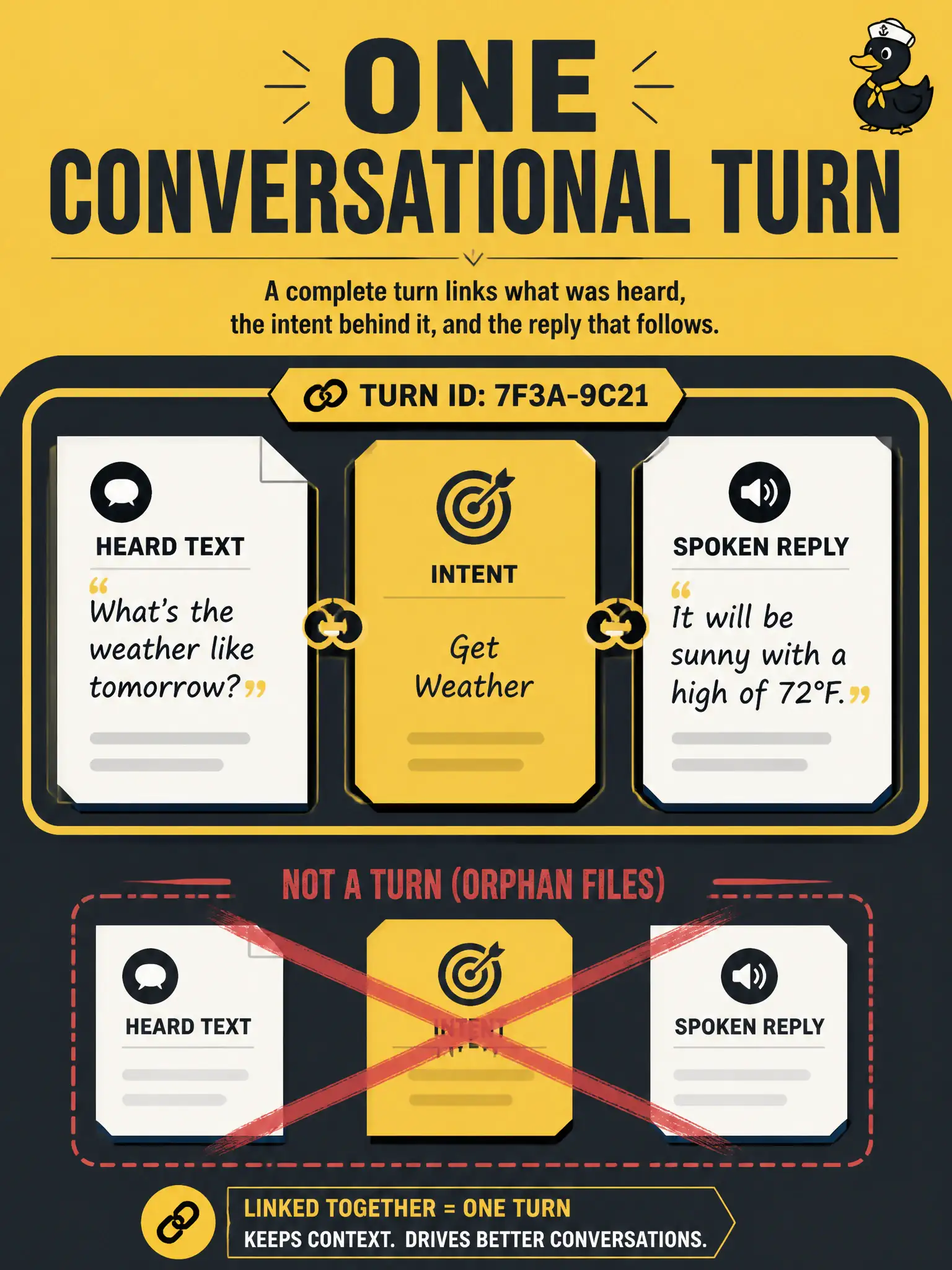
Picture one recipe card with three lines that must stay together: what you heard, what it meant, and what you say back. Split them into orphan files and the conversational pipeline loses the example.
Full Explanation
For a sign-painter kiosk conversational pipeline, the data unit is one aligned triple: heard text, intent, and spoken-reply script for the same customer turn. Three unrelated files with no shared turn identity break the pipeline join. A stills-only album of finished signs is not conversational turn data. A diffusion guidance-scale experiment is a generation control, not a conversational data unit. Exam caveat: conversational corpora align ASR/NLP/TTS arms per turn. Operational check: assign a turn id linking recognized text, intent label, and reply script; refuse folders that scatter those arms without a join key. Schema-validate sign-painter turns as heard/intent/reply triples under one turn id. Municipal operators closing q145 should file evidence that the correct concept was implemented on the civic assets named in the stem, that each rejected alternative fails for a distinct conceptual reason, and that an operational check appears in logs or dataset cards. Keeping that evidence with the run packet prevents silent drift back to distractor thinking during later maintenance. Municipal operators closing q145 should file evidence that the correct concept was implemented on the civic assets named in the stem, that each rejected alternative fails for a distinct conceptual reason, and that an operational check appears in logs or dataset cards. Keeping that evidence with the run packet prevents silent drift back to distractor thinking during later maintenance. Reference q145 in the evidence filename for traceability.