
A paper-marbling shop may later add a talking face using ACE with Riva and Audio2Face from official additional materials. What is the smart Domain 3 move for today’s audio–transcript pairs?
Select an answer to reveal the explanation.
Short Explanation
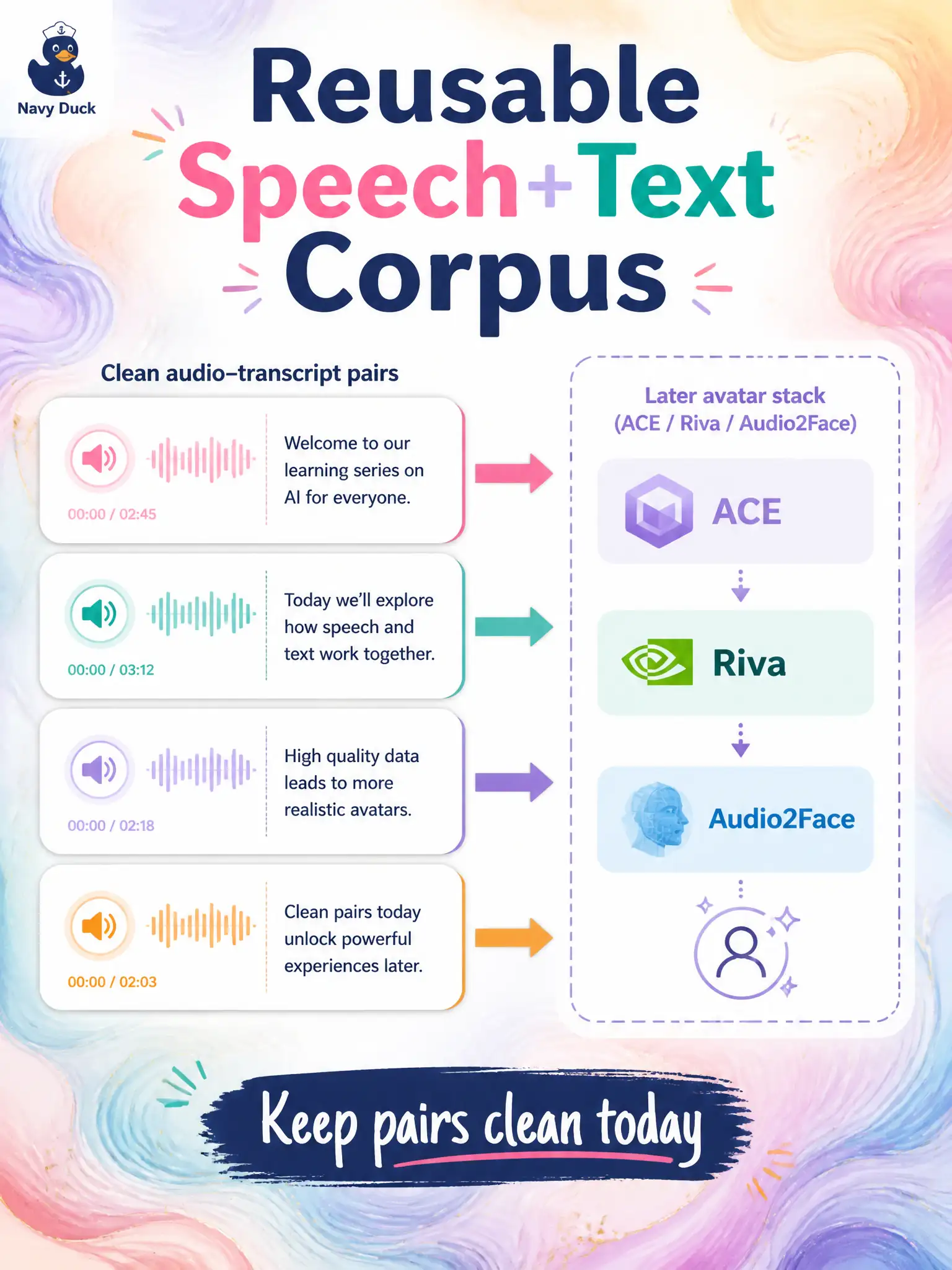
Today’s clean speech-and-text pairs are reusable building blocks. If a talking face comes later, you already have aligned audio the stack can build on—don’t trash the transcripts.
Full Explanation
If a paper-marbling shop may later add a talking face using ACE with Riva and Audio2Face from official additional materials, today’s smart Domain 3 move is to keep audio–transcript pairs clean and well aligned so they can be reused later as speech-plus-text input for that avatar path. Discarding transcripts because avatars “only need unlabeled noise” destroys reusable speech data. Rewriting pairs as Domain 7 authenticity certificates is the wrong domain detour. Replacing the corpus with a Domain 4 assemble step that invents face meshes without audio skips the speech foundation. Exam caveat: clean ASR pairs remain valuable when avatar stacks are added later. Operational check: validate alignment quality now, archive the civic pairs with stable ids, and note them as reusable inputs for a future ACE/Riva/Audio2Face path. Retain marbling audio–transcript ids for later ACE/Audio2Face reuse. Keep marbling audio–transcript pairs clean for later ACE/Riva/Audio2Face avatar reuse. Clean aligned pairs today are the cheapest input to tomorrow’s ACE/Riva/Audio2Face visitor avatar path. Close q144 with a municipal evidence note that records why the correct mechanism fits this civic multimodal scenario, why each of the three distractors fails by a distinct concept, and which operational check was observed in logs or dataset cards before promotion. File that note with the run packet so later maintenance cannot silently revive a rejected framing.