
A clay-pipe kiln writes how specialty terms such as “sagger” and “waster” should be pronounced for NVIDIA Riva ASR. How should that pronunciation lexicon be classified?
Select an answer to reveal the explanation.
Short Explanation
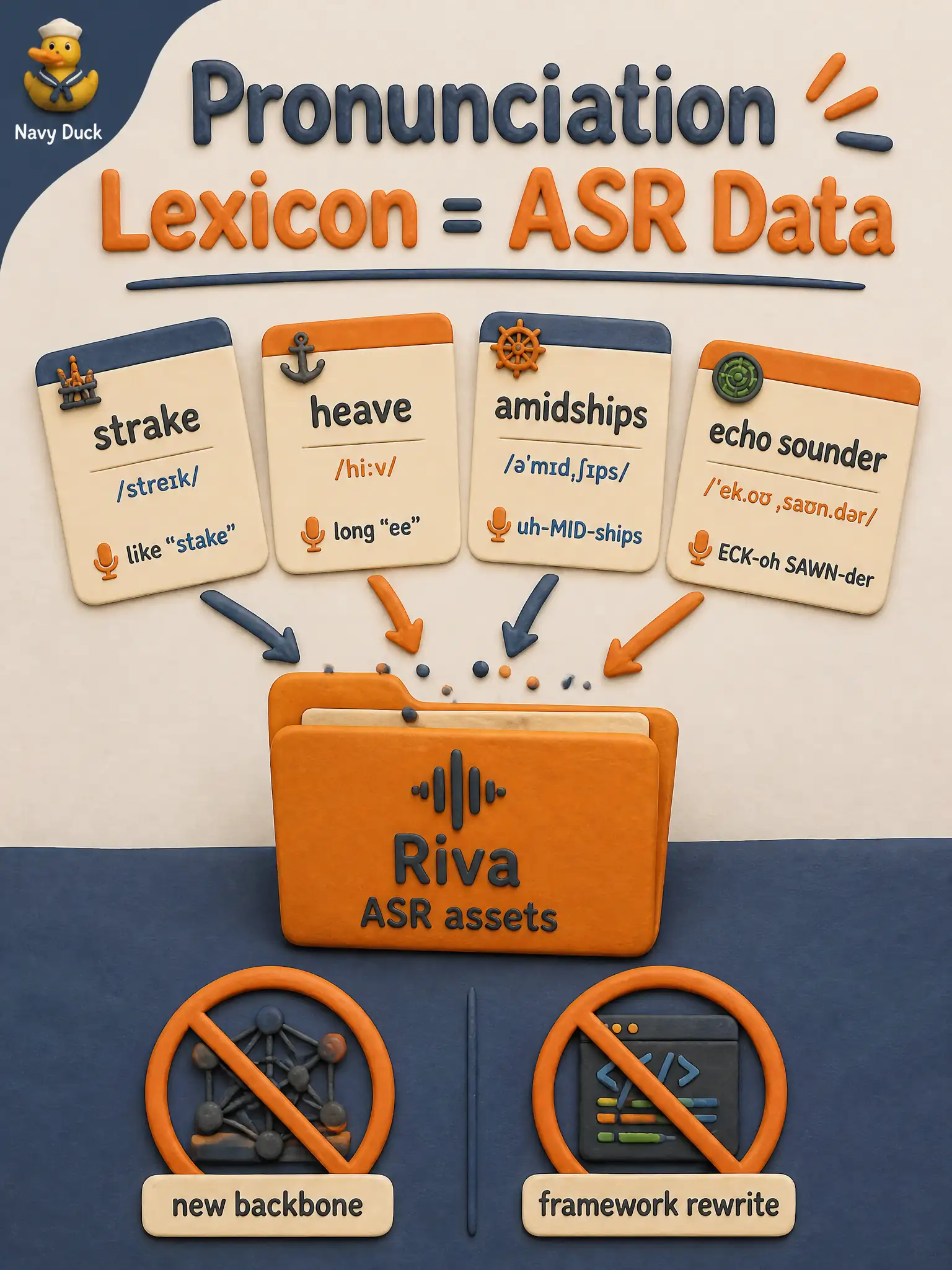
A pronunciation list is a cheat sheet for how words should sound—not a new network and not a coding framework. File it with the ASR customization data.
Full Explanation
A pronunciation lexicon that writes how specialty terms such as “sagger” and “waster” should be pronounced for NVIDIA Riva ASR is customization data that belongs with the Riva ASR data assets. It is not a Domain 2 neural backbone replacing the ASR model. It is not a Domain 4 framework project that must be rebuilt in a new language runtime. It is not a CLIP stills catalog for kiln photography. Exam caveat: lexicons sit with ASR customization assets, not architecture or vision catalogs. Operational check: store the clay-pipe pronunciation lexicon beside transcripts and vocabulary lists in the ASR data pack; version it with the customization release. Commit the sagger/waster pronunciation lexicon beside ASR transcripts in the data pack. Pronunciation lexicons for sagger/waster sit with Riva ASR data assets, not as backbones or CLIP catalogs. Treat pronunciation lexicons as ASR assets versioned with transcripts, never as Domain 2 backbones or CLIP catalogs. Close q143 with a municipal evidence note that records why the correct mechanism fits this civic multimodal scenario, why each of the three distractors fails by a distinct concept, and which operational check was observed in logs or dataset cards before promotion. File that note with the run packet so later maintenance cannot silently revive a rejected framing.