
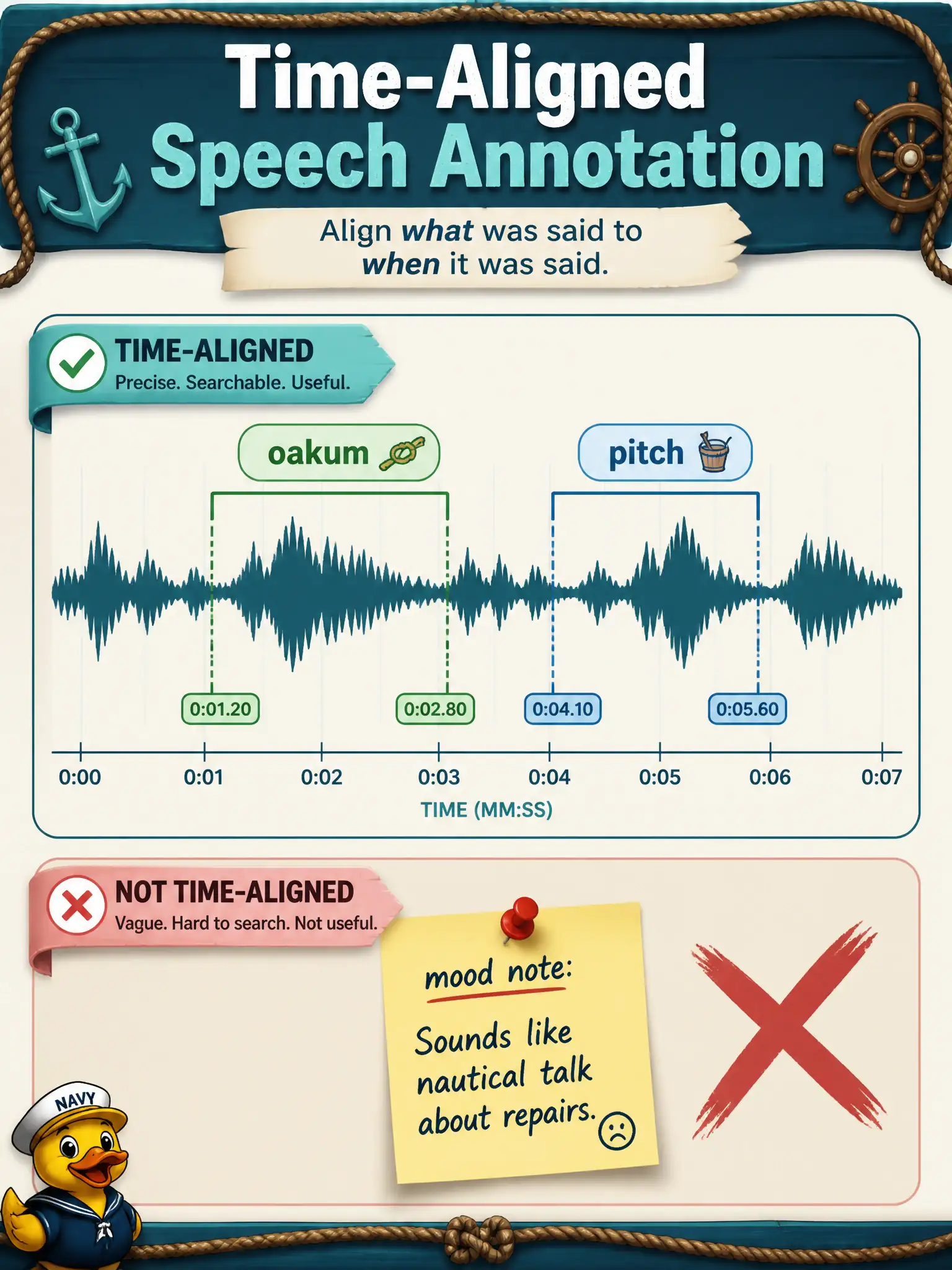
A ship-caulker records a long take that includes the phrases “oakum, then pitch.” One annotator marks when each phrase starts; another writes a single mood note on the whole file. Which annotation helps the speech recognizer learn from the clip?
Select an answer to reveal the explanation.
Short Explanation
Imagine sheet music with bar lines versus a sticky note that just says “energetic.” The recognizer needs words pinned to time, not a floating mood remark.
Full Explanation
On a long ship-caulker take containing phrases such as “oakum, then pitch,” time-aligned words that mark when each spoken phrase occurs help the speech recognizer learn from the clip. An unanchored mood note covering the entire recording lacks timing. A gallery caption of the caulking iron with no timestamps is not speech alignment. A Kubernetes scale setting is deployment config, not transcript timing. Exam caveat: time alignment is the annotation that ties words to audio positions. Operational check: mark phrase start (and end) times on the civic recording, bind them to transcript tokens, and verify a training example uses those alignments rather than a single mood blurb. Require time stamps on oakum/pitch phrases in the caulker annotation UI. Time-aligned words teach recognizers when “oakum, then pitch” occurs; mood notes and Helm scales do not. Prefer time-aligned word marks over shift-long mood notes whenever caulker audio will supervise a recognizer. Close q140 with a municipal evidence note that records why the correct mechanism fits this civic multimodal scenario, why each of the three distractors fails by a distinct concept, and which operational check was observed in logs or dataset cards before promotion. File that note with the run packet so later maintenance cannot silently revive a rejected framing.