
A weathervane loft wants NVIDIA Riva TTS to read care notices aloud. A volunteer points at a pile of vane photographs as “the TTS data.” What should the team request instead?
Select an answer to reveal the explanation.
Short Explanation
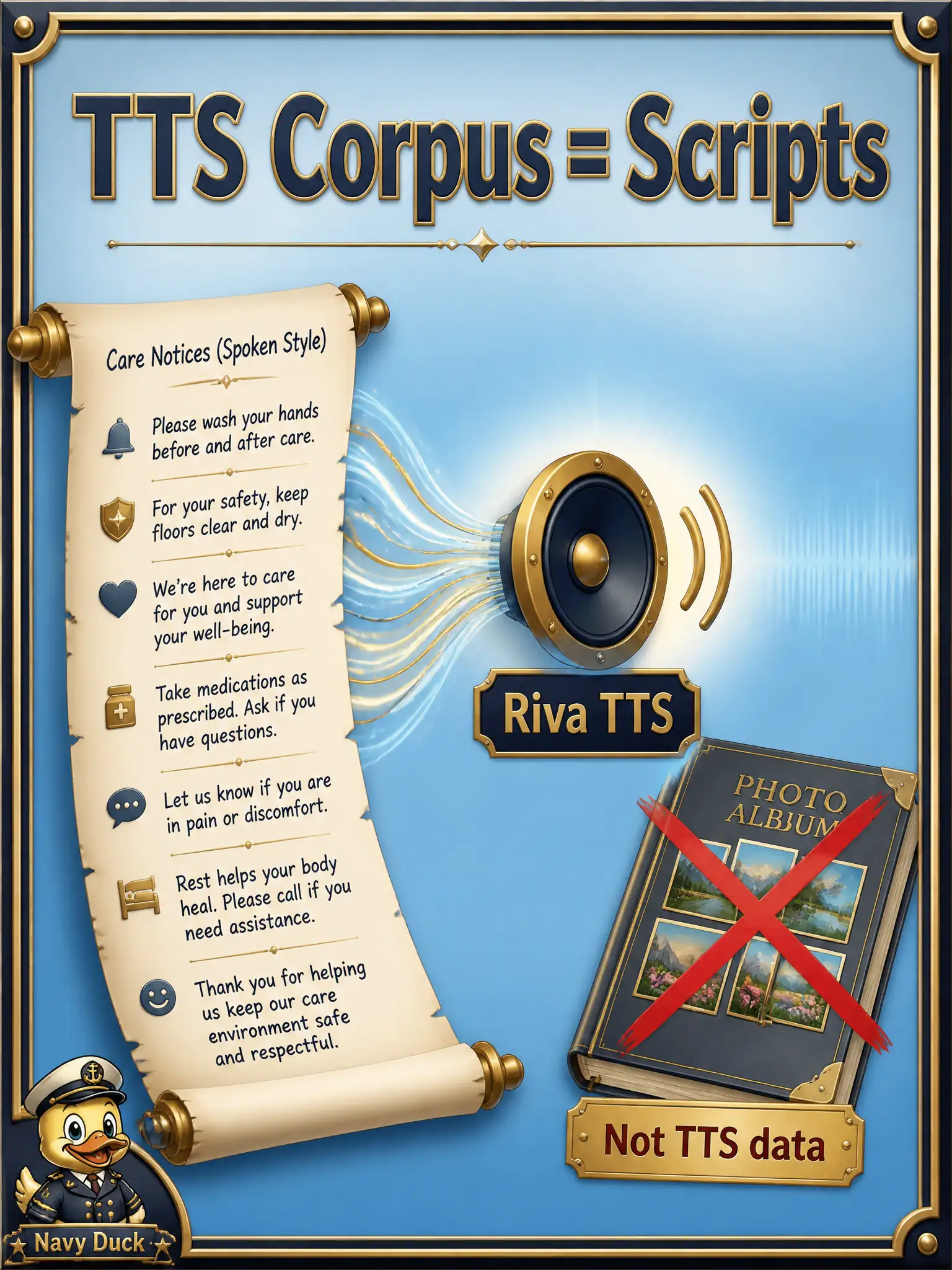
TTS is a reader, not a photo gallery. Feed it the words you want spoken—and voice samples if you care how they sound—not a stack of vane pictures.
Full Explanation
For NVIDIA Riva TTS to read weathervane care notices aloud, the team needs spoken-style script lines (and optional target-voice samples), not a stills album of vanes. More high-resolution stills do not primarily train TTS. A CLIP English–image pair set does not replace spoken-style scripts for synthesis. Late-fusion redesign so photos replace reply text confuses fusion architecture with TTS data needs. Exam caveat: TTS data is text (and optional voice samples), not photo galleries. Operational check: gather care-notice scripts in the speaking style required at the loft; optionally collect target-voice samples; refuse photo albums labeled as TTS corpora. Collect weathervane TTS scripts in speaking style; store photos in a separate vision bucket. TTS needs spoken-style weathervane scripts (and optional voice samples), not vane photograph albums. TTS data reviews should open the script folder, not the vane photo album, before approving Riva synthesis customization. Close q139 with a municipal evidence note that records why the correct mechanism fits this civic multimodal scenario, why each of the three distractors fails by a distinct concept, and which operational check was observed in logs or dataset cards before promotion. File that note with the run packet so later maintenance cannot silently revive a rejected framing.