
An automatic check says a kiln-tile render matches the card, but three potters say the pool is the wrong green. How should the associate treat those readouts?
Select an answer to reveal the explanation.
Short Explanation
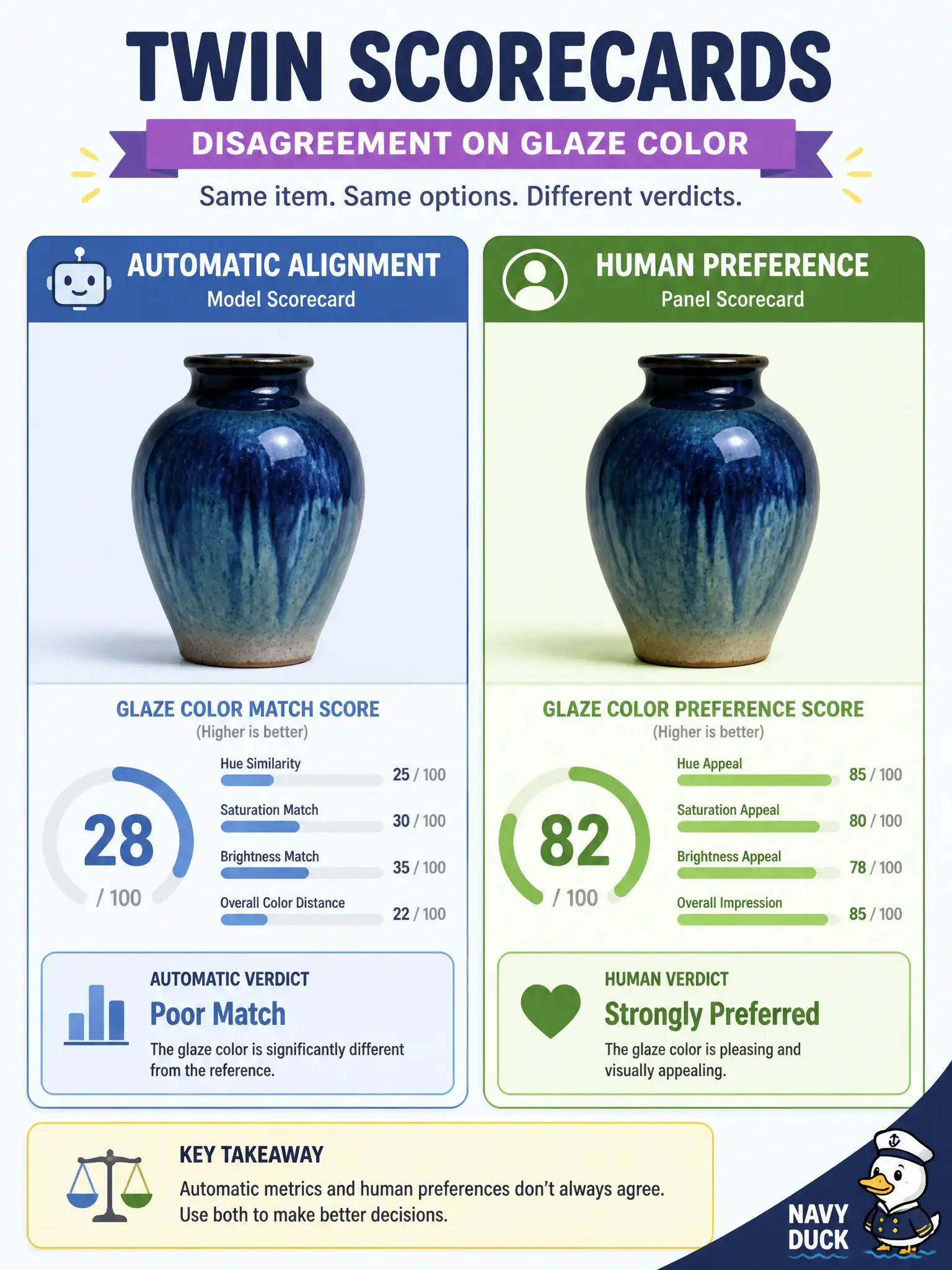
The robot grader and the potters can split. Log both—automatic alignment and human preference—as separate readouts when they disagree on the green.
Full Explanation
When an automatic check says a kiln-tile render matches the card but three potters say the pool is the wrong green, the associate should treat human preference and the automatic image–text score as two experimental readouts that can disagree. Civic craft standards often catch color errors machines miss; logging both protects public teaching tiles from shipping “aligned” wrong greens. Disagreement is data, not a reason to delete one readout.
Trusting only the automatic score and discarding human notes fails by silencing expert potters when color is wrong for the workshop. Trusting only the potters and deleting all automatic alignment checks fails by abandoning scalable screening that still catches many mismatches. Replacing both with GPU thermals as the style metric fails by substituting temperature for color and alignment judgment.
Exam caveat: automatic image–text scores and human preference are separate readouts that may conflict; both belong in the experiment log. Operational check: record the auto score and the potter panel’s color verdict side by side, block release when humans fail critical color checks even if auto passes, and refine prompts or training until both readouts clear.