
A paper-mill mark follows the sentence loosely at a weak text condition and looks harsh and over-literal at a very strong one. What associate experiment fits?
Select an answer to reveal the explanation.
Short Explanation
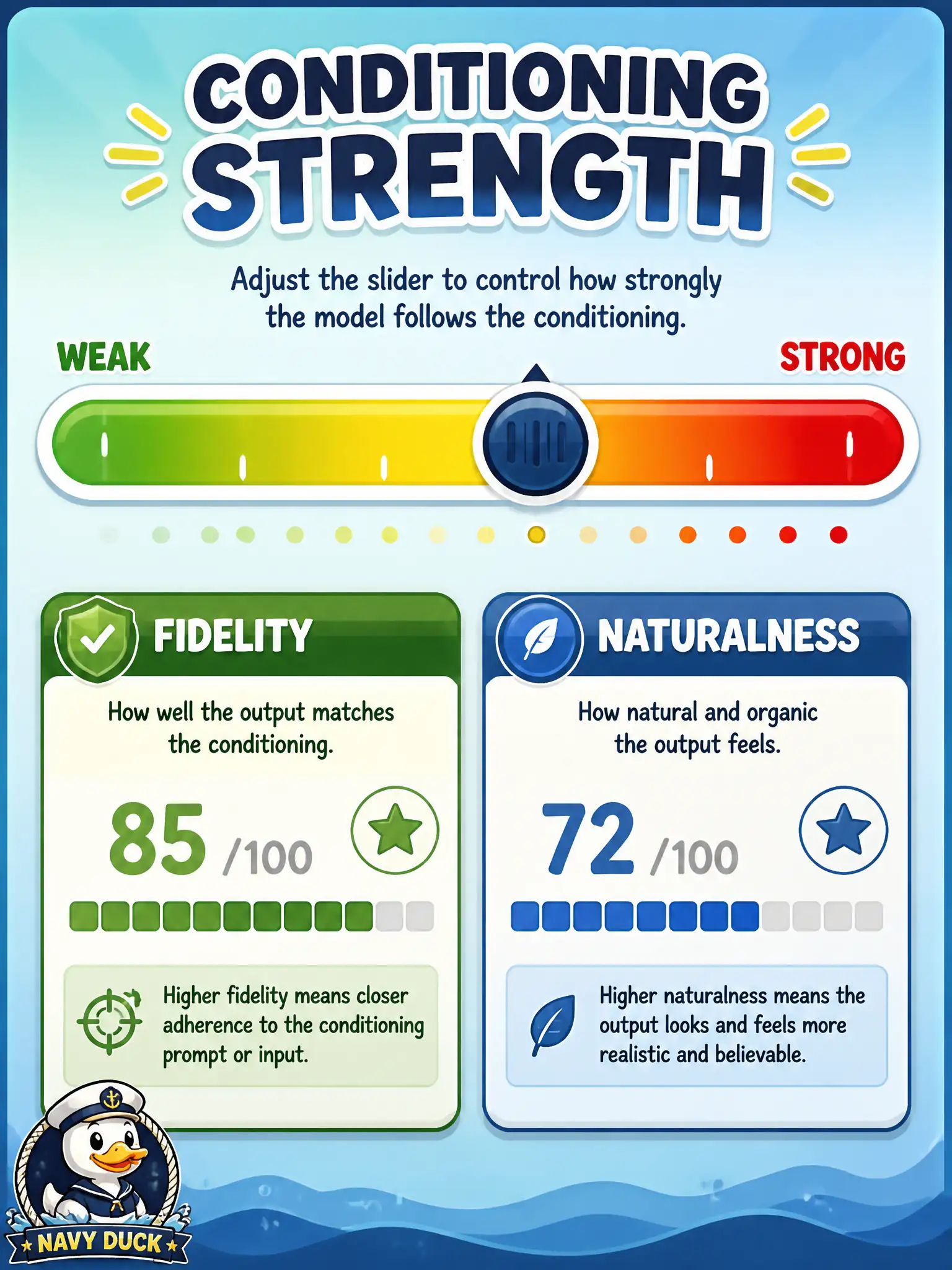
The text can whisper or shout at the generator. Sweep that volume knob and judge both “did it follow the line” and “does it still look natural.”
Full Explanation
A paper-mill mark that follows the sentence loosely at a weak text condition and looks harsh and over-literal at a very strong one calls for sweeping how strongly the context embedding is applied and scoring both line fidelity and visual naturalness. Civic mill education graphics need that volume-knob experiment so public materials are neither vague nor brittle. Associate practice treats conditioning strength as a tunable factor with two paired outcomes.
Ignoring conditioning strength and only tuning Ethernet MTU fails by substituting network frame size for text-conditioning strength. Replacing the image model with Triton as the primary serving answer fails by pivoting to a serving framework outside this generation conditioning experiment. Treating a third-party numeric cookbook as required NVIDIA canon fails by cargo-culting external numbers instead of sweeping and scoring on the civic set.
Exam caveat: sweep embedding conditioning strength and jointly score fidelity and naturalness—do not retarget to MTU, Triton-as-answer, or unofficial cookbooks. Operational check: hold seed and sentence fixed, sweep conditioning strength across a grid, plot fidelity versus naturalness, and pick the operating point that best serves mill teaching cards.