
A pottery desk embeds “ash glaze, iron speck” and “celadon, quiet rim,” then runs both through the same diffusion recipe. What must stay shared so the factor is the context embedding?
Select an answer to reveal the explanation.
Short Explanation
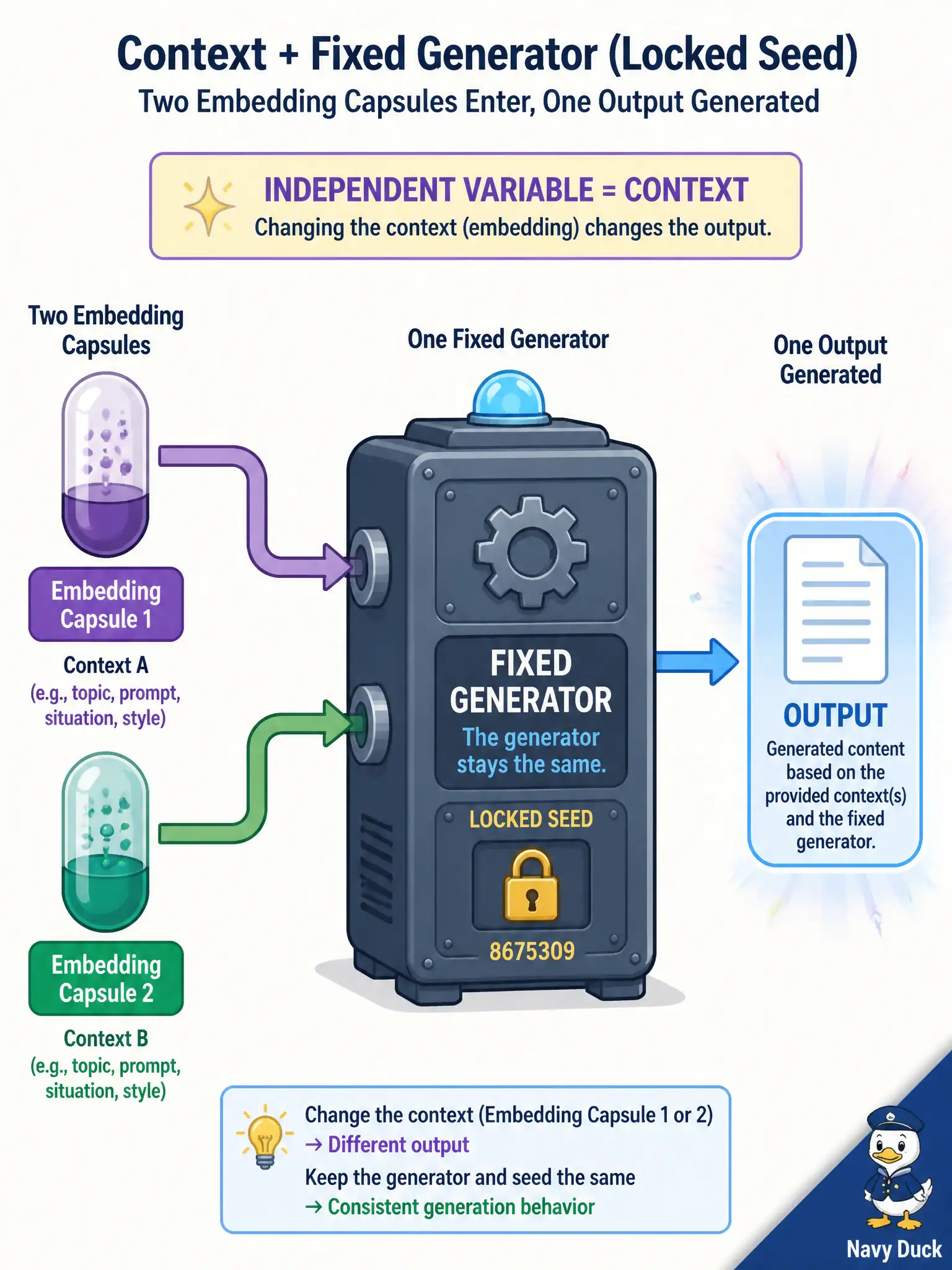
To taste-test two glaze descriptions, keep the oven and the shuffle lock the same. Then the only changing ingredient is the embedding.
Full Explanation
A pottery desk that embeds “ash glaze, iron speck” and “celadon, quiet rim,” then runs both through the same diffusion recipe, must keep a shared generator and seed so only the embedding differs. Civic craft teaching cards comparing two glaze descriptions need that isolation; otherwise oven changes and shuffle luck masquerade as language effects and mislead workshop instructors. Shared controls make the context-embedding factor trustworthy for public educational materials and repeatable demos.
Using a different generator and a new seed for every embedding fails by confounding embedding differences with model and seed changes. Mandating a switch to Audio2Face between embeddings fails by injecting a talking-face animation tool into a still glaze-card comparison. Creating a new Kubernetes namespace per word in the sentence fails by absurdly coupling packaging namespaces to tokens instead of holding generation controls fixed.
Exam caveat: when the factor is context embedding, share generator and seed; do not rotate models, faces, or namespaces per phrase. Operational check: lock recipe weights and one seed, embed each glaze line separately, render both cards, and attribute visual differences only to the embedding before choosing workshop defaults.