
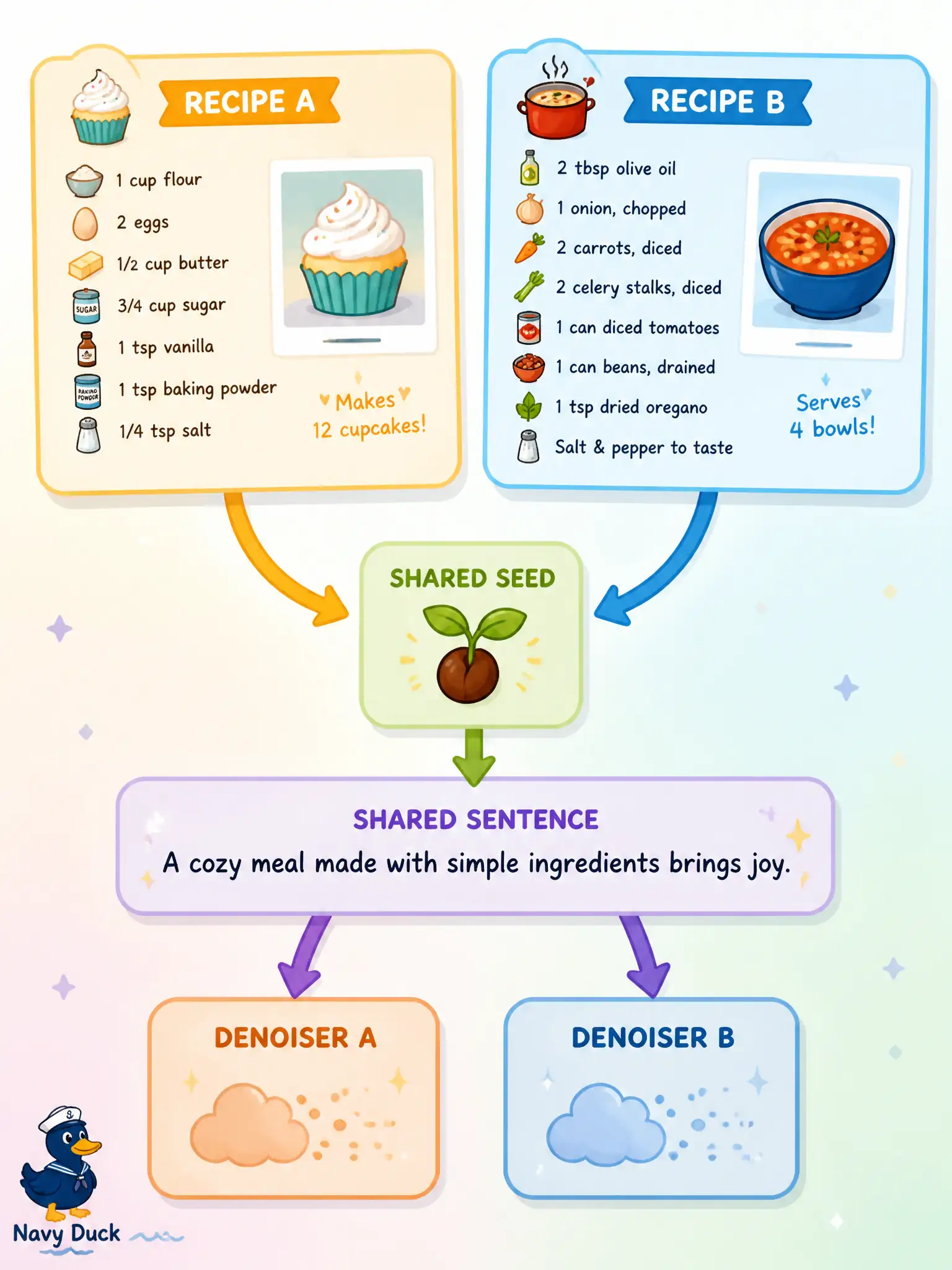
A pottery glaze desk has two diffusion recipes and wants to compare them fairly. What must stay shared so the comparison is about the denoiser?
Select an answer to reveal the explanation.
Short Explanation
Side-by-side taste tests need the same ingredients list. Same seed and same sentence let the difference show up in the denoiser, not in luck or wording.
Full Explanation
A pottery glaze desk with two diffusion recipes should keep the same seed and the same text condition for both recipes so the comparison is about the denoiser. Civic craft labs comparing recipes for public teaching cards need shared controls; otherwise random luck and wording differences masquerade as model superiority. Fair side-by-side tests protect instructional materials and workshop handouts from false winners that fail when prompts are equalized later.
Using different random seeds and different sentences for each recipe fails by confounding recipe differences with prompt and seed noise. Using a Riva TTS voice ID as the only shared control fails by importing a speech identity into an image recipe comparison where voice is irrelevant. Running separate Kubernetes clusters with unrelated prompts fails by adding infrastructure drift and prompt drift instead of holding generation controls fixed.
Exam caveat: fair denoiser comparisons share seed and text condition; TTS IDs and unrelated cluster prompts are not the shared controls on the associate path. Operational check: lock one glaze description and one seed, render both recipes, score glaze fidelity with one rubric and the same judges, and attribute differences to the denoiser recipe before selecting a house default.