
An observatory wants searchable spoken plate-talk and will never speak back. A vendor sells a full Riva ASR+NLP+TTS stack. What experiment scope fits the job?
Select an answer to reveal the explanation.
Short Explanation
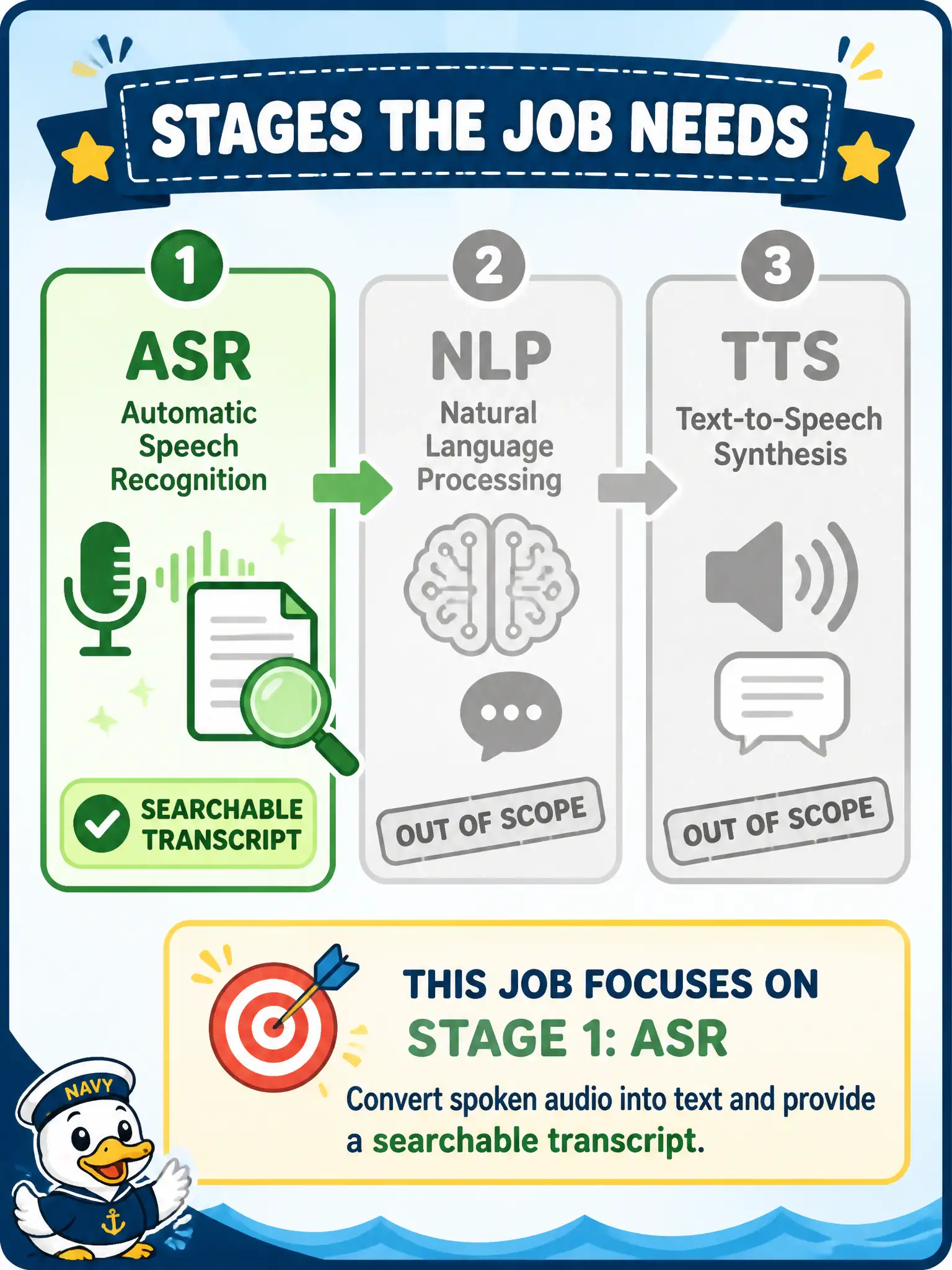
If nobody talks back, you do not need a mouth on the kiosk. Scope the trial to ASR for searchable plate-talk and leave TTS on the shelf. Buy the stages the job actually uses.
Full Explanation
An observatory that wants searchable spoken plate-talk and will never speak back should run an ASR-only experiment and decline TTS as out of scope for this archive trial—even if a vendor sells a full Riva ASR+NLP+TTS stack. Civic science archives should buy stages the job uses; searchable transcripts do not require a mouth on the kiosk. Associate judgment declines unused stages rather than accepting a full conversational bundle by default, protecting public spend.
Buying and evaluating the full three-stage stack because conversational products always need TTS fails by forcing unused synthesis cost onto an archive-only need. Skipping ASR to start with TTS so the archive narrates plates visitors never asked about fails by inverting the requirement toward unsolicited speech-out. Replacing speech work with a denoising-diffusion image generator on plate photos fails by abandoning transcription for unrelated image generation.
Exam caveat: scope conversational stacks to needed stages; searchable plate-talk is ASR-first, not a mandatory ASR+NLP+TTS purchase. Operational check: write success as searchable transcript quality on plate-talk audio, explicitly mark TTS out of scope in the trial charter, and refuse vendor bundles that cannot be purchased ASR-only for this experiment.