
A glasshouse desk recognizes English questions correctly, but the spoken reply comes out in a language visitors do not speak. What kind of experiment does that call for?
Select an answer to reveal the explanation.
Short Explanation
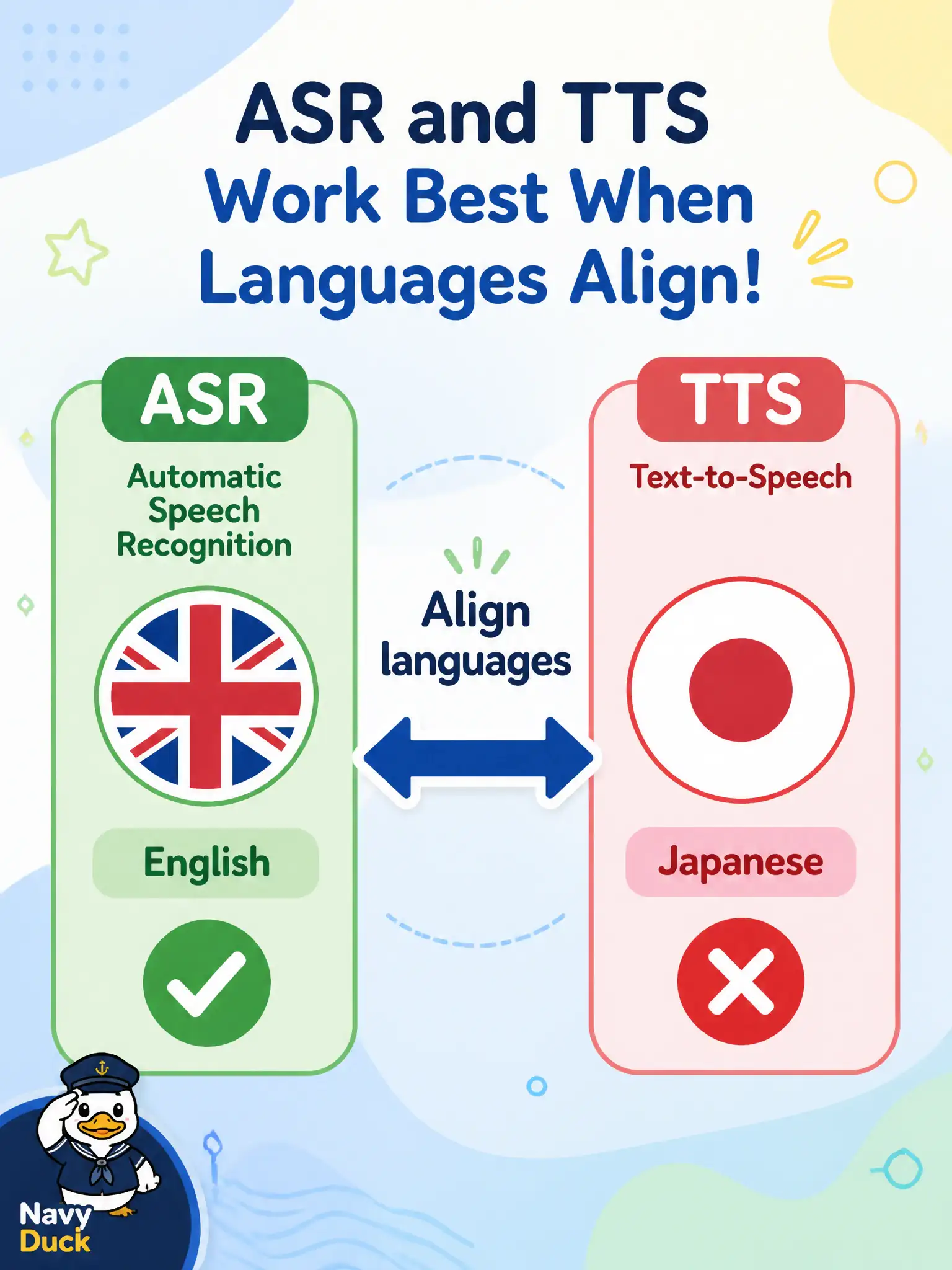
The ear hears English; the mouth answers in another tongue—that is a pipeline dress-code mismatch, not a new picture model. Align ASR and TTS language settings in a focused cross-stage trial.
Full Explanation
A glasshouse desk that recognizes English questions correctly but speaks replies in a language visitors do not speak needs a cross-stage language-mismatch experiment aligning ASR and TTS language settings. Civic horticulture kiosks fail visitors when the ear and mouth disagree on language even though recognition accuracy looks fine. Aligning packs across stages restores public usability without launching unrelated vision or fabric projects.
Starting a new still-image generation model to redraw care-card artwork fails by treating a speech-language mismatch as an art problem. Running an NCCL multi-node bandwidth trial because language mismatch is a “fabric symptom” fails by misdiagnosing configuration as networking. Fine-tuning CLIP on orchid photos until the kiosk stops speaking fails by attacking the wrong stack and never aligning ASR/TTS languages.
Exam caveat: conversational pipelines can fail from ASR/TTS language-pack disagreement even with good recognition scores. Operational check: print ASR and TTS language settings side by side, set both to the visitor language, re-run the English question set, and confirm spoken replies are in the expected language before other experiments.