
A tram-depot booth can wait for a slightly better transcript or speak a faster, rougher reply so riders catch the next car. What experimental choice does that pose?
Select an answer to reveal the explanation.
Short Explanation
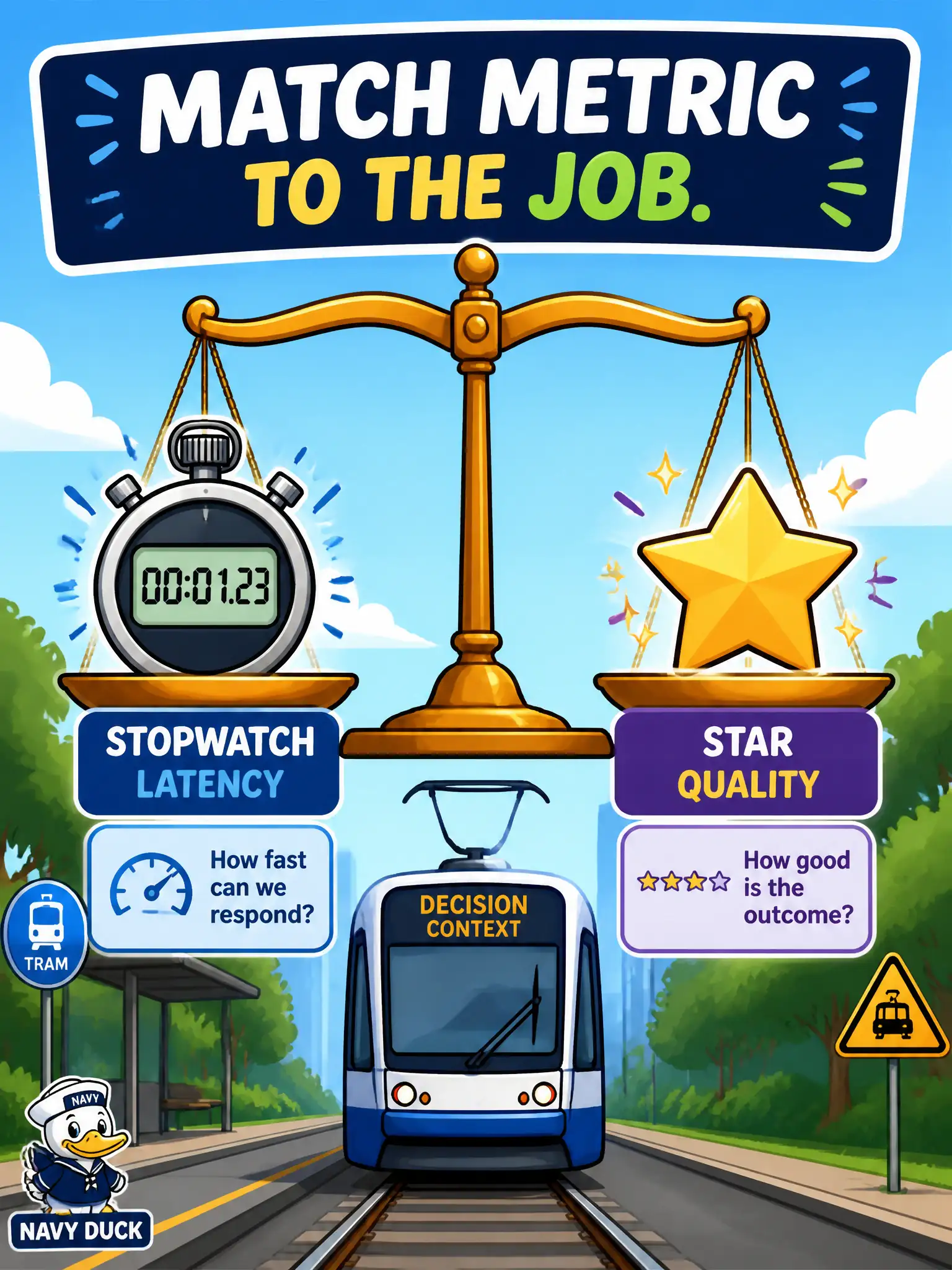
Catching the next tram beats a perfect sentence that arrives after the doors close. Pick the success measure that matches the booth—speed versus polish—and treat that trade as an explicit experimental choice.
Full Explanation
A tram-depot booth that can wait for a slightly better transcript or speak a faster, rougher reply so riders catch the next car poses an experimental choice to trade pipeline latency against stage quality using a success measure that matches the booth’s job. Civic transit guidance often values timely direction over perfect diction after doors close; documenting that trade keeps associate decisions aligned with public outcomes rather than optimizing every stage in isolation.
Always maximizing per-stage quality in isolation because end-to-end latency is never an experimental factor fails by denying latency as a legitimate booth objective. Replacing the speech pipeline with a VIA video Blueprint so latency becomes a frame-rate problem fails by changing modality instead of confronting the speech latency–quality trade. Authoring custom CUDA kernels until both latency and every stage quality hit theoretical peaks fails by escaping into out-of-scope kernel work.
Exam caveat: conversational experiments may explicitly trade latency for quality; the right objective follows the deployment job. Operational check: define the booth success metric (on-time car catch versus perfect wording), measure end-to-end reply time and task success under two latency budgets, and pick the operating point riders need.