
A funicular window can map recognized phrases to a tiny reply table or send each line through a pretrained language model, then speak. How should that comparison be designed?
Select an answer to reveal the explanation.
Short Explanation
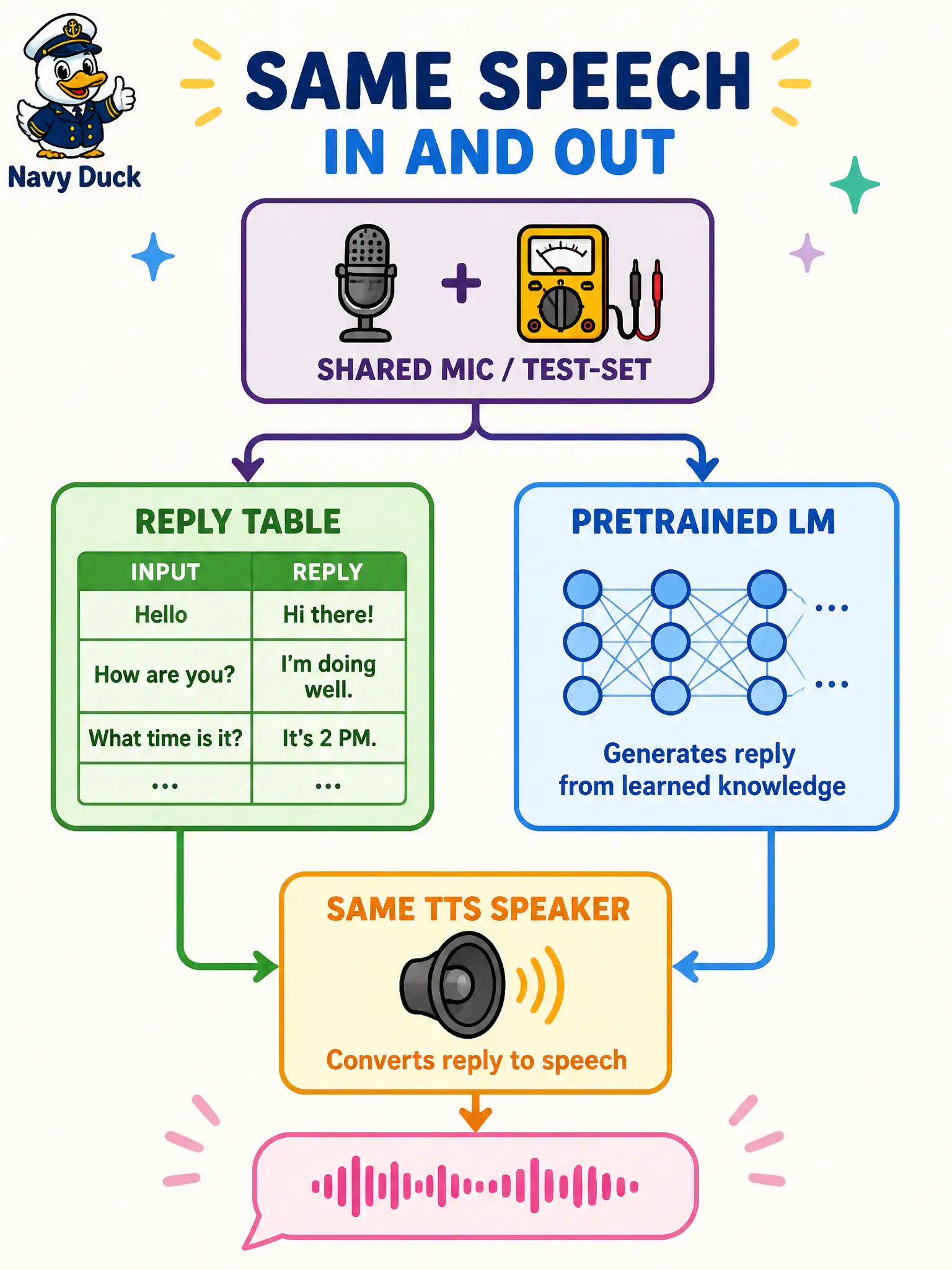
Table versus language-model brain is still one comparison: same shoppers’ lines in, same voice out. Hold the spoken test set and TTS fixed so the only difference is how understanding writes the reply.
Full Explanation
A funicular window that can map recognized phrases to a tiny reply table or send each line through a pretrained language model, then speak, should use the same spoken test set and the same TTS voice so only the NLP arm differs. Civic transit windows comparing rigid tables to generative language heads need that isolation so rider outcomes reflect understanding behavior, not ASR drift or voice changes. Fair comparison protects public service quality claims.
Rebuilding the trial as a LangChain agent framework bake-off with RAPIDS feature stores fails by importing NCA-GENL-style app and dataframe tooling outside this multimodal speech comparison. Changing ASR language packs on every arm so each NLP path hears different audio fails by confounding understanding with recognition differences. Scoring both arms with image FID because replies appear on a screen fails by applying generative vision metrics to spoken reply quality.
Exam caveat: table versus pretrained language head is an NLP-arm comparison inside Riva—fix speech eval and TTS, avoid GENL framework detours. Operational check: decode one frozen spoken test set once, route the same transcripts through table and language-model arms, synthesize with one TTS voice, and compare rider-task success.