
A harbor foghorn museum wants either live captions beside an exhibit or a nightly dump of the day’s docent talks. How should the team choose between streaming and batch Riva ASR trials?
Select an answer to reveal the explanation.
Short Explanation
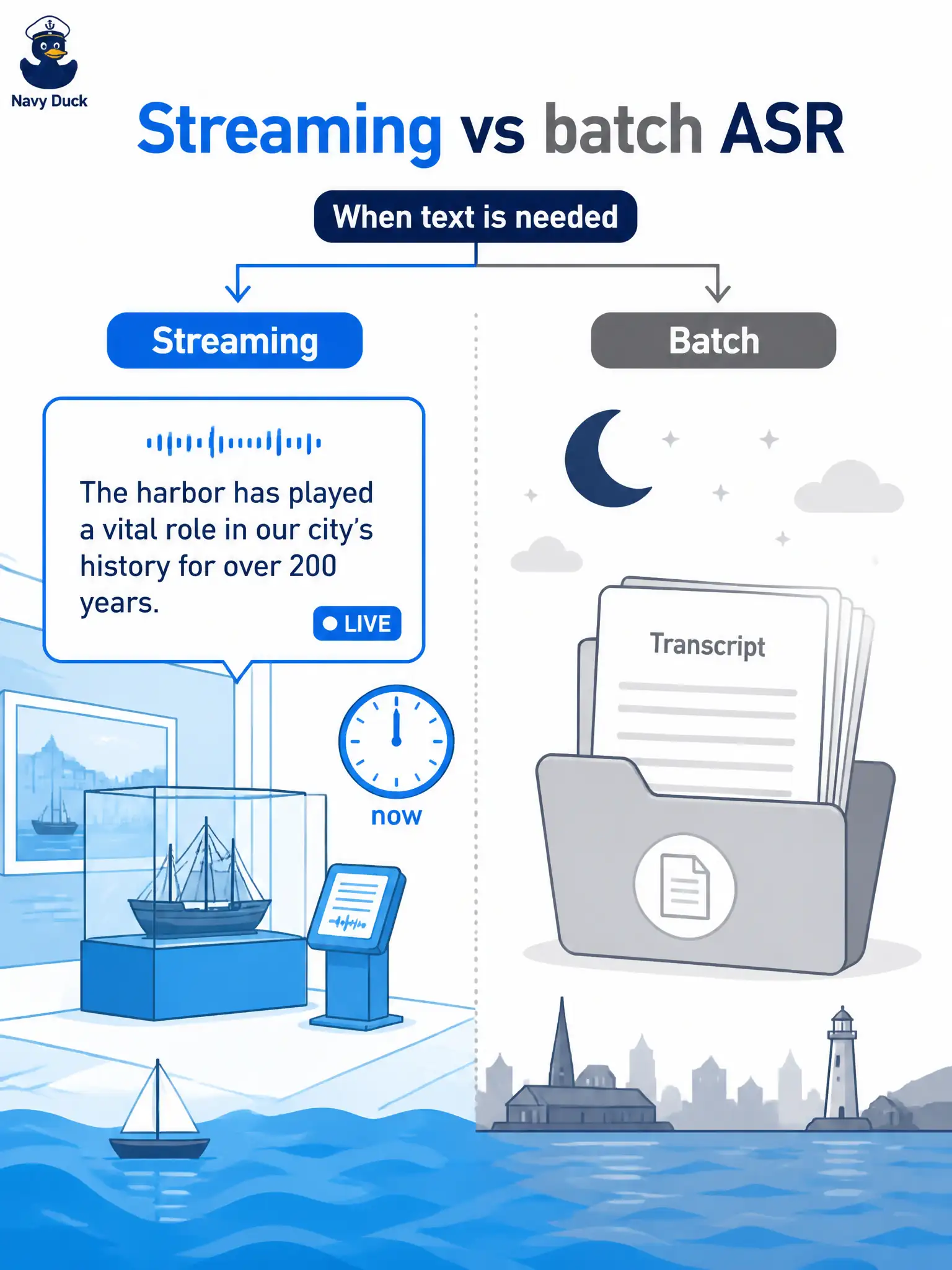
Live captions need words now; a nightly dump can wait until closing. Pick streaming or batch from that timing need — not from how big a cluster sounds impressive.
Full Explanation
A harbor foghorn museum choosing live captions beside an exhibit versus a nightly dump of docent talks should pick streaming versus batch Riva ASR by when the text is needed. Live civic captions demand streaming so visitors read words during the exhibit; overnight dumps fit batch when staff only need morning transcripts. Matching latency need to ASR mode protects visitor experience and museum workflows without turning the choice into a cluster-size contest that ignores when text must appear.
Choosing by which option needs the largest cluster fabric fails by optimizing impressiveness of infrastructure instead of text timing for guests and staff. Always choosing batch because streaming cannot use Riva fails by asserting a false product limitation that blocks live captions. Regenerating exhibit photos instead of transcribing speech fails by abandoning the speech task for unrelated image generation that never produces captions.
Exam caveat: streaming versus batch is a latency-need experiment for Riva ASR on the associate path, not a fabric-size bake-off or a claim that Riva cannot stream. Operational check: document whether text must appear during the visit or overnight; select streaming for live captions and batch for the nightly dump; verify captions or dumps arrive within the stated latency budget on a rehearsal day.