
A pottery kiln glaze trial stores each firing as a card plus a tile photo. A volunteer types “which firing crawled?” and a pretrained question-answerer must point at the right card so the matching photo can be pulled. How should the experiment be scored?
Select an answer to reveal the explanation.
Short Explanation
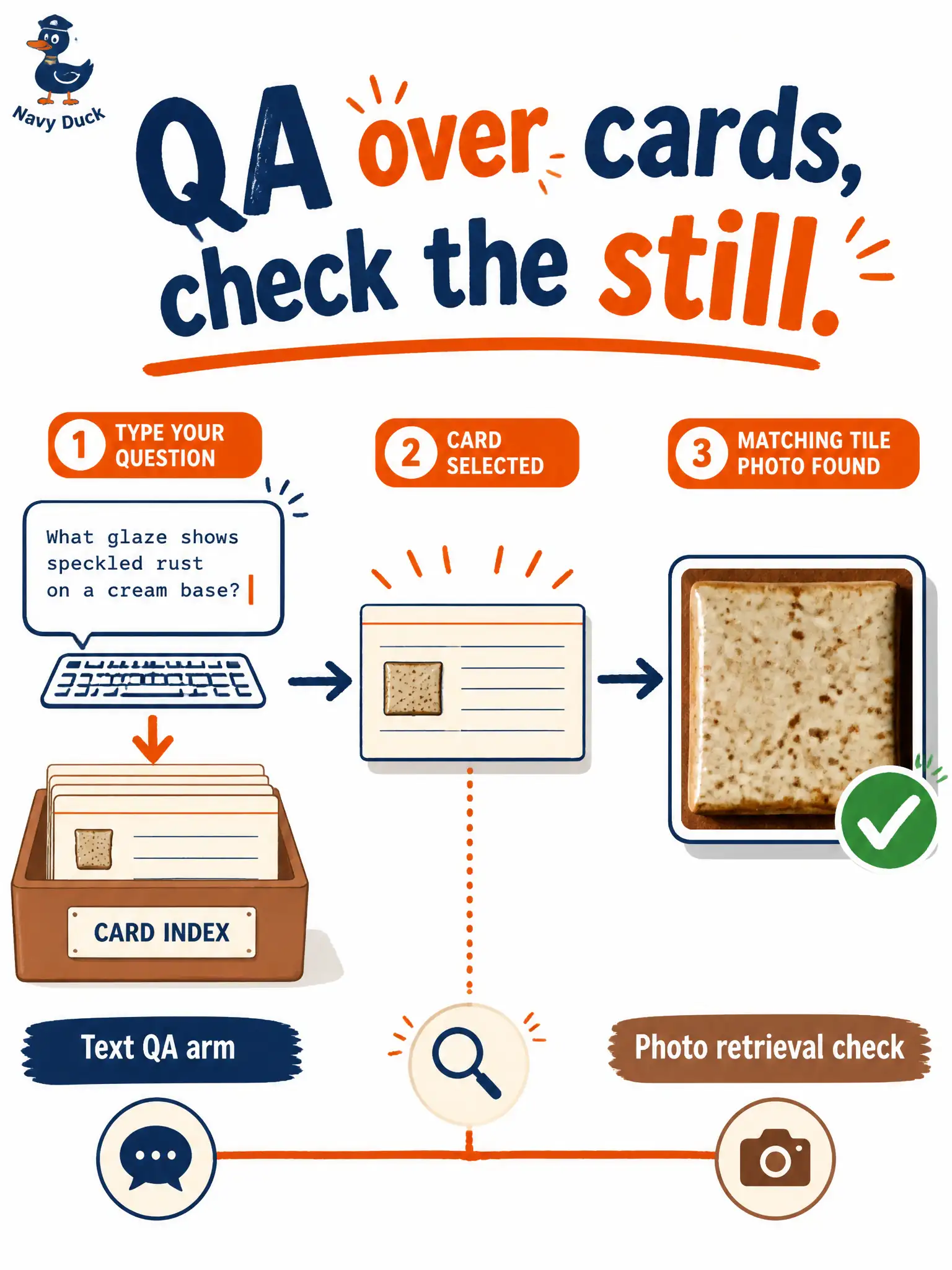
The typed question hunts through cards first; the photo is the proof you landed on the right firing. Score whether the pulled still matches — that is the multimodal check.
Full Explanation
A pottery kiln glaze trial that stores each firing as a card plus a tile photo should score a pretrained question-answerer as QA over the text index, checking whether the retrieved still matches the answer card. Civic craft labs documenting firings for teaching and quality review need that text-to-still verification: the typed question hunts cards, and the matching photo proves the right firing was found. Scoring the multimodal link protects public instructional materials from fluent but ungrounded answers.
Scoring only whether the QA model invents a new glaze recipe in verse fails by measuring generation creativity instead of retrieval grounding to the correct firing still. Scoring only GPU utilization during the typed question fails by substituting infrastructure metrics for task success. Treating the trial as a vision-only classifier that never reads the cards fails by discarding the text index the volunteer’s question targets.
Exam caveat: pretrained QA in an image-backed catalog is judged by correct still retrieval, not poetry or GPU burn. Operational check: issue held-out questions such as which firing crawled, require the system to return a card and tile photo, and mark success only when the still matches the answered firing card.