
A clocktower carillon office dumps a weekend of visitor comments next to belfry photos. Staff want a transformer only to flag comments that mention a cracked louver so those frames stay in the keep pile. How should the experiment be framed?
Select an answer to reveal the explanation.
Short Explanation
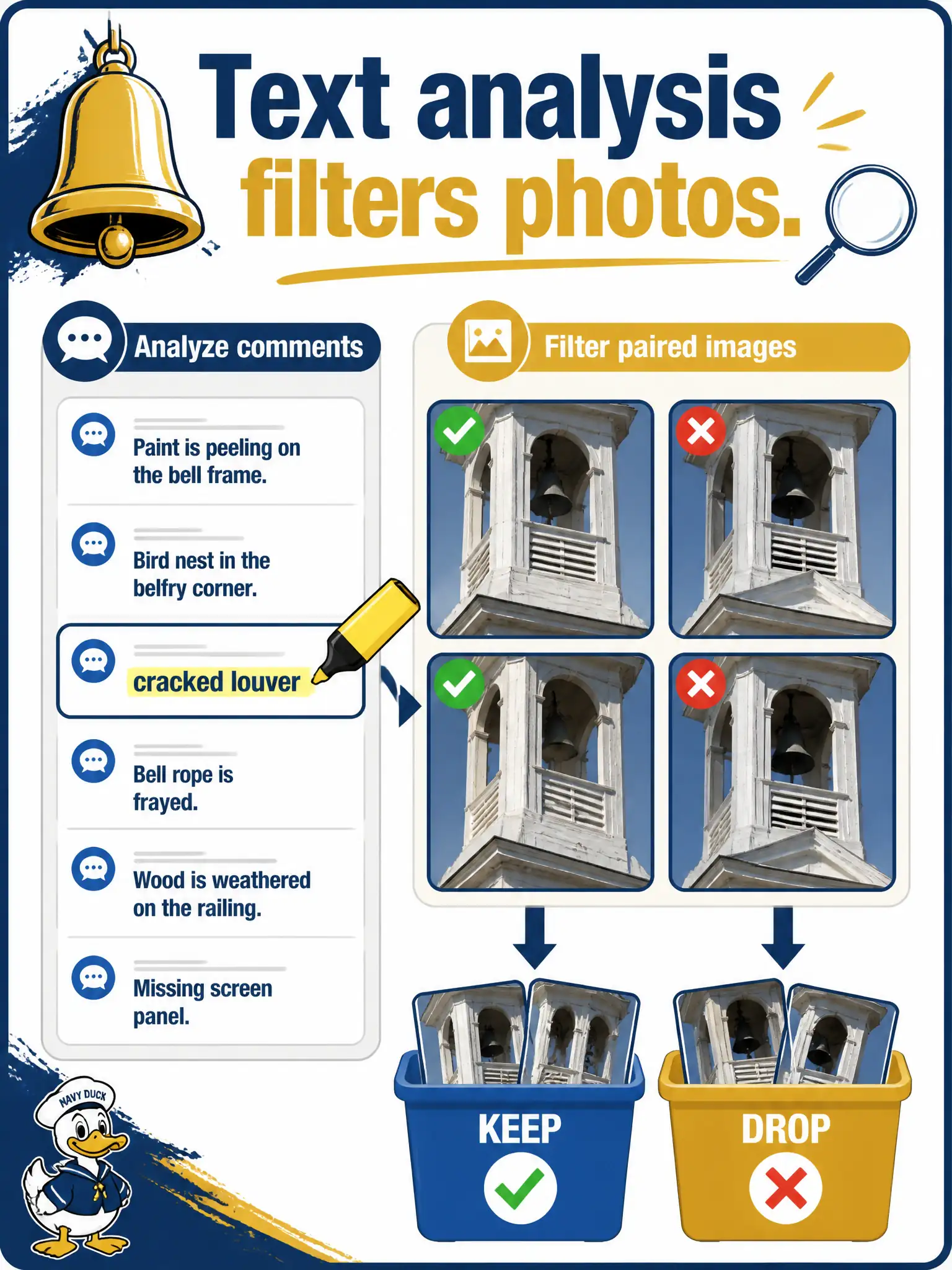
The transformer reads the guestbook and waves a keep flag when someone mentions a cracked louver. The photos are what get filtered — the experiment is text analysis, not a new camera brain.
Full Explanation
A clocktower carillon office dumping visitor comments beside belfry photos should frame a transformer that flags cracked-louver mentions as analysis of the text stream that filters which paired photos to keep. The photos are the keep/drop targets; the experiment scores whether text analysis correctly prioritizes civic maintenance evidence for public heritage assets. That protects volunteer time and municipal repair budgets by routing attention to frames tied to damage language rather than rebuilding a vision detector first.
Training a new vision detector that ignores all comments fails by discarding the text evidence the staff explicitly want to use for filtering. Regenerating every belfry photo from comment text fails by substituting image generation for keep/drop analysis over existing stills. Running a Riva TTS voice-style bake-off for the lobby fails by changing the question into speech synthesis unrelated to comment-driven photo triage.
Exam caveat: text analysis that gates a paired image set is not a vision-training substitute and is not a TTS trial. Operational check: label comments for cracked-louver mentions, apply the flagger, and measure precision/recall of kept frames against maintenance ground truth without retraining a detector in the first pass.