
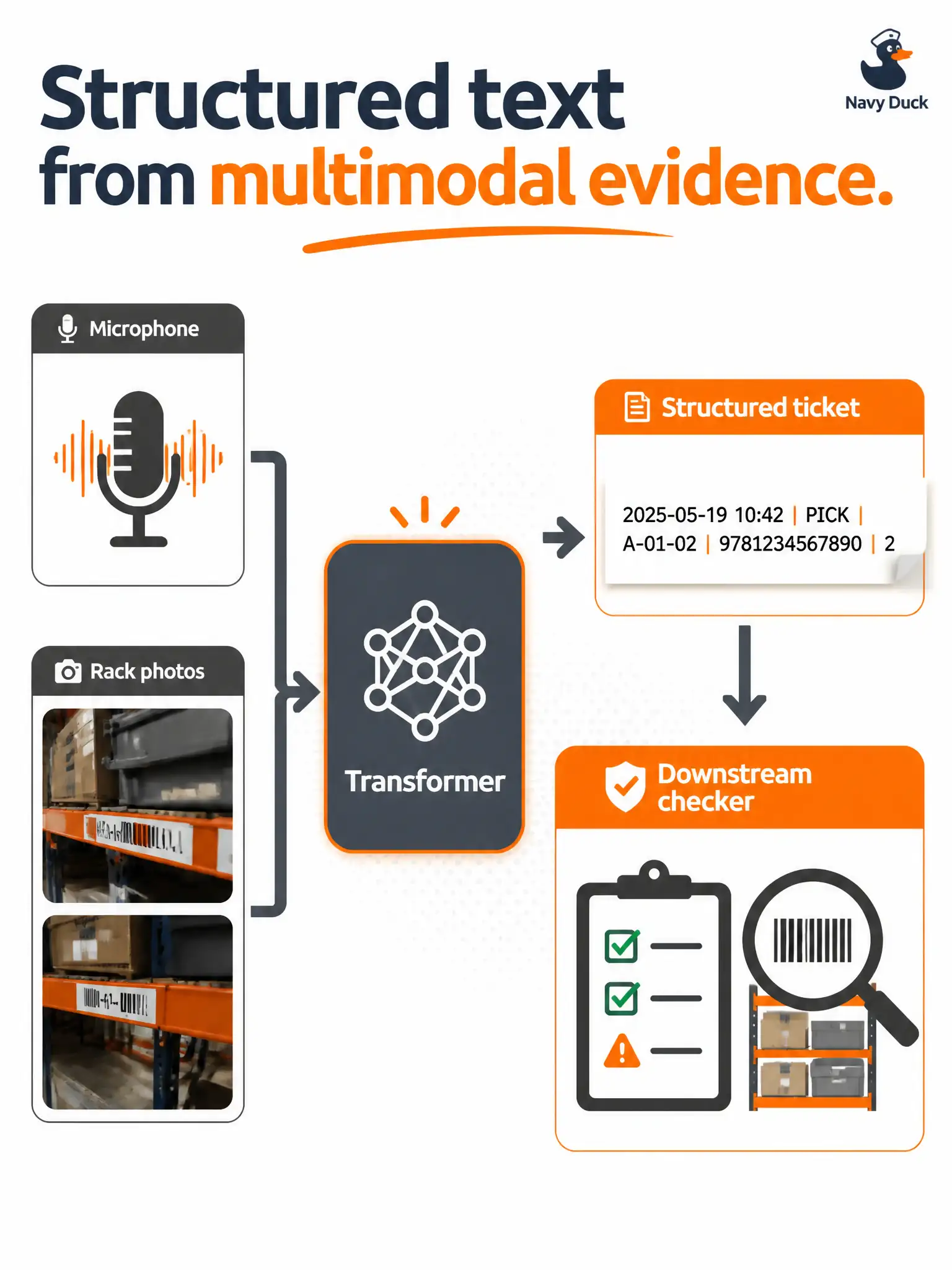
A smokehouse batch desk records a spoken walk-through and snaps three rack photos. Staff ask a transformer to turn the transcript into a one-line batch ticket a later image checker can read. What kind of experiment is that?
Select an answer to reveal the explanation.
Short Explanation
The desk already has speech and photos. The transformer’s job is to write a tidy ticket those other tools can use — like filling a shipping label from a spoken checklist.
Full Explanation
A smokehouse batch desk that records a spoken walk-through and snaps rack photos, then asks a transformer to turn the transcript into a one-line batch ticket for a later image checker, is generating structured text from multimodal evidence for another modality tool to consume. That framing matters in civic food-safety and production logs: the transformer’s job is usable structured language that downstream visual checks can read, not a new vision network or an infrastructure study. Public batch accountability improves when speech evidence becomes a ticket other tools can verify against photos.
Training a brand-new smokehouse vision network from three photos alone fails by reframing a text-structuring task as vision training with inadequate scope. Replacing ASR with a diffusion model that invents rack photos fails by swapping recognition for image synthesis and dropping the spoken evidence path. Measuring GPU cluster fabric latency for the walk-through audio fails by turning an associate multimodal design question into an out-of-scope fabric benchmark.
Exam caveat: structured text generation that feeds another modality tool is still a text-arm experiment, not vision training or cluster telemetry. Operational check: produce tickets from held-out transcripts, pass them to the image checker unchanged, and score whether ticket fields correctly select the matching rack photos.