
A marionette-theater props closet pairs each puppet photo with a card. After a trial, every answer quotes the card and never mentions a missing string that is obvious in the photo. What should the next experiment test?
Select an answer to reveal the explanation.
Short Explanation
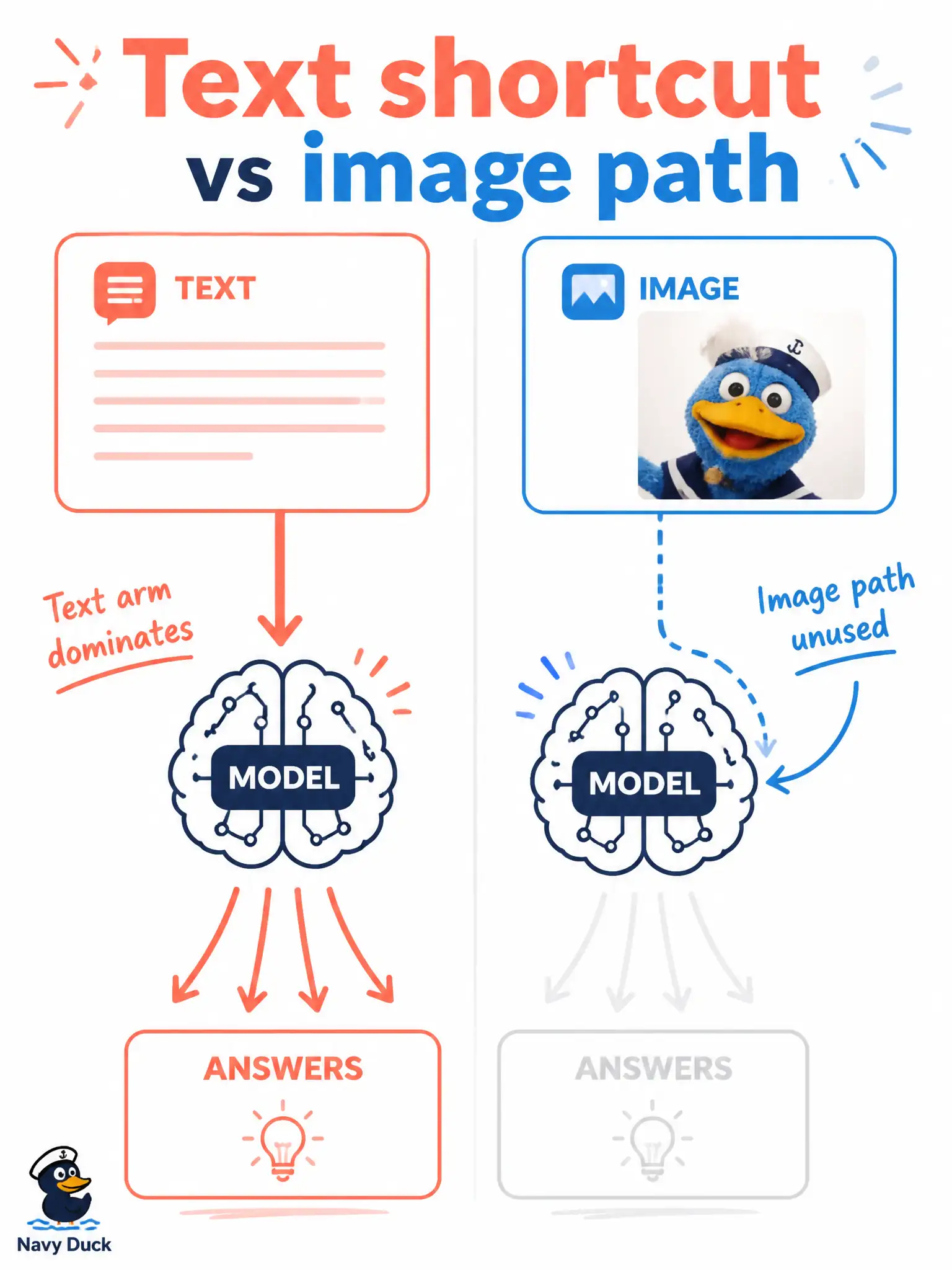
If every reply only echoes the card, the system may be reading the note and ignoring the puppet. The next trial should poke the image path to see if the eyes are even connected.
Full Explanation
When a marionette-theater props closet pairs puppet photos with cards and every answer quotes the card while ignoring photo-obvious missing strings, the next experiment should test whether the image path is actually being used. Text-arm dominance is a classic multimodal failure mode: the system looks fluent because it echoes notes, yet civic prop inventories still need visual grounding when cards omit damage, color, or missing strings. Probing the image pathway protects public collections from text-only shortcuts that hide grounding gaps.
Asking whether longer captions alone fix cross-modal grounding fails by assuming more text cures a missing visual contribution. Deleting all photos to improve answer quality fails by removing the modality that should supply the missing string evidence. Replacing the photo wall with a speech synthesizer fails by changing the problem into TTS rather than diagnosing whether vision features reach the answerer.
Exam caveat: associate experiments distinguish text shortcuts from true cross-modal use; fluency on cards is not proof the eyes are connected. Operational check: ablate or corrupt image inputs on items where the card omits a photo-obvious detail and verify whether answers change—if they do not, the image path is idle.